
Thirty years before On the origin of species was published, Charles Darwin’s first appearance in print was, he later confessed, still one of his proudest achievements. You see, like so many great biologists, Darwin was a beetle man at heart.
In his later days he likened himself to an old war horse, roused by a clarion call, on reading of the discovery of rare beetles. Well, that really rings true. He also said that seeing his name next to some of the beetle records in James Francis Stephens’ milestone 12 volumes series of Illustrations of British Entomology (1828-1846) brought him great delight, and well it might.

Just one of several of Charles Darwin’s beetle finds, recorded in the first beetle volume of J.F. Stephens’ monumental Illustrations of British entomology.
Here it is, in the addenda to Stephens’ first beetle volume (1829). Since it was issued in parts, various subscribing entomologists were able to read the early fascicles and send their comments and additional records to the author so he could incorporate them before the volume was finished. Technically, Darwin’s first record is a couple of pages earlier, but was for what is now a non-species (Ocys tempestivus, which has since been synonymized as just a slightly larger and brighter form of the very common Ocys harpaloides).
Blethisa multipunctata is a beautifully sculpted metallic ground beetle from riversides and marshes. Studying at Cambridge, Darwin was well-placed to find it in the Cambridgeshire fens, still a major stronghold. I’ve never found it. If I did, I’d certainly let someone know. And hope to see my record in print, with my name beside it.
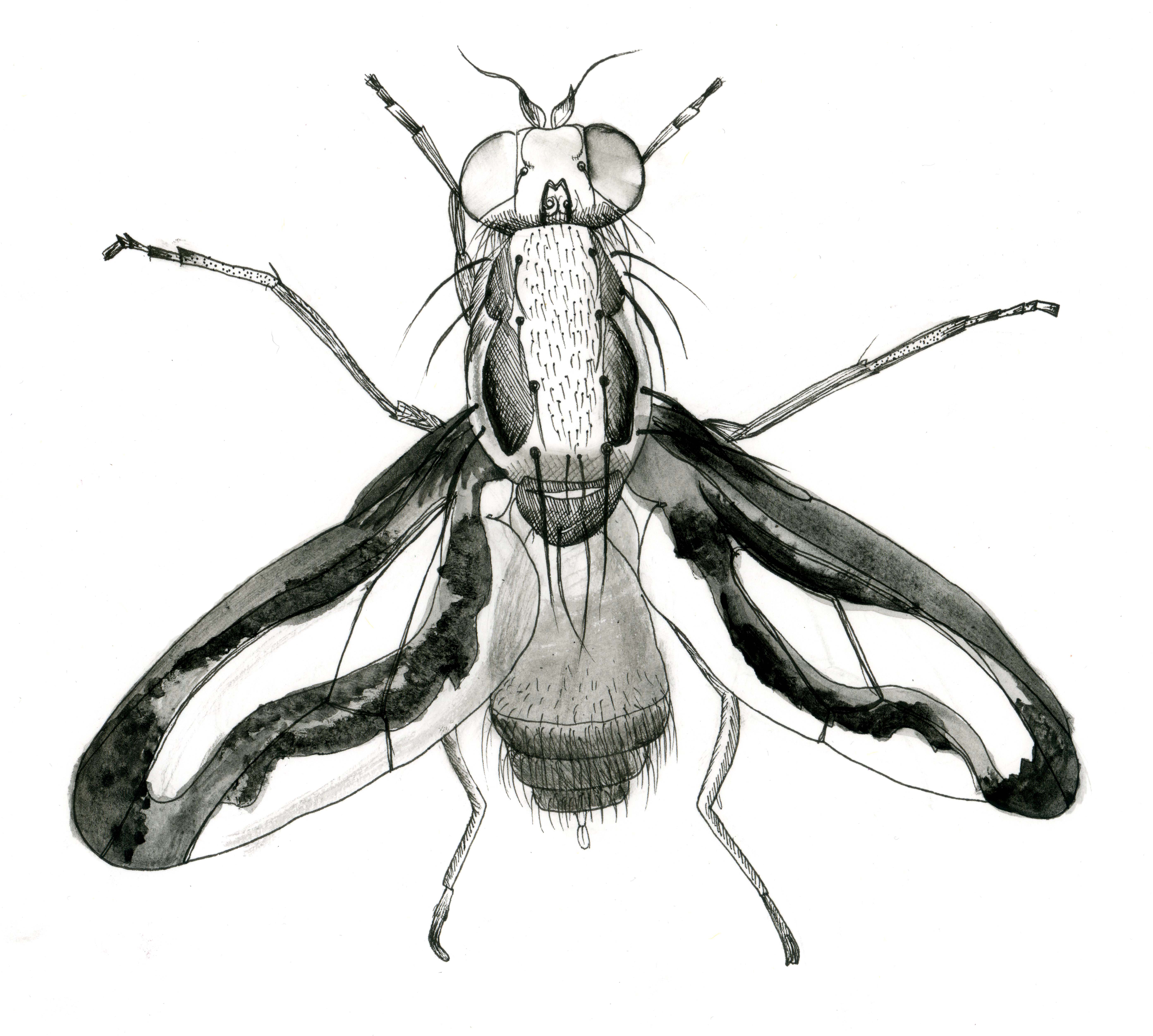
When I was eighteen, I went up to an entomological meeting at London’s Natural History Museum. Here were many of the well-known entomologists of the day, Cyril Hammond was one I remember. I chatted to a few people, including the dipterist Alan Stubbs, one of the organizers, who was singularly impressed to learn that I had just recently seen quite a lot of a strikingly handsome and very rare hoverfly, Doros profuges (D. conopseus it was then). Later, when addressing the meeting he made mention of me, a newcomer in the room who had seen more specimens of this scarce fly than all previous British entomologists put together. There was a lot of interested head nodding in the audience, and I felt the same pride that Darwin knew. I guess that makes me a fly man, as well as a beetle man.













 Richard Jones







 Bugman Jones
You must be logged in to post a comment.