Category Archives: General Stuff

Let’s just forget about habitat destruction, shall we?

The idea of habitat destruction has had it’s day. I think we need to move on.

Anyone who has ever seen the ulcerated sore of an open-cast mine, or the mud-slide run-off from a deforested tropical hillside will know what habitat destruction is. But neither of these is very common in Britain. There is the occasional gravel pit or chalk quarry, but even quite large new building developments or road schemes seem relatively minor scrapes when viewed in aerial photographs, we have Google Earth to thank for this calming revelation.

And yet conservationists, especially entomologists, are always barking on about declines in biodiversity due to habitat destruction. It has become a mantra of our times. The trouble is, no-one is really listening. The reason they are not listening is because, intuitively, they don’t believe it. They look out at the world, from the car or train window, or even when they walk down a country lane, and the world out there is still obviously green and pleasant. Where is all this destruction that’s supposed to be going on?

Talk of habitat loss isn’t much better. It simply conjures up images of minor landslips in Dorset or Lincolnshire. Dramatic they may appear on the pages of the red-tops, and sad, yes, for the people whose houses are plunged into the sea; but, again, these are minor plots of land — nothing to get het up about, and no serious sway on environmental opinion.

We should stop talking about habitat destruction, it isn’t helping much.

Of course, what we can’t see, are the subtle, insidious changes that have been going on cankerously since the 1940s, with the intensive industrialization of agriculture and the demise of traditional rural husbandry.

Woods are still full of trees, and they all look very green. But close inspection shows that they are gone to pot. Coppice cycles have been abandoned and woodland management is now, very often, no management at all; the once rich, varied mosaic of copses has become crowded, overgrown and dark, and the delicate woodland flora has been replaced by dull uniformity.

Even the language of green fields is skewed by the obfuscation of farming propaganda; at best it is counter-productive, at worst it is directly misleading. Contrary to any reasonable understanding, ‘improved’ grassland actually means ruined grassland; it is only improved for agriculture. Fertilized beyond care with chemical preparations or over-manured beyond its natural capacity, the thick, lush grasses useful only to the commercial dairy farmer are increased, at the expense of a broad, mixed, flowery richness, which is everywhere diminished. The hay meadows of blessed memory and literary allusion, alive with butterflies, bees and all those other insects, are now the empty fields of factory silage — virtually green deserts. Still green to the eye, though.

Elsewhere the insipid dilution of natural wonder gives us dank secondary woodland dense with sycamore, flailed hedges thick but dull, roadsides rank with nettles, riverbanks polluted with invasive balsam and once smoothly undulating chalk grazing hills now encrusted with the erupting pustules of scrub encroachment.

It all looks green, though. Very green indeed. But it is becoming more uniform, less varied, less diverse. As hedgerows are removed piecemeal (hardly warranting the title ‘destruction’ though?) the mosaic of small diverse fields becomes a mundane prairie. The embroidered quilt, rich in a million shades of verdant emerald, pea, jade and lime, tinged with russet, gold and ochre, is becoming a bland process colour, and if the landscape designers working for agribusiness and housing developers are to be believed, I expect we could identify it as a single Pantone number.

Green blandness captured in Anville. With apologies to Dr Seuss, I've grabbed this screen image from the Universal Pictures adaptation of The Cat in the Hat.

Green blandness captured in Anville. Pantone 378-3 seems about right. With apologies to Dr Seuss, I’ve grabbed this screen image from the Universal Pictures adaptation of The Cat in the Hat.

Diversity is failing, species (plants and animals) are lost. The habitat has not been lost, or destroyed, though. Instead it has been floristically and faunistically cleansed. Talk of habitat ‘destruction’ no longer serves this danger. Instead, we have to move on — we need a new vocabulary of environmental alarm.

I offer these:

habitat corruption

habitat degradation

habitat degeneration

habitat decay

habitat debasement

habitat adulteration

habitat blight

habitat impoverishment

habitat impairment

habitat disruption

habitat desecration

habitat mutilation

habitat ruination
A most serendipitous insect

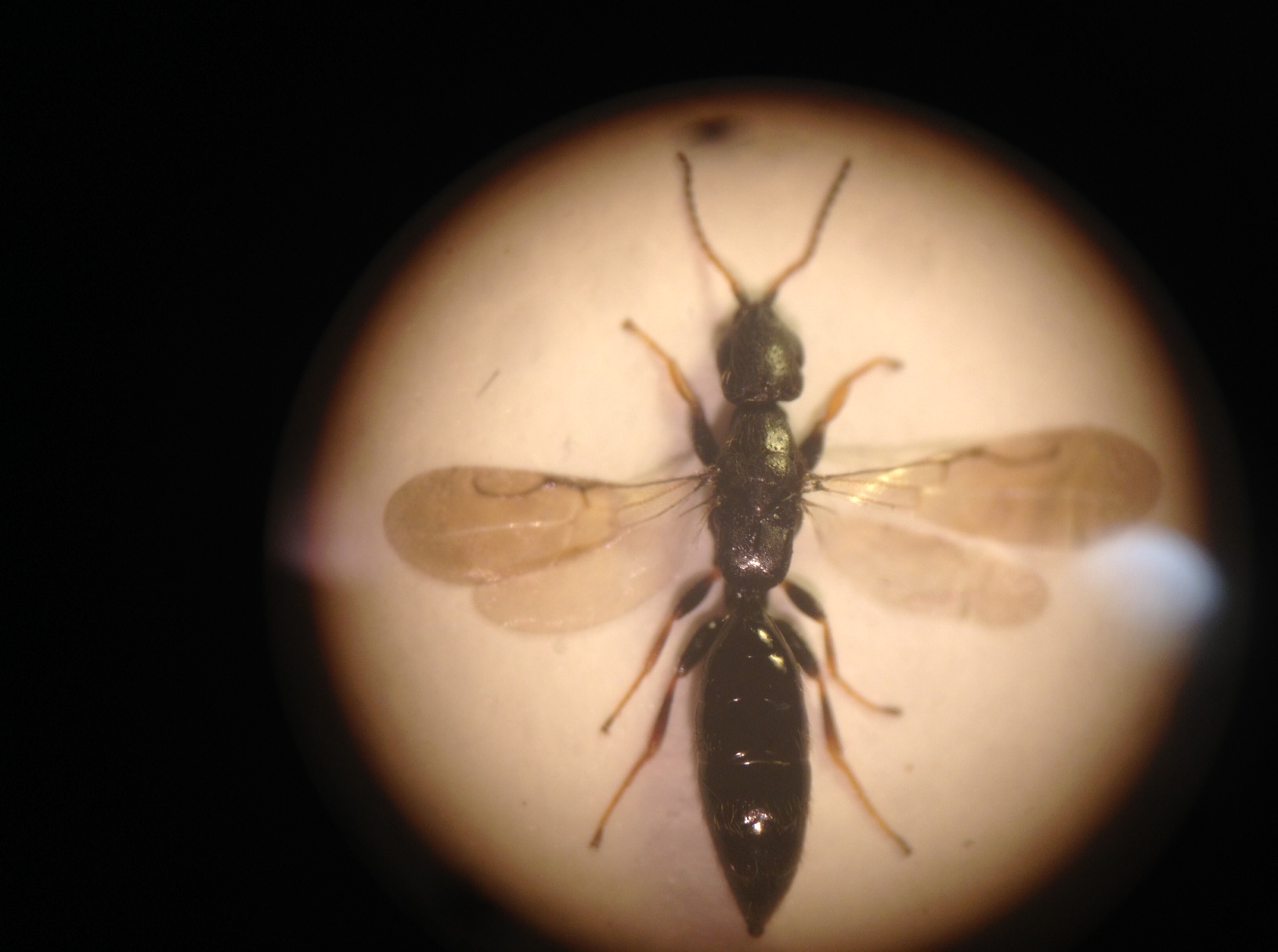
The sunny weather drew me out on Wednesday. There are a few things about — the odd bee-fly, some solitary bees, a comma and peacock butterflies. I bashed a stand of ivy covering an old tree on Honor Oak’s One Tree Hill, and out fell a couple of bethylids. I like these curious creatures. Although given honorary aculeate (ant/bee/wasp) status, they actually run around like tiny rove beetles in the net, an impression emphasized by their stout triangular or pentagonal heads.

At 4 mm, Bethylus boops is not large; dainty, more like.

At 4 mm, Bethylus boops is not large; dainty, more like.

These ones were Bethylus boops (pronounced “bo-ops”), a species dear to my heart because it was the first insect species I ever found ‘New to Britain’ — running about on my newspaper, as I sat reading in the garden in Nunhead, in 1992. I tentatively identified it as something highly unlikely, but when I sent it to the UK bethylid expert to check, he told me no, it was a new one. The hairy eyes are a dead give-away.

It turns up regularly in the London area, and I’ve found it several times. The National Biodiversity Network distribution map is patchy, to say the least.

Mostly, distribution maps show the distribution of searchers, not what is being sought.

Mostly, distribution maps show the distribution of searchers, not what is being sought.

London and Gretna(?), apparently. Not sure I believe that.

Trespassers W

The Isle of Wight is an old haunt for me. For several years in the 1960s it was the summer holiday destination of choice for the Jones household. Over the many visits we trooped up and down the disused railway lines, which thanks to Dr Beeching were now converted into byways, and we rambled the hills and woods which are criss-crossed by more miles of footpath than almost anywhere else in southern England. We did a bit of sight-seeing, a minor concession of my naturalist father to his slightly reluctant children: there was the Godshill Model Village, Sandown Zoo, Bembridge Waxworks and Osborne House. Well, not the house at Osborne, just the gardens actually. And there was an ulterior motive here.

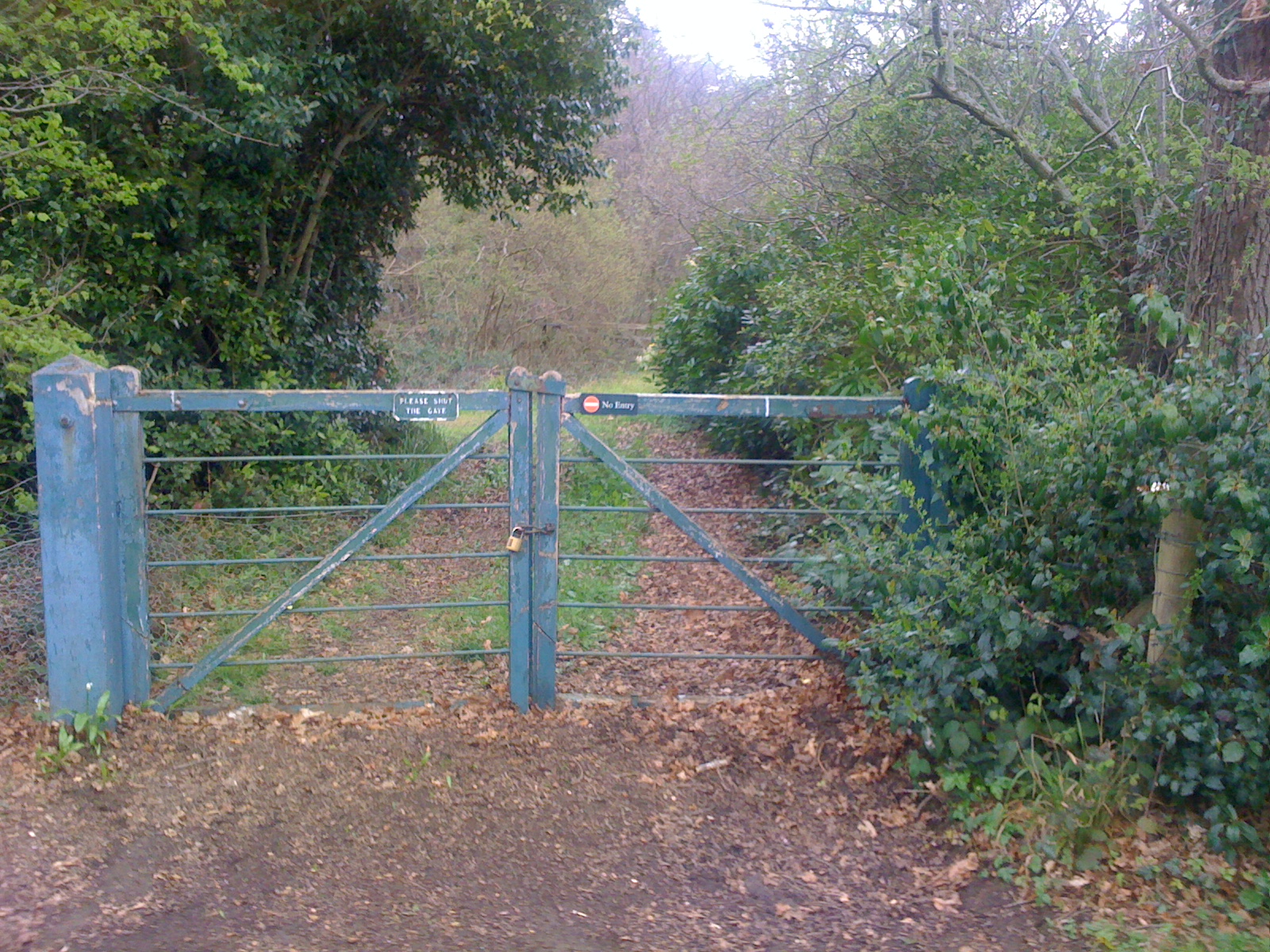
Mostly, of Osborne House, I remember, down by the royal children’s Swiss chalet-style ‘playhouse’, this gate:

Keep out.

No entry. The gate is shut. And locked. Photographed April 2012.

For it was over this that my father dragged a hesitant 10-year-old to go exploring in the woods that ran down to Spithead (incidentally one of the best-named tracts of water anywhere on the planet). Because of its royal history, there  remained at Osborne a large segment of the island that was footpath-free and very private. This did not suit my father’s inquisitive need to check out the plants and insects, so we took it upon ourselves to go trespassing.

Trespassing comes naturally to a Jones. Through all the years of traipsing across the English countryside, either with my dad, or off on my own, a “PRIVATE — KEEP OUT”  sign was of no consequence. We went where we would.

On the whole we never met anyone, or if we did a gentle polite conversation was usually enough to show that we were doing no harm. The insect nets were always good ice-breakers and obvious signs that we were either nutty or scholarly, but not dangerous. Very often the convivial conversation would turn to country matters, wildlife, nature or the obscure history of individual pollard trees. My father always wore a tie, and usually a suit. When I realized that power-dressing could have influence on the game-keepers, woodmen or occasional owner on horseback, I too kitted out in worsted or tweed, and knotted a smart tie. I sometimes still do.

I can’t really remember what we found down in the lower Osborne woods, we certainly didn’t meet a soul there; but I do have a memory of the flotsam-covered beach, and the broken concrete runway down which Victoria’s wooden cart-wheeled bathing machine was run into the sea whenever she fancied a dip.

Now it’s my turn to take family holidays on the island. We do more sightseeing than trespassing. We always head to Osborne to marvel at its kitsch bling interiors and take a wander around the beautiful sweeping grounds.

Now, however, that gate is open wide:

Come on in.

Come on in. Photographed April 2013.

The private beach is now accessible to visitors; the bathing machine runway is still there, the old queen’s ‘alcove’ (ludicrously ornate covered seat) has been renovated, the beach has been tidied up and cleared of driftwood, there’s a cafe and everything. Spithead is still a wonderful sight, filled with sails and ships.

But it’s not quite as exciting as trespassing.

House guests, house pests

I’ve just received the approved ‘blads’ for House guests, house pests. They’re based on a few pages of sample text I wrote when the publishers agreed the contract. Their main purpose is to be shown off at bookfairs, to secure foreign rights and to drum up trade interest. I’m very pleased with the look of them. [Illustrations/design by Morphart Creation, Hintau Aliakse, Yingko and Shutterstock.]

Picture 6 Picture 7
Picture 9 Picture 8
Picture 10

For the last year I’ve been trawling the latest research and the strangest anecdotes ready for an autumn writing blitz. I’ve more or less completed the Appendix/ rogues gallery/ identification section. My favourite so far is Scobicia declivis, the lead cable borer also known as the ‘short-circuit’ beetle. Primarily a wood-borer, it will also damage soft metal (lead) casings, probably because of textural confusion rather than nutritional need, hence its common name, and this  leads it to cause a unique type of damage. It has a penchant for the lead sheath of aerial telephone cables, close to where they attach to a building. The bores are made next to the cable support rings which are thought to give the beetle enough leverage to chew into the metal. In California, the damage is only revealed on the first serious rains after the adult beetle has emerged, when water entering the borehole causes short-circuits. Brilliant.


Now how did that get in there?

This, it appears, will have to count as my first hoverfly of the year. It’s a drone fly, Eristalis tenax, fished out of the salt-filled outer compartment of the built-in water softener attached to washing machine and dishwasher in our holiday house in Yarmouth, on the Isle of Wight. Now how did that get in there?

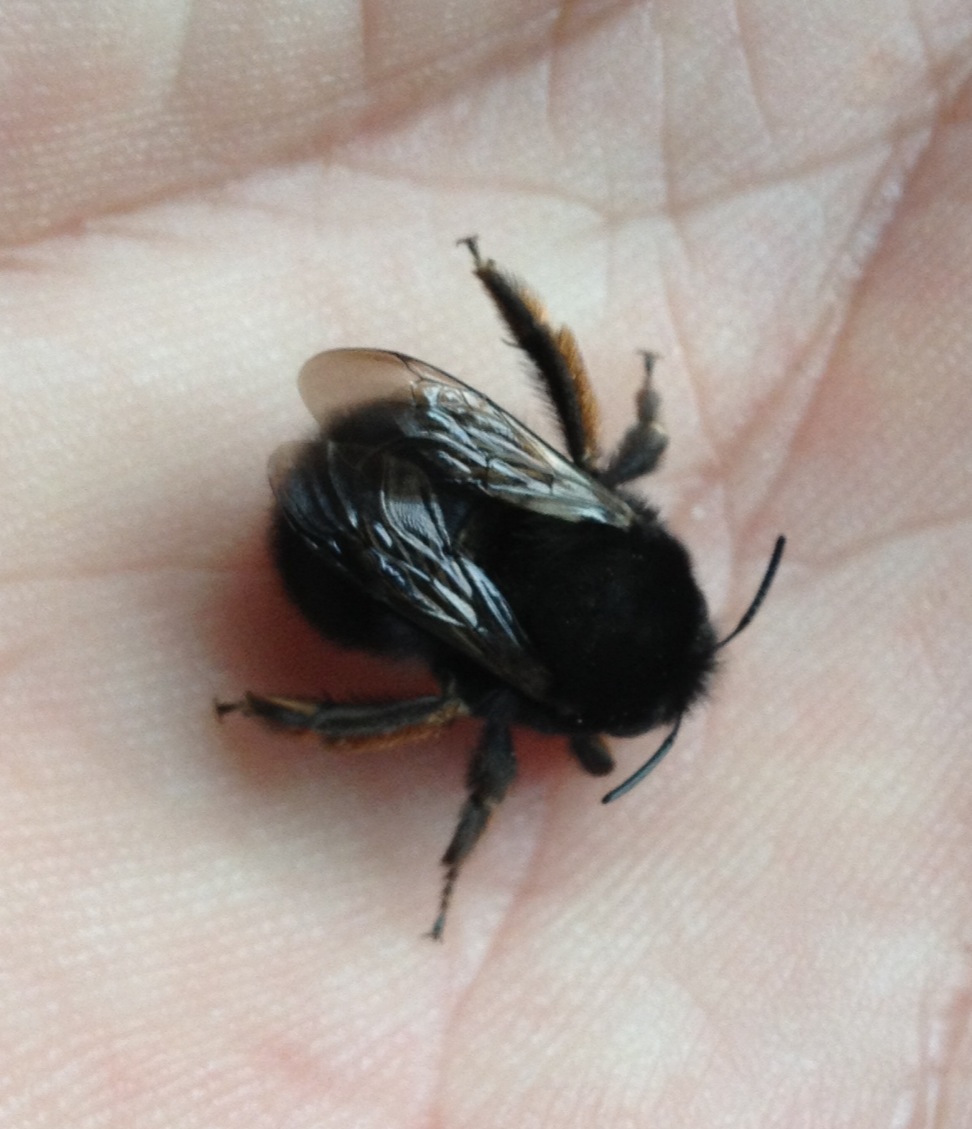
Despite the fur coat, she was having a hard time

Found this female Anthophora plumipes today, stalled on the pavement as a blistering wind whipped up the dusty remains of the frosty snow which fell on Saturday. Even with her thick hairy coat she was barely moving. Nothing is flying out there so I was a bit surprised to see her, presumably trying to forage. The thermometer has been below zero for several days now, and although the ground is no longer white, there is a pale remnant tucked down in the long grass.

The Verrall Supper 2013

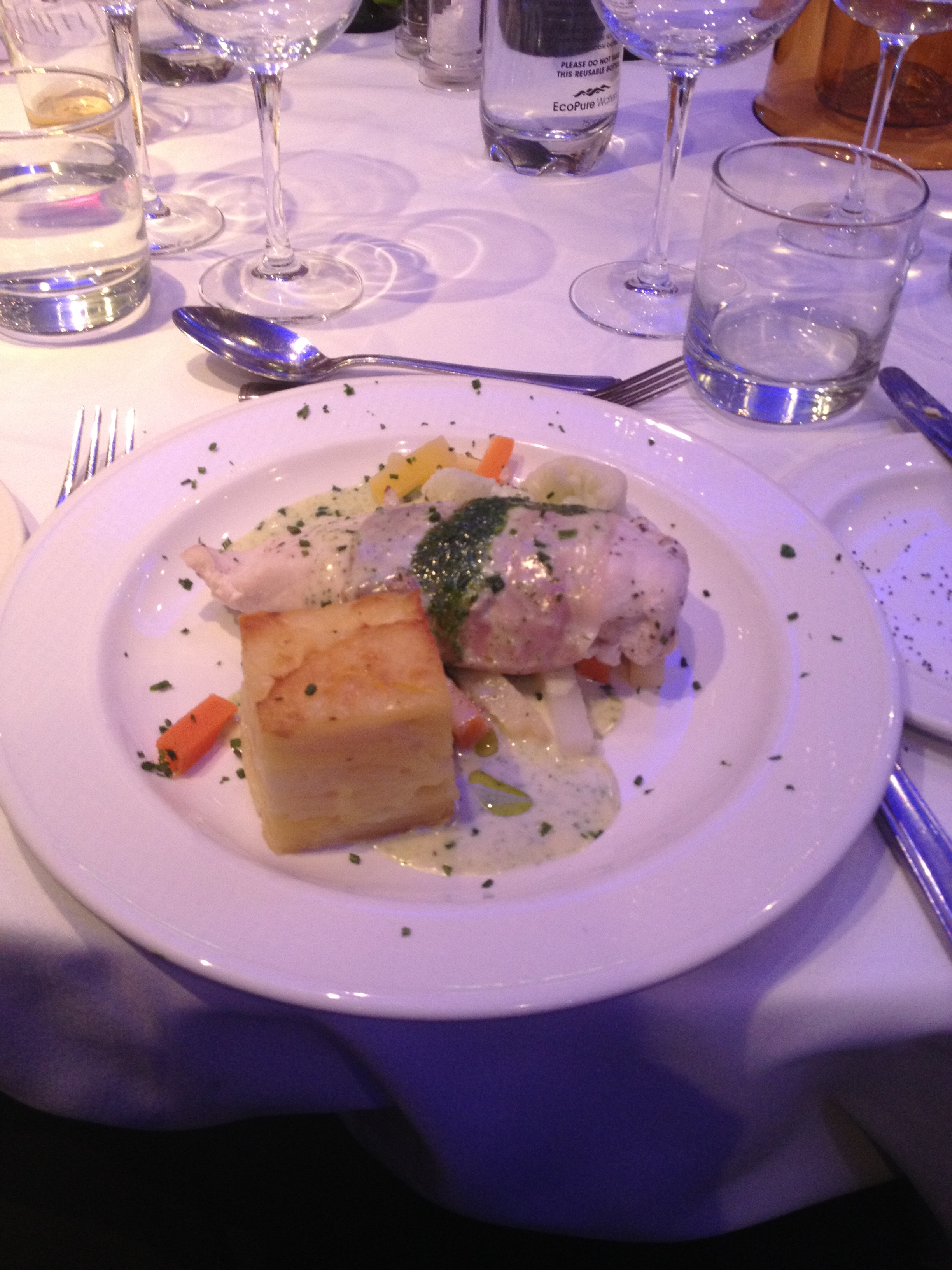
Yesterday was the Verrall Supper. Here it is:

Chicken, veg, and cuboid potatoes.

Chicken, veg, and cuboid potatoes.

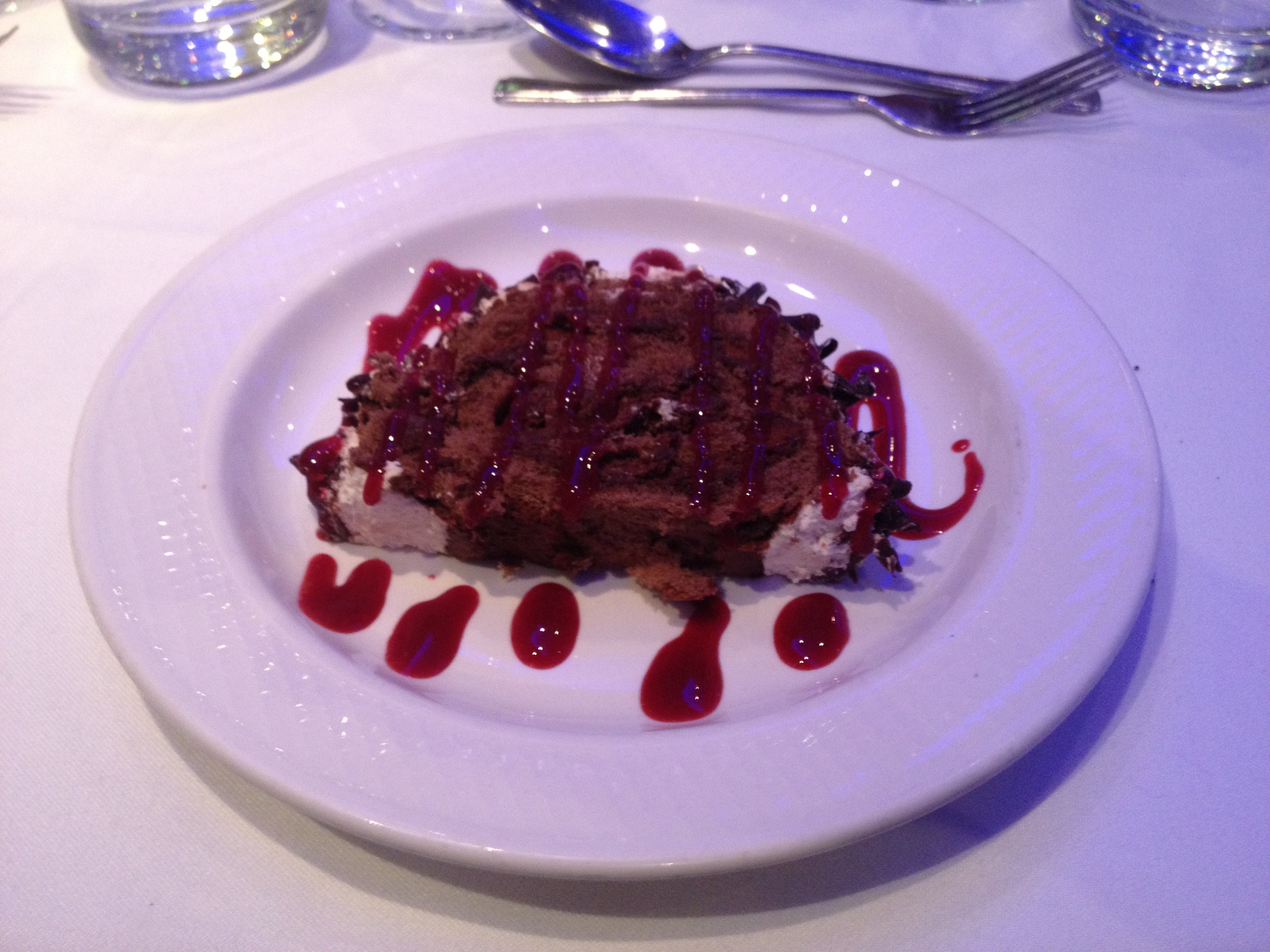
And it was followed by the Verrall Pudding:

Very chocolaty indeed.

Very chocolaty indeed.

In a change from previous Verralls (2012 event here), it marked a move from Imperial College to the Rembrandt Hotel opposite the Victoria and Albert Museum.

All seemed well, despite the sinister novelty of round tables rather than long rows.

See you all again next year.

Rat dissection at Ivydale School Natural History Club gets a mixed reception

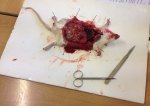
Well, I thought it was a grand idea. I’d just picked up some frozen fluffs for our rescue snake, and whilst I was in the pet shop I also picked up a large frozen white rat, £3.50 — a snip.

And what better than to snip it open at Ivydale School Natural History Club last week? Last year I rolled up with a beef heart to chop open, and after some initial squeamishness everyone wanted to pull it apart to have a look at the valves and the arterial connections.

Mr rat, though, got a rather different reception. OK, it did smell rather bloody, but even so I was slightly surprised at the seeming revulsion of a couple of the 9-year-olds. They were excused observational duties and skulked in a corner muttering, whilst the rest of us dug in.

It was definitely a Mr rat, by the way. The very large testes were spotted from the start.

At pick-up time the school office was abuzz with some of the kids telling their parents what they had just been up to. I’m still half expecting a complaining letter or two, though.

Just to finish, I love this quote, from eccentric Victorian naturalist Frank Buckland, Notes and jottings from animal life, 1882.

I owe a great deal to rats. When a student at St. George’s Hospital I wrote an article on rats, which I sent to a magazine, and to my great amazement the publishers sent me a cheque for it. From that moment I have taken a great liking to my first patrons in literature, viz. ‘Rats,’ and I always somehow connect them in my memory with publishers.

Why do I have a collection of ladybirds?

The thing which, in most people’s eyes, defines me as an entomologist is not my comical antics with a sweep net, my morbid curiosity of animal droppings and carrion, or my excessive enthusiasm for tiny biting specks of obviously malignant animated matter living in their children’s hair — it is the fact that I have an insect collection. In an era of ultra-sleek cameras, optically pure macro-lenses, high-resolution digital images and the wonderfully interactive labyrinth of the internet, a series of stiff dry insect bodies pinned into a small wooden box seems not a little archaic.

If people see the contents of a glass-topped drawer or an open store-box, laid out beside a microscope on my kitchen table, responses to it are varied. At the one end of the curiosity scale (usually voiced by children), there is: “Wow, did you kill all these yourself?” At the other end (usually from their parents, squinting at the tiny specks of nothingness which are chalcidid wasps or seed weevils) is: “Wow, how on Earth do you find these things?” This is a polite interest, but I often get the feeling there is also a hidden suspicion: “He kills the things he claims to love?!”.

There are, of course, the well-rehearsed arguments — the sheer unimaginable numbers of insects hidden all around us, their prodigious fecundity, and the mathematical impossibility of entomologists doing any harm by collecting a few specimens, even a lot of specimens maybe. When I spoke to some novice potential entomologists last year I tried to dumbfound them with a rough calculation I did on the back of a proverbial envelope*: more insects were killed in the building of the 2012 London Olympics, than have been collected and killed by all the entomologists in the world, who have ever lived, ever.

It’s a statistic to get people thinking, at least, but there is still some unease at the idea of a ‘collection’. For what is a collection if not a vainglorious display of prize trophies? It’s here I have to start making the other familiar claims about not being able to identify tiny insects unless a specimen can be minutely examined — often individual bristles on individual legs. My stock statistic is that I reckon on something like 1500 British insects being easily identified from a photograph; but since there are over 25, 000 species here, it means that nearly 95% of UK insects need confirmation under the microscope. This doesn’t even take into account the fact that plenty have various colour forms, males and females differ, and all have very different larvae and nymphs too. Sometimes the distinctions are so fine that a large series of specimens from various localities, found over many years, often have to be compared to identify them firmly.

The trouble is that the physical presence of the ‘collection’, with its neatly aligned rows of carefully mounted insects and painstakingly presented labels and headings, is still very much a hang-over from the past — a past where collecting something for the sake of it, to own it, to savour it, and to display it proudly and overtly, was a perfectly acceptable scientific procedure.

For nearly half a century, though, there has been a formal published code for collecting. It appeared at a time when butterfly collecting began to be viewed with mistrust, (and egg-collecting became the criminal activity of a rogue underclass). Just over 10 years ago I was pleased to be involved with reviewing it, and if I may make so bold, my greatest contribution was to get its title changed to a ‘Code for Collecting Insects’ where previously it had been a code for ‘insect collecting’.

Here is a subtle, but fundamental difference. One, like stamp collecting, or egg collecting, is all about making that private, often secretive, vanity-stoking display to show off magnificent captures. The other emphasizes the workaday need to maintain an ordered and accessible scientific reference collection to aid and support identification, and to advance entomology further. This is why a collection is necessary.

So why do I have a collection of ladybirds? Intuitively, they fall into the group of 1500 UK species which can more or less reliably be identified from a photograph, and surely they can all be firmly named under a hand lens in the field. Except, as any entomologist will agree, things are never quite this easy.

Firstly, there are the ‘other’ ladybirds. These are the remaining 25 small (2.5 mm) to tiny (1 mm) non-brightly-spotted beetles in the family, which include the sometimes notorious genera Scymnus and Nephus, which can fox even the most experienced eye. There are the ridiculous number of confusingly different colour forms and fluctuating spot patterns of several very common species. Occasionally I’ve found something that just looked ‘a bit odd’ in the field; maybe I hoped they would prove to be something new. And I’ve also accumulated dead specimens from traps, which would otherwise simply be discarded.

All these are good enough reasons, but the honest truth is that I have a ladybird collection because sometimes I need a prominent display of obvious and familiar insects that I can show off.

Ladybirds to the left, 'others' to the right.

Ladybirds to the left, ‘others’ to the right.

Although they would do just as well, I don’t have any butterflies, or moths, or dragonflies. A bunch of 8-year-olds might be enthusiastically scandalized by a display of sombre dung beetles, or fascinated by a box of pretty glittering rubytail wasps, but they can’t relate to them in the way that they can to the spotty, domed, brightly coloured beetles they all know so well. Looking at ladybirds, with their strong colour schemes and easy spot-number names, children can get an immediate understanding of such basic concepts as: species, genus, variation and rarity. The display collection (as opposed to the reference collection) still does have a place.

And I admit, I do still collect the occasional ladybird. Is this a bad thing?

……………………………………………………………………………………………………………..

* My calculations went something like this. The Olympic park in East London is 2.5 km2, that’s 2.5 x 10⁶ m2, so with a nominal insect density of 1000/m2 we would get 2.5 x 10⁹ (two and a half billion) insects destroyed. This is roughly forty times the size of the Natural History Museum’s insect holdings (60 million specimens). The museum has the largest collection (by a long way) anywhere in the world, so 40 of them ought to be enough to equate to world-wide entomological activity during, say, the last 200 years. I hope I’ve built enough latitude into the equation: actually insects are often quoted at densities over 10,000/m2, and I did not take into account any of the other Olympic venues around the country.

BENHS Coleoptera Meeting 2013

Today was the British Entomological and Natural History Society‘s 10th annual Coleoptera Meeting, this time held at the Hope Department of Entomology, in Oxford University’s Natural History Museum.

Just before the start, in the lecture theatre.

Just before the start, in the lecture theatre.

The Museum itself was closed, displays are boarded over and exhibits are bubble-wrapped against damage as the leaking glass roof is repaired.

Darren Mann gave some of us a guided show-and-tell tour of the department, including a history of the collections, a selection of Darwin/ Wallace/ Fabrician and other types, and made some choice comments about the poor funding given to the natural history collections of provincial museums.

Thereafter people divided into various laboratory spaces to look through the collections, library or take part in a dung-beetle identification workshop. Much chat and good-natured banter ensued.

This was the first BENHS beetle meeting I’ve been to, others held in the society’s headquarters at Dinton Pastures have always seemed too much of a logistically difficult journey from south-east London. I might have to rethink this.

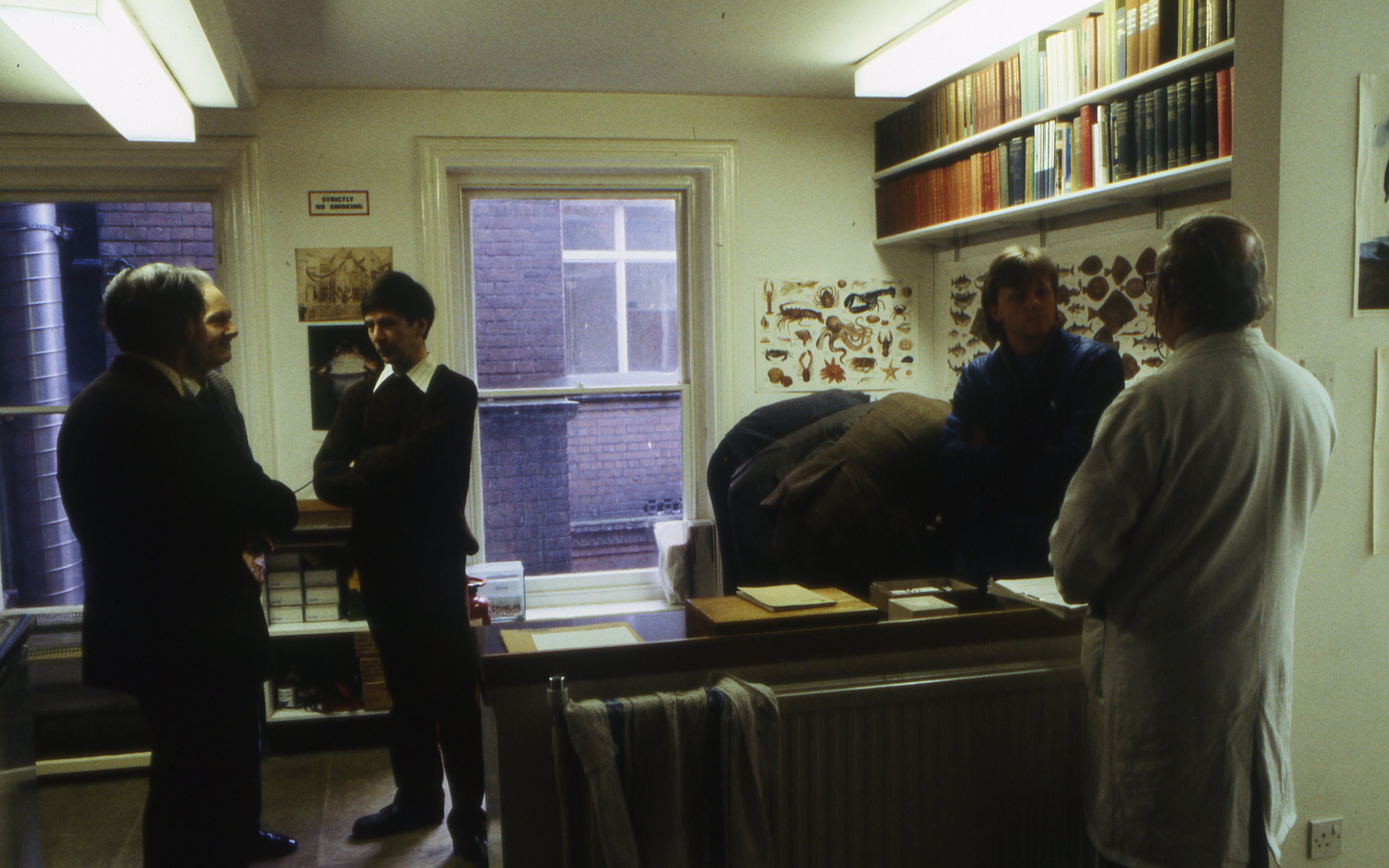
The day also put me in mind of another, similar event, held some time earlier. On 16 March 1985, Eric Philp organized a Coleoptera workshop at Maidstone Museum. Here we are:

Left to right: My father Alfred W. Jones (back towards the camera), A.A. Allen (just peeking out), Peter Hodge (arms crossed), Mark Colville and Eric Philp. Not sure who are the three bods stooping over a display at the back of the room.

Left to right: My father Alfred W. Jones (back towards the camera), A.A. Allen (just peeking out), Peter Hodge (arms crossed), Mark Colvin and Eric Philp. Not sure who are the three bods stooping over a display at the back of the room. Three names that come to mind are John Parry, David Porter and John Owen, but these are all guesses.

Eric died on 8 January and I went along to his funeral last Tuesday, 29 January.  I always knew Eric as a coleopterist, but most others knew him also as an ornithologist, or a botanist. As usual talk centred around reminiscing and someone else commented that Eric always wore his lab coat when working in the museum. It was almost his badge of office. I wonder if Darren has a white coat?