Monthly Archives: November 2012

Memories of a chainman

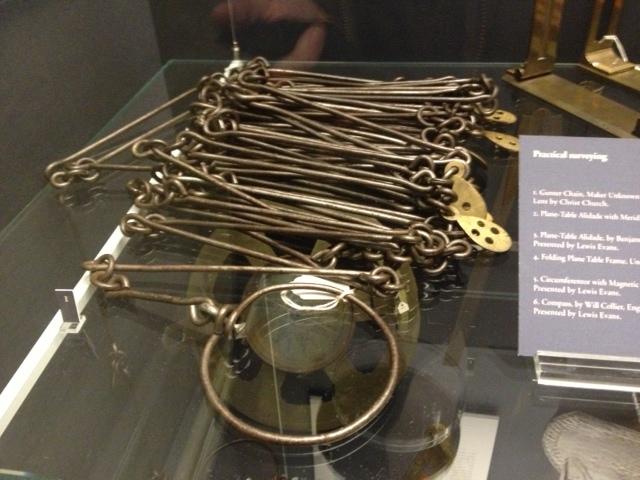
On my recent visit to Oxford, I spent a little time in the Museum of the History of Science, in Broad Street. And amongst all the ancient brass astrolabes, microscopes and alchemical glassware, I was pleased to see a Gunter chain.

My first job after university was working as a chainman on the construction of the Cuilfail Tunnel in Lewes. In an era before steel tape measures, laser-sighting triangulation and GPS, it was the chainman’s job to maintain and haul about the 22 yards of interlinked ironmongery of the Gunter chain. I’d never seen one before, although I had found some pictures in the historical section of one of the surveying basics books lying around in the engineers’ decrepit Portakabin on site.

By the late 1970s a modern chainman’s role involved carting about sighting poles, tripods and levels and setting up theodolites. My biology skills were not needed, but my maths was occasionally put to use in triangulating, or surveying to see if any of the houses above the tunnel had started to subside. They hadn’t.

My lasting memories of the tunnel are the mud, the Portakabin mice, a belligerently fascist South African engineer and the deathwatch beetle which landed on the collar of the site foreman one sunny autumn afternoon.

The best insect on Earth?

Well, this is the Oxford Entomological Society gleefully voting out my suggestion of Wallace’s golden birdwing, Ornithoptera croesus, from their X-Factor “What’s the best insect on Earth” show. Philistines.

I thought I’d done well with my simple premise: Ornithoptera croesus is the most beautiful insect in the world, backed up with that quote from Alfred Russel Wallace; you know the one:

“The beauty and brilliancy of this insect are indescribable, and none but a naturalist can understand the intense excitement I experienced when I at length captured it. On taking it out of my net and opening the glorious wings, my heart began to beat violently, the blood rushed to my head, and I felt much more like fainting than I have done when in apprehension of immediate death. I had a headache the rest of the day, so great was the excitement produced by what will appear to most people a very inadequate cause.”

I also produced the world’s simplest possible Power Point presentation of just one lone slide, and relied on my impassioned rhetoric. But I was defeated.

My competitors were:

Jeremy Thomas, President of the Royal Entomological Society, who proposed the mountain large blue butterfly, Maculinea rebeli, on account of its bizarre and complex life history as a cuckoo parasite in nests of a red ant;

Tim Cockerill, one-time Cambridge Zoologist, and billed on the poster as a ‘flea circus performer’, who espoused the dubious wonder of the human flea, Pulex irritans, and its history as one of the smaller money-making side-shows,

and Jake Snaddon, rainforest ecologist at Oxford’s Biodiversity Institute, who sang the praises of the daringly ocean-going sea-skater, Halobates micans, about which we know, er, virtually nothing actually.

The form of the discussion was to be a balloon debate, where an audience vote dictates which hapless victims are lobbed out of the balloon gondola. I’m afraid to report that birdwing and flea were the first to go. The two remaining finalists, (benefiting perhaps from some hidden Oxford home-ground advantage?) made last-minute pleas before the final vote ejected the sea-skater.

So, there you have it, apparently the best insect in the world is a rather dull blue butterfly with an unlikely and convoluted ecology involving subterranean parasitism and other, less than laudable, grubby behaviours. Harrumph.

But I’m ready for a rematch in 2013, when, rather than something straightforward and elegant, I shall be presenting an obscure nano-beetle with barely understood but obviously bizarre life style. It should be an easy walk-over.
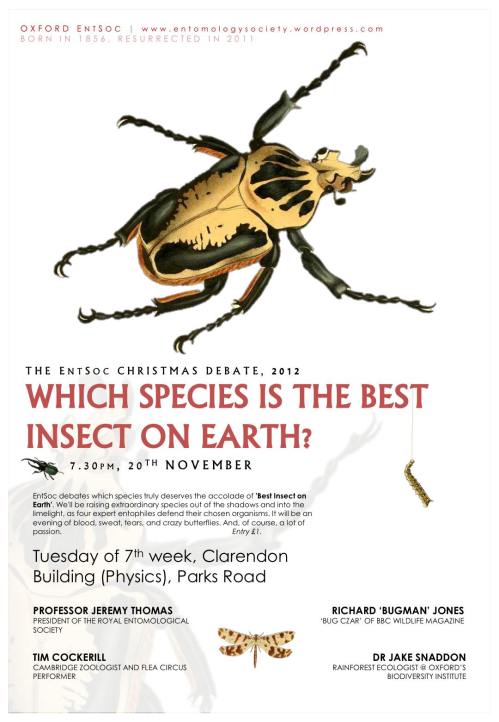
I do quite like the Bug Czar tag, though.

Less is more

At 1.3 millimetres long, Liocyrtusa vittata is less than your average beetle, and tricky to identify even under a microscope, but it’s very scarce.

I’m wondering whether its scarcity has anything to do with its diminutive size. I’m not sure I would have noticed it ‘in the field’ but was able to recognize it as more than a shiny speck of protoplasm when it landed on the old sheet I was using as a backdrop to the mercury vapour moth light I’d lit up on 28 June 2011.

I found a new bug, but it took me 2 years to recognize it

I think it must have been sitting at the edge of my consciousness. I regularly have a clear out of survey specimens. These are the sample voucher specimens collected, but once identified under the microscope, they go off to be used for whatever educational purpose I can throw them to. The last lot went to the Horniman Museum, some might have found their way into the behind-the-scenes reference collections, but most were for use at their hands-on nature base.

Last week, whilst sorting out some insects from past surveys, I noticed the largish shieldbug. It was unnamed. It looked odd. Dredging the depths of memory I vaguely recall thinking it looked a bit unusual when I swept it from the rough brownfield herbage between the railway lines and houses behind Earl’s Court Exhibition Centre in July 2012. At the time I glossed over it as possibly a large pale version of the common hairy shieldbug, Dolycoris baccarum. As usual, I did not have enough time to do anything more than merely set it aside to look at in the dim future. Now, however, pinned beside specimens of Dolycoris, it looked very different.

Imagine, if you will, the sound of assorted gears and cogs grinding, light bulbs pinging on and pennies dropping. Oh! It’s that one.

Rhaphigaster nebulosa, the mottled shieldbug, had been spreading through Europe for the last 20 years when it was first noticed in Rainham Marshes in September 2010. Penny Frith found a breeding colony in Warwick Gardens between Peckham and Camberwell, the following year. What’s really embarrassing is that I went with her to the site to try and find Orientus ishidae, another bug she’d discovered there new to Britain, and she told me all about Rhaphigaster at the time. Her pictures of it are spectacular. I just did not take it in.

I’d better have another trawl through the last few years’ left-overs, to see what else I’ve missed.


What is the collective noun for entomologists?

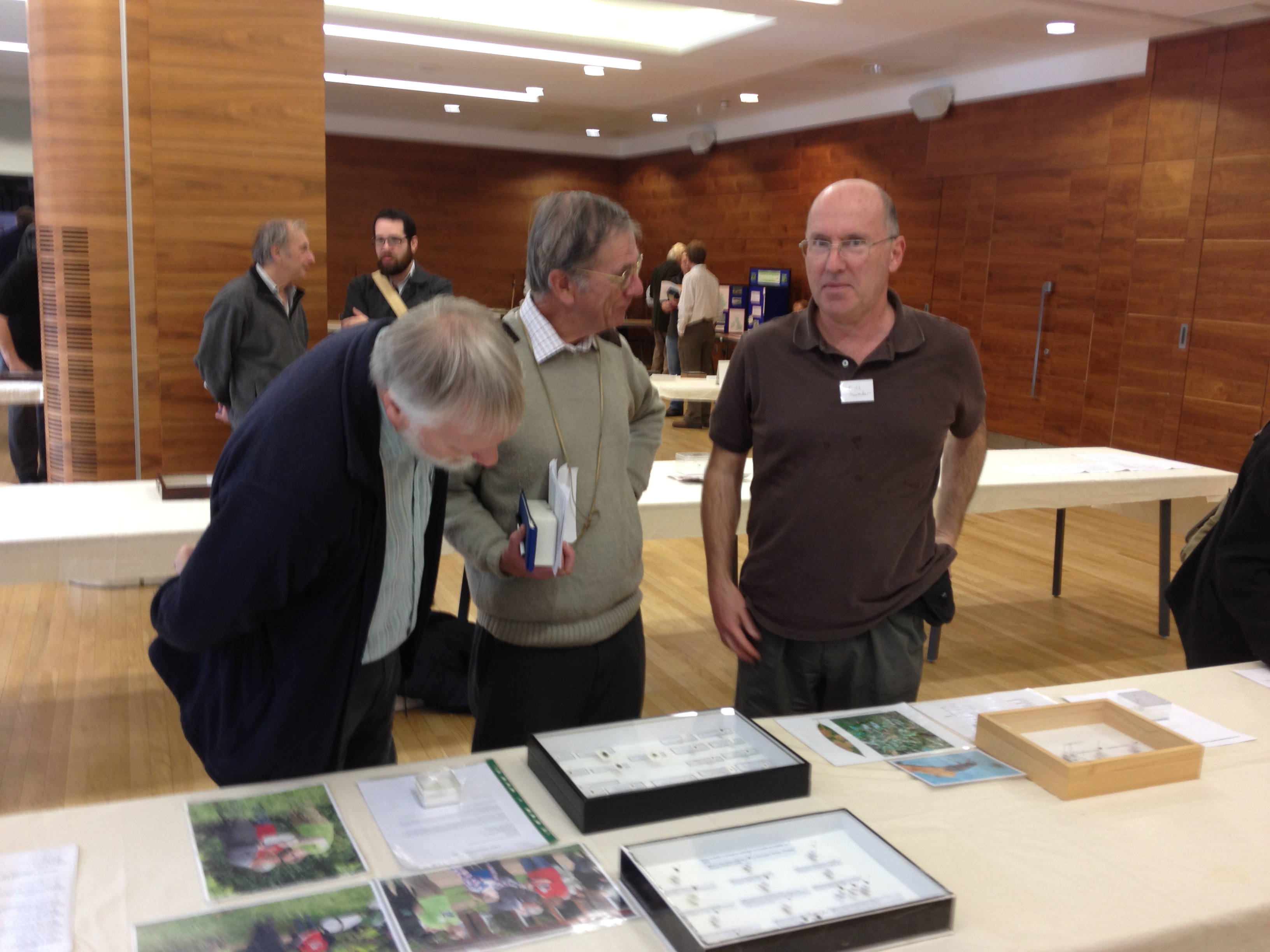
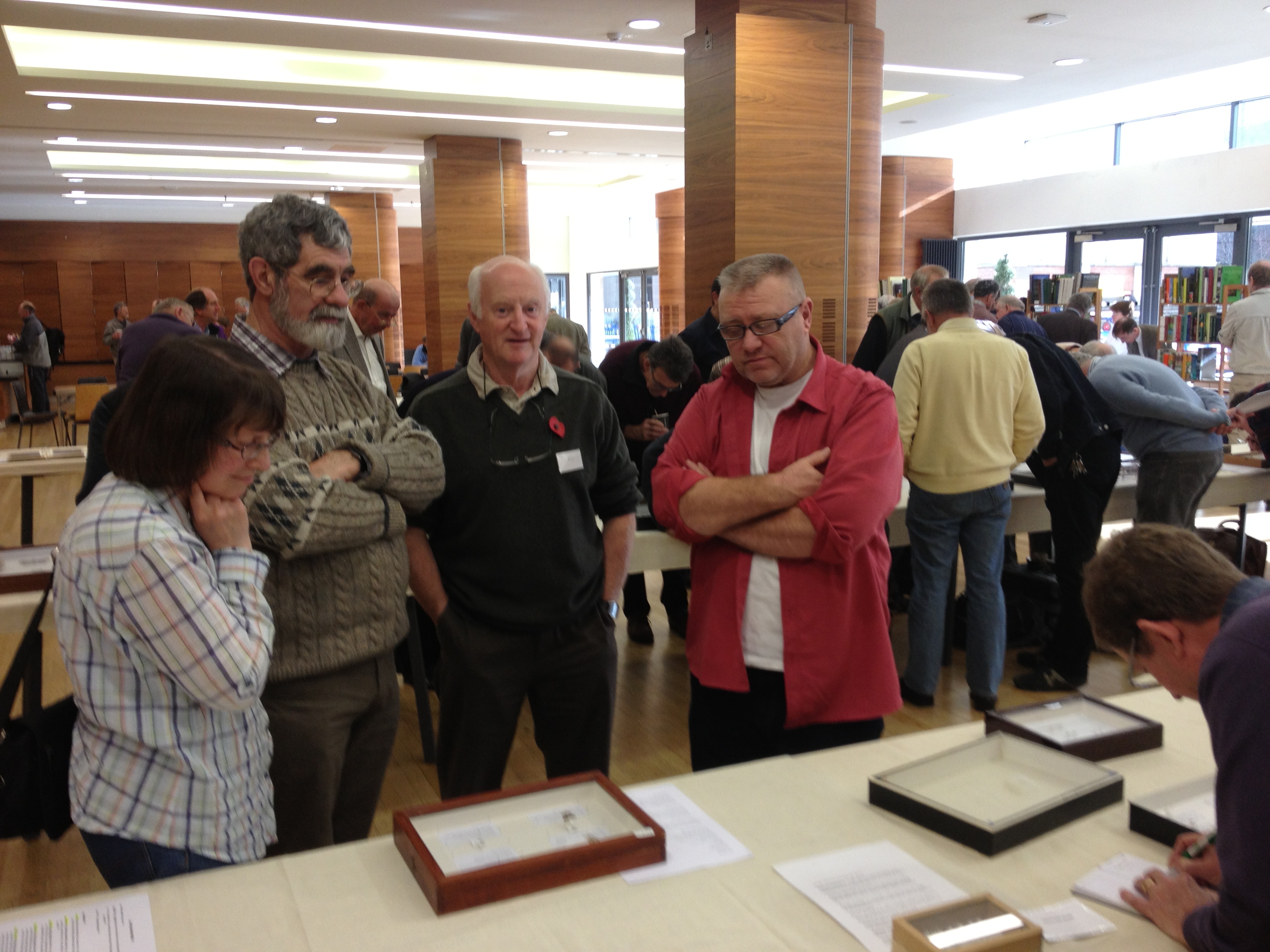
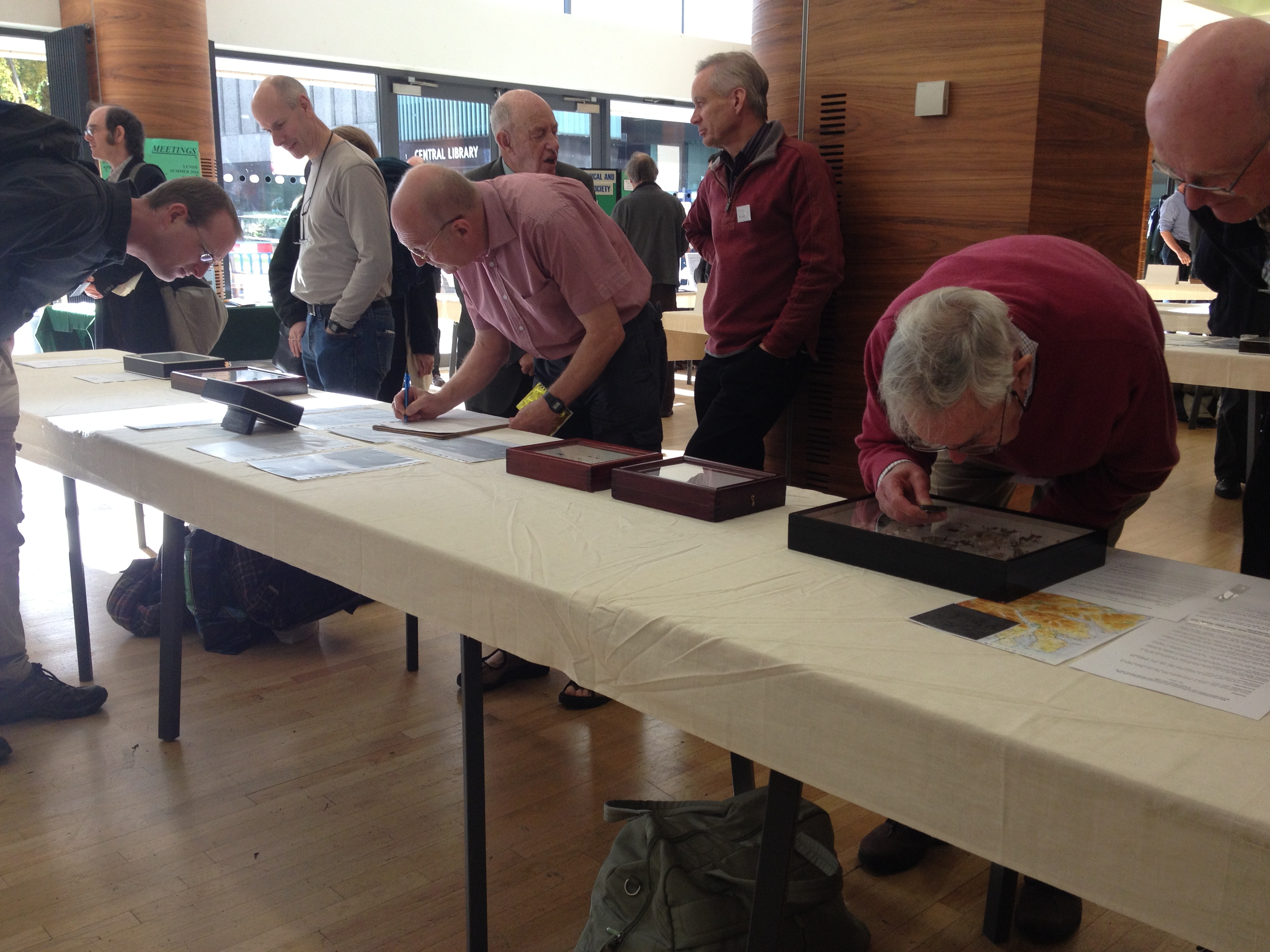
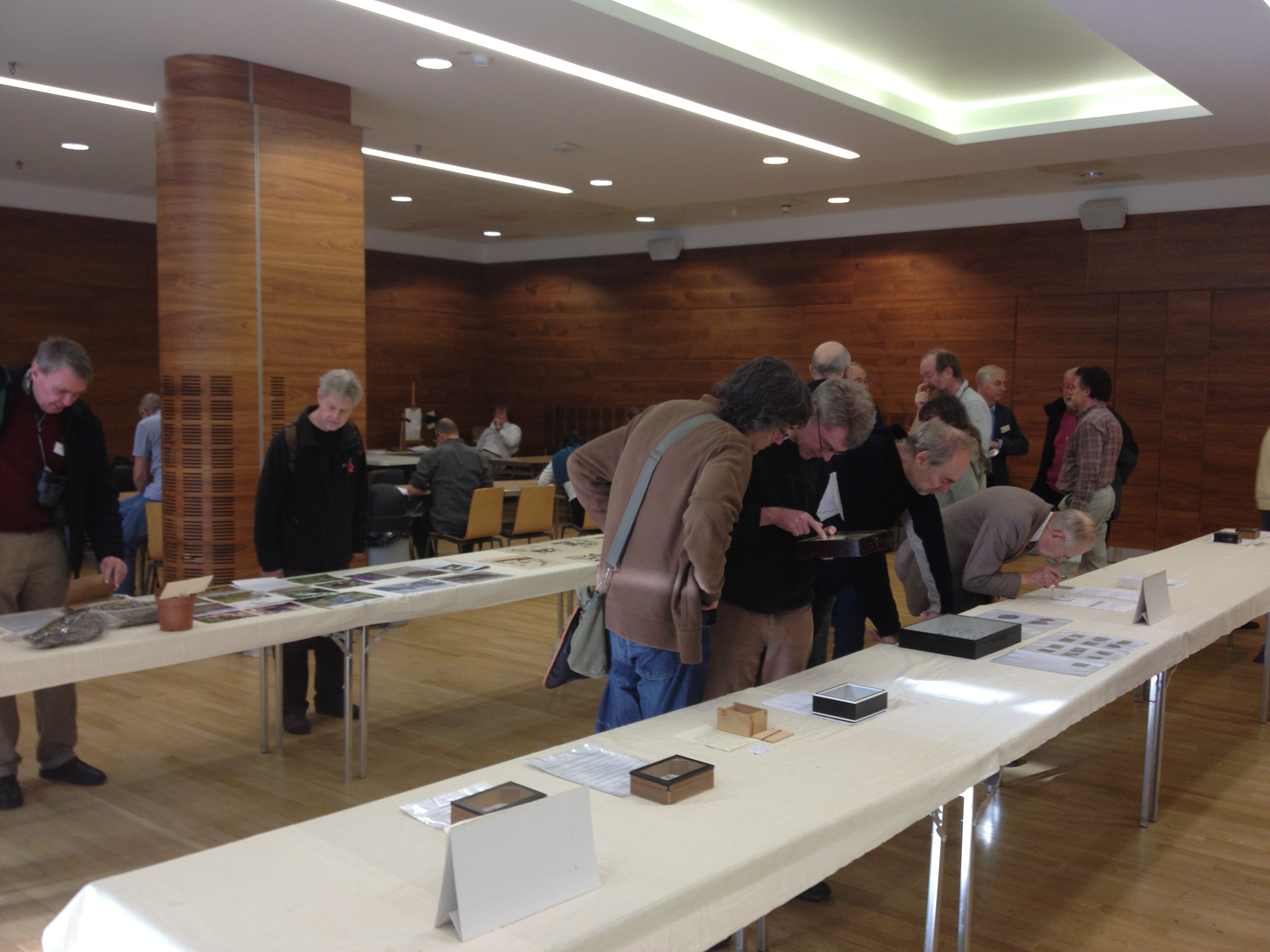
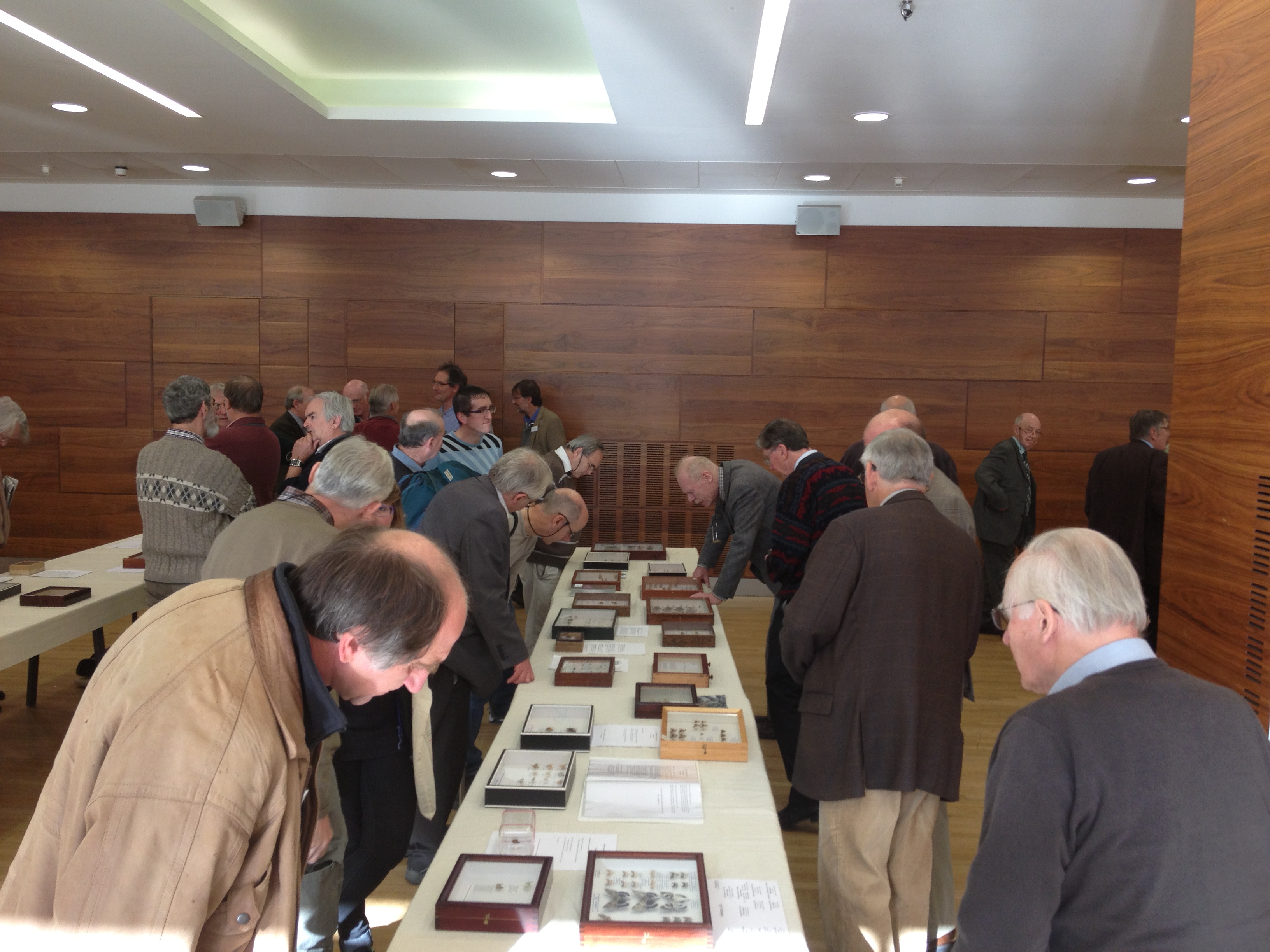
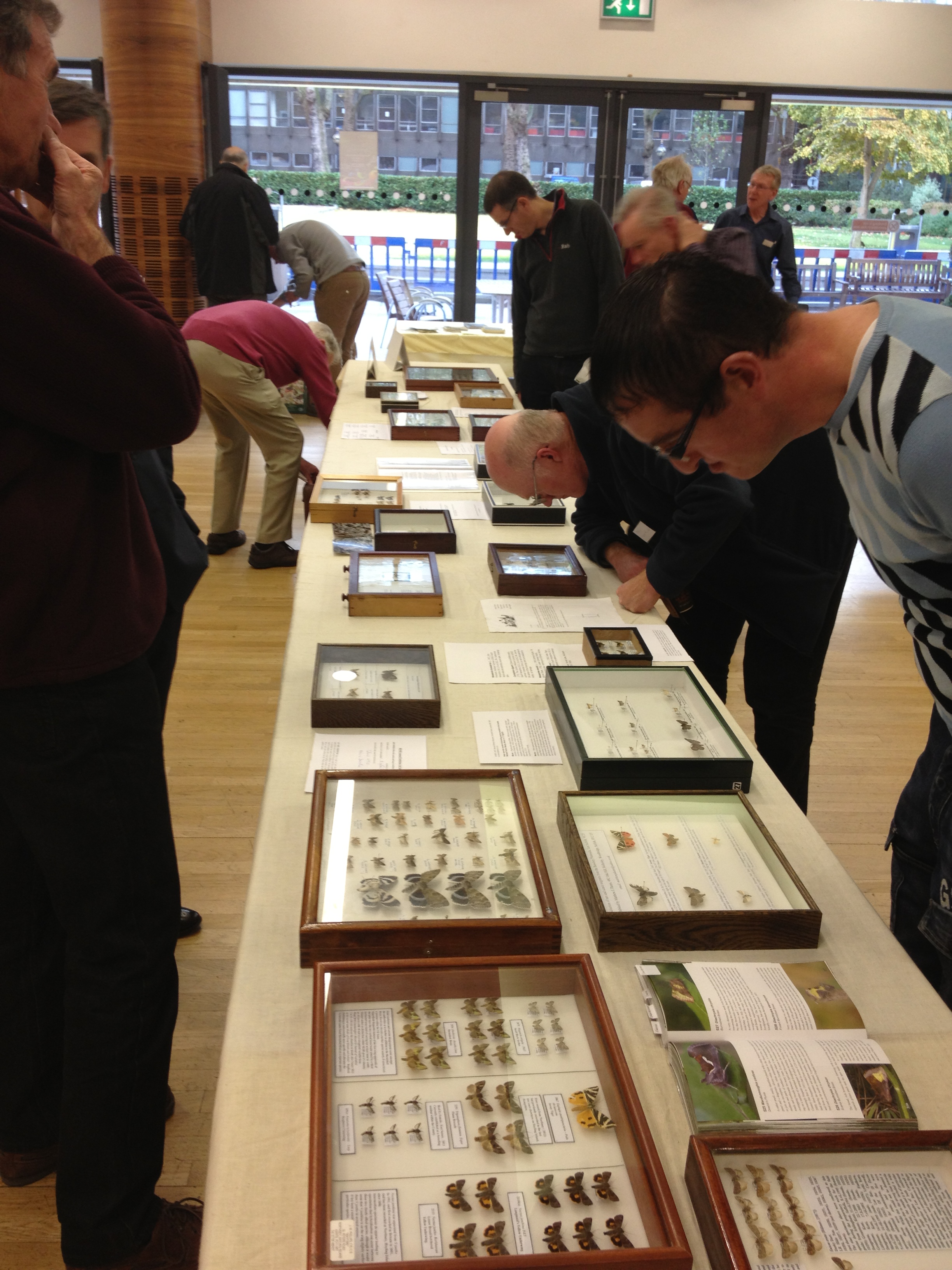
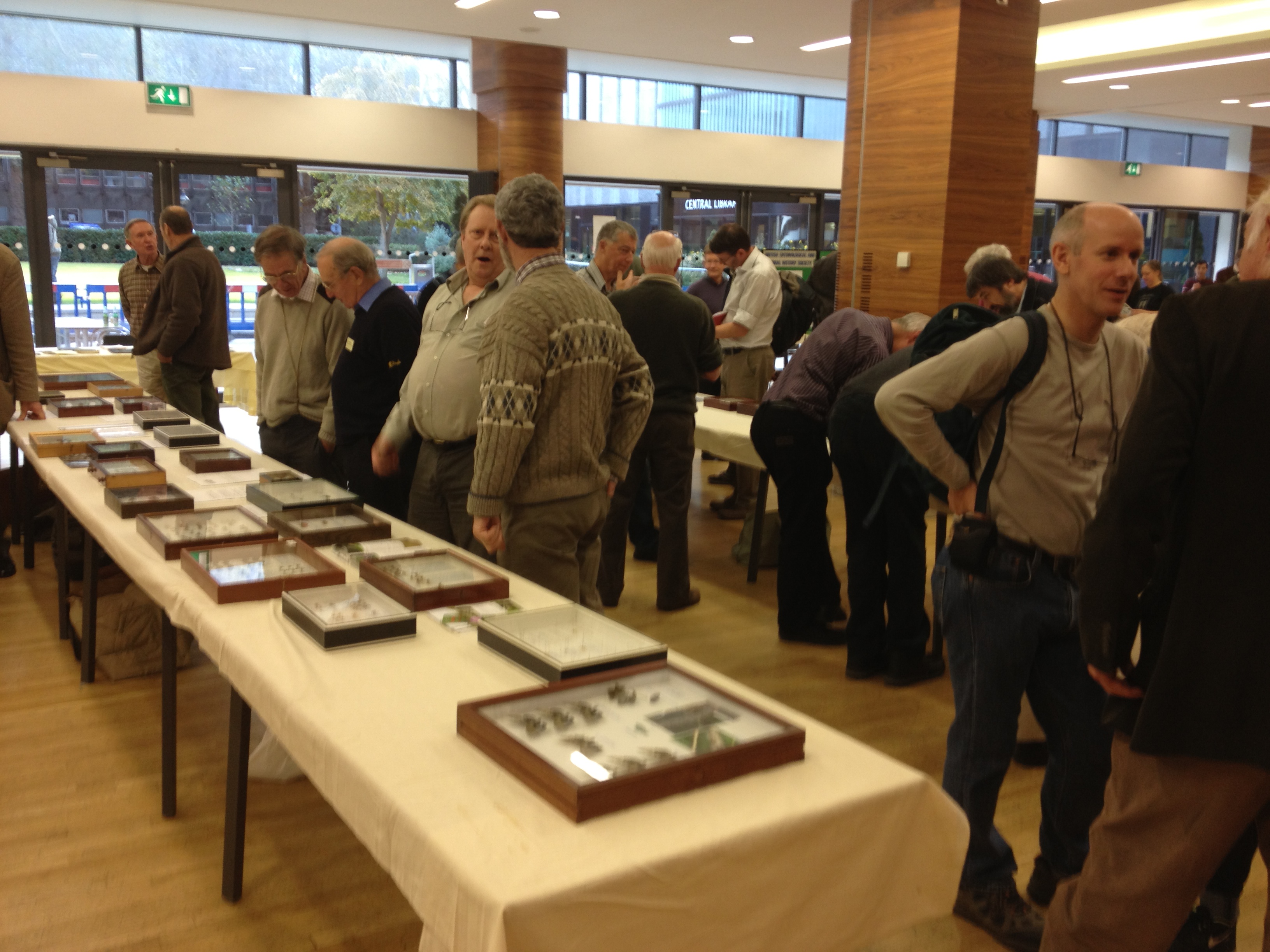
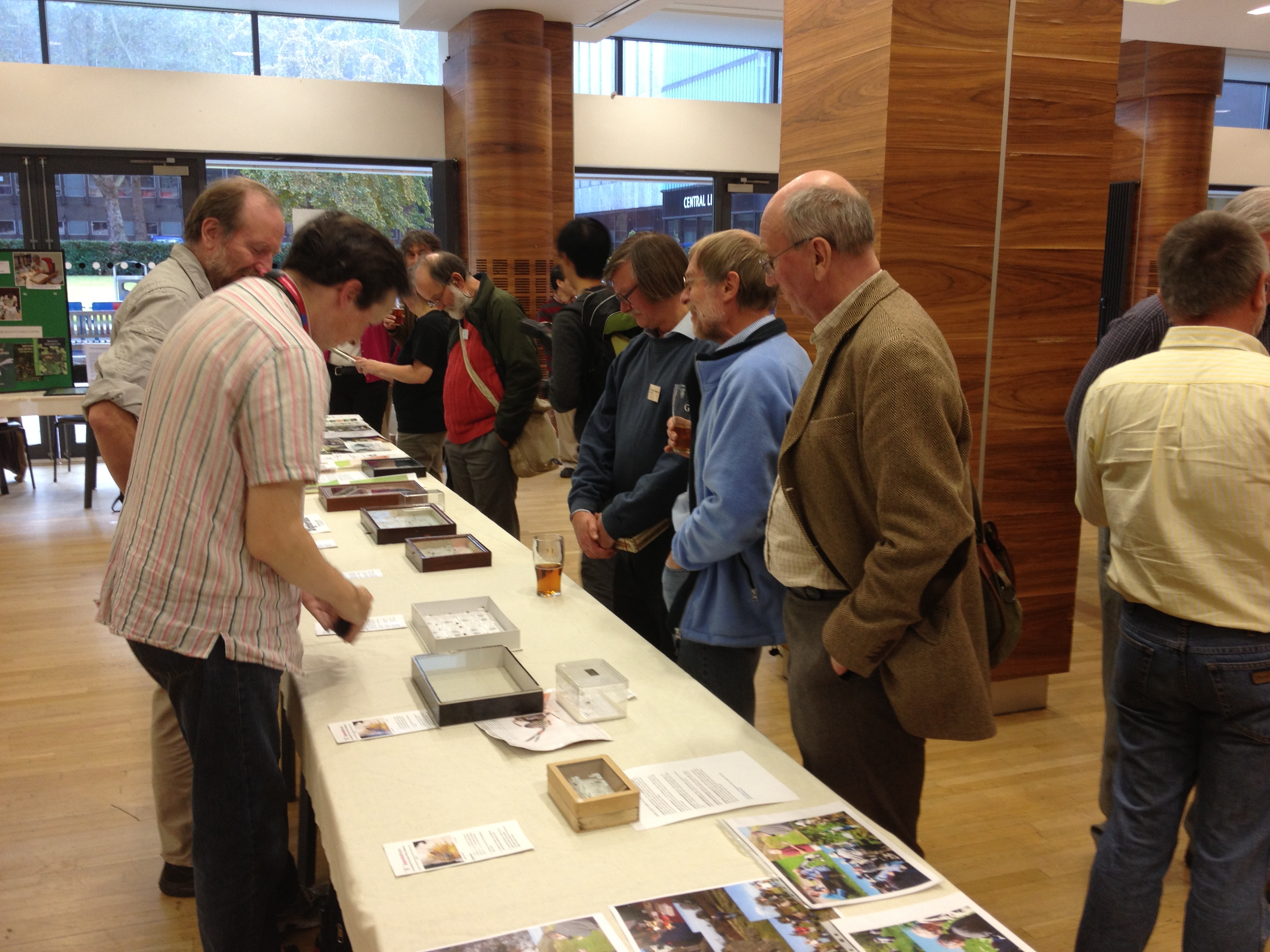
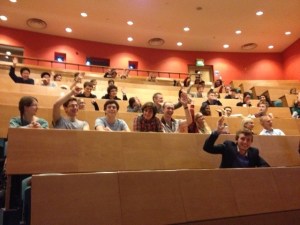
It’s a stoop. Other suggestions included a flutter, and a buzz. When entomologists come together at the annual exhibition of the British Entomological and Natural History Society, at Imperial College, they do two things: they talk incessantly in a strange dialect of copious Latin verbiage and abstruse jargon, and they stoop.

The stooping is done over  glass-topped display boxes showing the latest finds or discoveries. Here is the evidence.

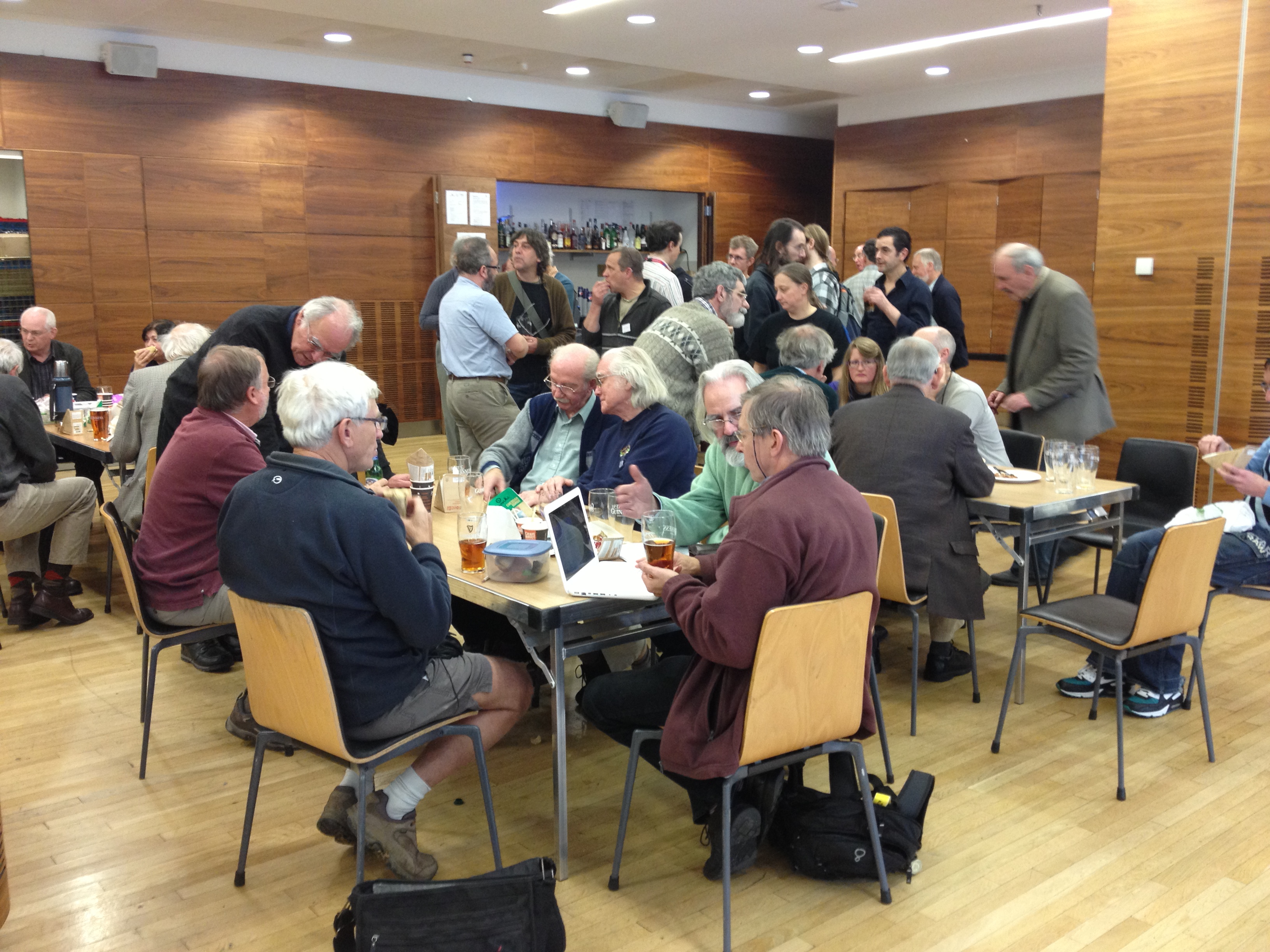
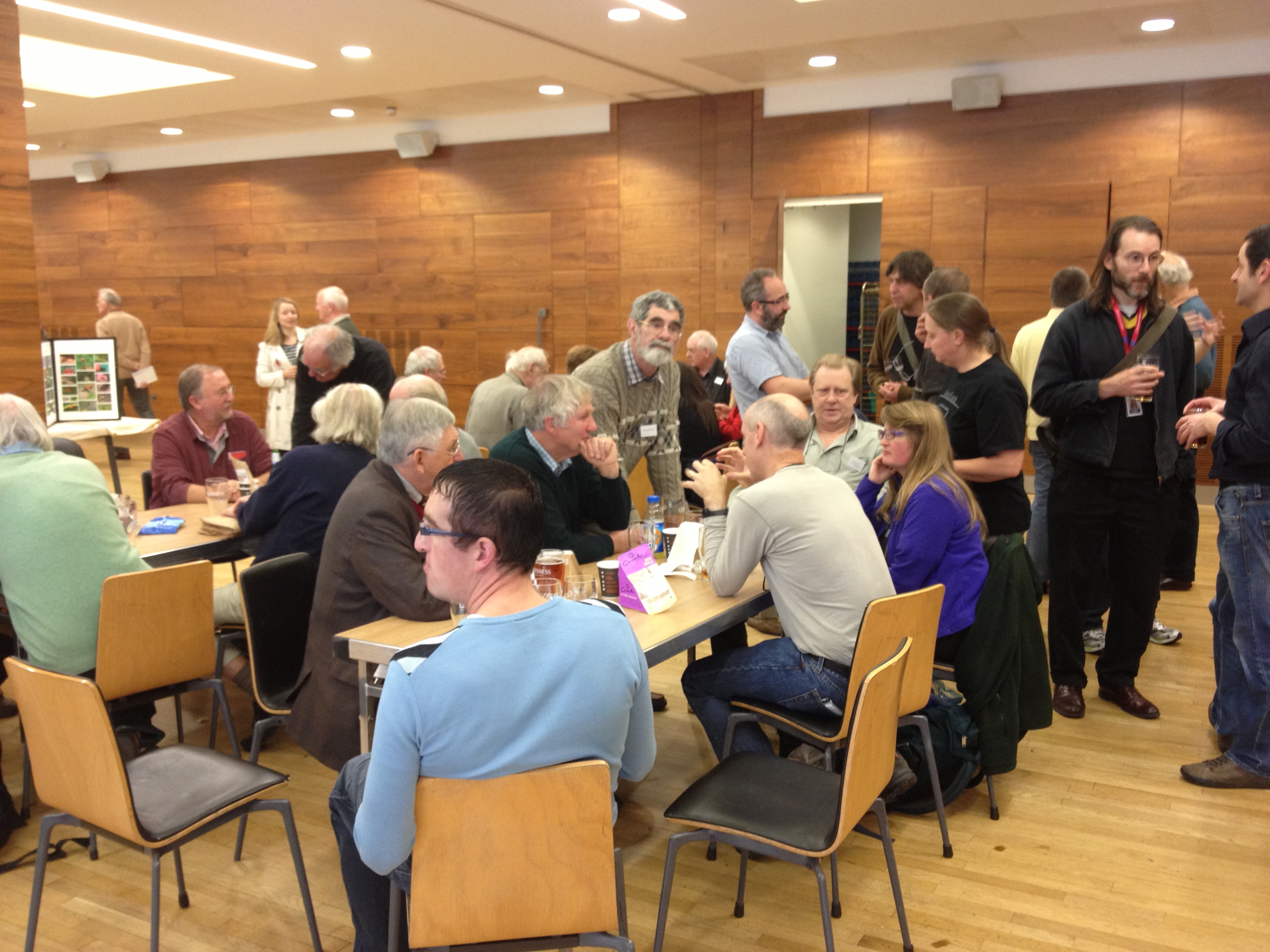
This is one of my favourite meetings of the entomological year. It’s a chance to meet the faces behind the emails and the journal articles, to catch up and exchange the entomological news of the last 12 months, have a bit of a moan about the weather and pick up the latest books and journals.

OK, they do a fair bit of drinking beer too, but it’s the stooping that captures the mood of the day. So, there you have it — a stoop of entomologists.