Category Archives: General Stuff

The woodworm’s revenge

I’m starting a new project, a book on house guests and house pests, a natural history of the animals that invade our homes. I’ve been lucky enough to find plenty of animals in my own homes.

Mealworm beetles flew in through the open windows of the flat in Peckham; sparrows and starlings were nesting in the roof space when we moved into a half derelict house in Nunhead Grove; biscuit beetles floated to the surface in the milk of my breakfast shreddies in Bellwood Road, and here we flap ineffectually at clothes moths and scratch at the occasional cat flea.

I’m pretty relaxed about all of these interlopers. Even pulling back the old kitchen carpet — it was thick, pink, shag pile! — to reveal thousands of larder beetles (three species) and their larvae was more about enthusiastic exploration and focussed eradication than disgusted revulsion.

The only time I ever lost sleep over an animal in the room was on holiday on the Greek island of Lesvos (sometimes Lesbos). Having abandoned our cheap package holiday pension because it was so noisy from other guests, we upped and shipped out to the local fishing village of Molyvos, where we found a room in a guest house in the steep cluttered streets of the old town.

The nights here were silent, perfect, but just beside my ear I could hear an insect chewing in the wood of the small bedside cabinet. It wasn’t loud exactly, more persistently and irritatingly irregular. It was gnawing, and just as the jaws of my unseen persecutor rasped at the wood, so too the jarring scrapes rasped at my not-quite-unconscious mind.

Banging on the wood would shut it up for a short while, but, inevitably, just before I finally drifted off to sleep it would set up again — screek, screek, screek. The offending piece of furniture was a small spindle-legged cupboard, simple, barely ornamented, and probably meant to house a po, or perhaps other night-time accoutrements. But it only had three legs now. The remains of the fourth spindle, a short stump, hanging down like a damaged stalactite, clearly showed that it was riddled with the smooth tunnels of some chewing insect.

From the diameter of the tunnels maybe 5–7 mm, I’m guessing house long-horn, Hylotrupes bajalus, or perhaps golden jewel beetle, Buprestis aurulenta. Hylotrupes is apparently native to the Atlas Mountains of North Africa, but the forests of this area have been cleared long ago in antiquity, and instead it ekes out a living in building timber across much of Europe, South Africa and North America. Buprestis is native to the Pacific coast of North America, but furniture made from infested timber is shipped all over the world; adult beetles can emerge years (or decades) later.

I never saw an adult beetle, and after a couple of interrupted nights I stuck the cupboard out into a corner in the hallway for other guests to trip over. Peace at last. Apart from the American woman getting stuck in the lavatory in the middle of the night, and the dormouse dropping its dropping into my coffee cup, the lasting memory I have of this lovely old guest house is the grinding noise from the bedside table, which kept me awake at night.

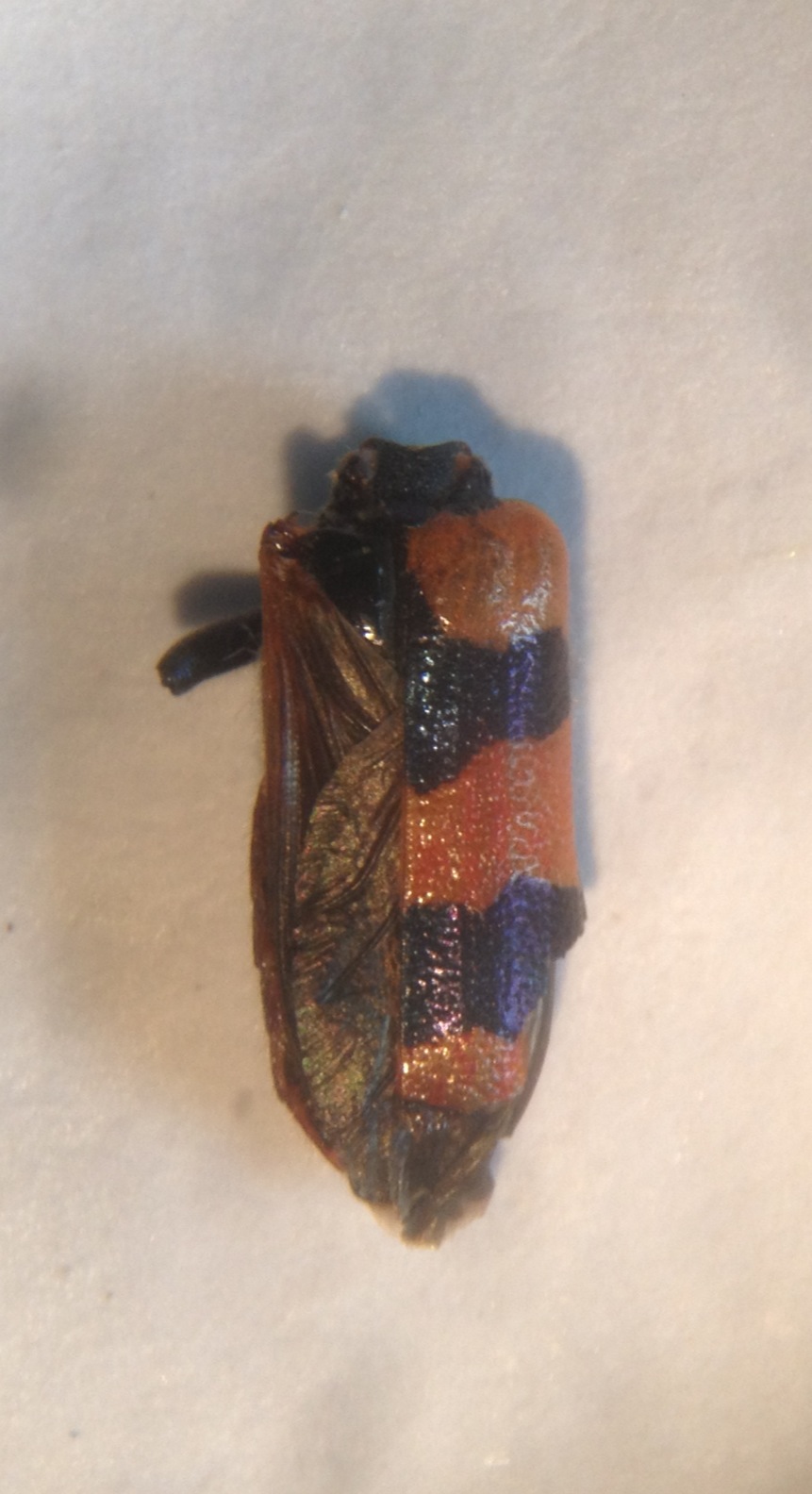
Trichodes apiarius in East Dulwich, well, nearly

The ‘bee’ beetles, Trichodes species, are so named because they breed in the nests of solitary bees and wasps. There are 20 or so species in Europe, but none is recognized as British. Having said this, two very similar-looking banded black and red species are reputed to have been found here; the understanding is, though, that these are either chance importations or strays making landfall after freak weather conditions or accidentally taking a wrong turn at Calais. If they were ever really native here, they are now presumed to be extinct.

So what do I make of this one?

A bit of a beetle, but a distinct bit nevertheless.

I found it dead, very dead indeed, on the floor of my 7-year-old’s bedroom, when we were playing with his Lego on 23 August 2012. I’ve identified it as Trichodes apiarius. This is the one with two blue-black bars across the rich red/orange elytra, and with the apex similarly dark. Here’s a better picture of a live one. It’s distinct from Trichodes alvearius, which has three darks bars, and the tip of the elytra red. Again, from the www.koleopteroligie.de gallery, here’s a photo.

I’m pretty certain this is not a resident East Dulwich species. In fact, I’m convinced we accidentally brought it back last week, from our holiday in the Dordogne. I thought I’d seen a Trichodes flying around in the meadow near the gite, although I never bothered to try and chase after it.

I’m guessing that it was already dead, on the floor of the gite, when we scooped up all the assorted Lego pieces we’d been playing with on holiday. The rug was fussily patterned and I had to get down on hands and knees and peer closely to find all the tiny bits of plastic we had scattered around. In the end, Lego collection was by touch rather than by sight. I can quite easily imagine that the beetle corpse had lain by the bed leg all the time we were there, and we’d never have noticed it.

So, sorry, not really a British record of Trichodes apiarius, but I shall take enormous pleasure in writing the data label: Friern Rd, E. Dulwich/ VC17, 23.viii.2012/ import from Dordogne?/ dead amongst Lego bricks.


Grass-stars, winkies, adenosine triphosphate and the possible childish wonder of Cro-Magnon hunter-gatherers

On Saturday night I stood in the field just outside our Dordogne holiday gite and gazed skywards. I was looking for Perseids, the late July and early August meteor shower, a product of the Earth sweeping through the ghostly interplanetary remains of the Swift-Tuttle comet, which last passed through this neck of the solar system in 1992. Despite a relatively clearish sky, I saw no shooting stars. I did, however, find a grass star — a glow-worm, Lampyris noctiluca.

Bioluminescence is one of nature’s many magical things, and never fails to enthral me. I cupped the beetle in my hands and rushed indoors to show the rest of the family the glow-in-the-dark fairy.

Holding this small beetle and watching its not insignificant greenish glow on my skin I was reminded, yet again, just how miraculous the natural world can seem, even to the initiated, the educated, the experienced scientist.

Elsewhere in the world, glow-worms (and their New World equivalents the fire-flies) are also sources of childish wonder and nowhere more so than in Jamaica, where I’m reliably informed the children call them winkies, because of their bright and regular flashing.

Jamaica is home to one of the largest and brightest of fire-flies, Pyrophorus noctilucus. It’s not in the usual group of glow-worm or fire-fly beetles (family Lampyridae) instead it is a member of the family Elateridae, or click beetles (named for the audible click they make as they suddenly jack-knife to escape the would-be predator), nevertheless, for many years it was claimed to be the largest fire-fly and to produce the brightest light of any insect.

These claims (later verified) had the unexpected consequence that Pyrophorus was particularly sought after, not by the world’s entomologists, but by its nutritionists.

My informant is Dr Joan Stephen, who in 1954 helped set up, in Jamaica, the Tropical Metabolism Research Unit with Professor John Waterlow of the London School of Hygiene and Tropical Medicine. This was a time when the chemical understanding of nutrition (or malnutrition in this case) and metabolism was being unravelled. A field station in an impoverished and under-nourished Commonwealth country was one of many ways to find out how poor living, poor diet and metabolic imbalance could be a leading cause of death, especially in children.

Coincidentally, During the 1930s and 40s biochemists had finally worked out the basis of photosynthesis, as light photons hitting the chlorophyll in green leaves, released electrons through a cascade of reactions that finally promoted adenosine diphosphate (ADP) to the energetically more available adenosine triphosphate (ATP). ATP exists through all living organisms as the molecular currency of energy, energy used in every metabolic reaction, and a keystone to understanding how metabolism, and in its turn, nutrition, works.

In today’s high-tech labs it’s easy to forget that, in the 1950s, assays relied on boiling up substances in test-tubes with various reagents, and often manually checking subtle colour changes against printed colour charts. This was OK for roughly measuring the carbohydrate content of a pain-au-chocolat, or how much alcohol is in a bottle of Guinness, but ATP and ADP are highly reactive molecules that occur in truly minute amounts. An assay to measure their activities required a much higher level of analysis. And it was available thanks to glow-worms.

The cold light given off by these beautiful beetles, without heat, without combustion, is the exact opposite of photosynthesis. During a special chemical conversion, that energy-storing molecule ATP gives up its electron to produce ADP and as the reverse cascade of chemical reactions continues it produces back that photon, to shine out into the night sky to try and attract a fire-fly mate.

In the test-tube, though, that small light output could be accurately measured using recently developed photometry devices which offered an electrical means of measuring, comparing, and giving a fixed numerical value to spectacularly minuscule chemical reactions. The light-producing chemicals of the fire-fly, luciferin and its enzyme converter luciferase, offered a unique and super-sensitive assay for the newly discovered ATP/ADP energy reaction.

And, so it happened, Jamaica was also home to that giant and brightly glowing click beetle, Pyrophorus. This beetle’s light-producing chemicals were now in great demand.
In a low-tech twist, though, these chemicals could not be synthesized, but needed to be harvested from adult beetles, laboriously collected in the Jamaican hillside forests. However, rather than the scientists doing the collecting themselves, Joan Stephen was in charge of marshalling the local children. They collected the winkies and she paid them with pennies, she, of course, being known as “the winky woman with the pennies”.

The glow-worms here in the Dordogne are smaller, humbler and more discreet than Jamaican winkies, but still lovely and mysterious to behold. The Dordogne is at the centre of European ‘cave-man’ art, and, for a moment, I was tempted to imagine some long since vanished hairy, brutish Cro-Magnon man, clothed in rough mammoth-skin cloak and aurochs-leather leggings, bending down on a similar limestone hillside 15,000 years ago, scooping up a glow-worm in his gnarled hands and grunting in soft wonderment at his astonishing find. Sadly, there appear to be no insect-related cave pictures hereabouts, glowing or otherwise.

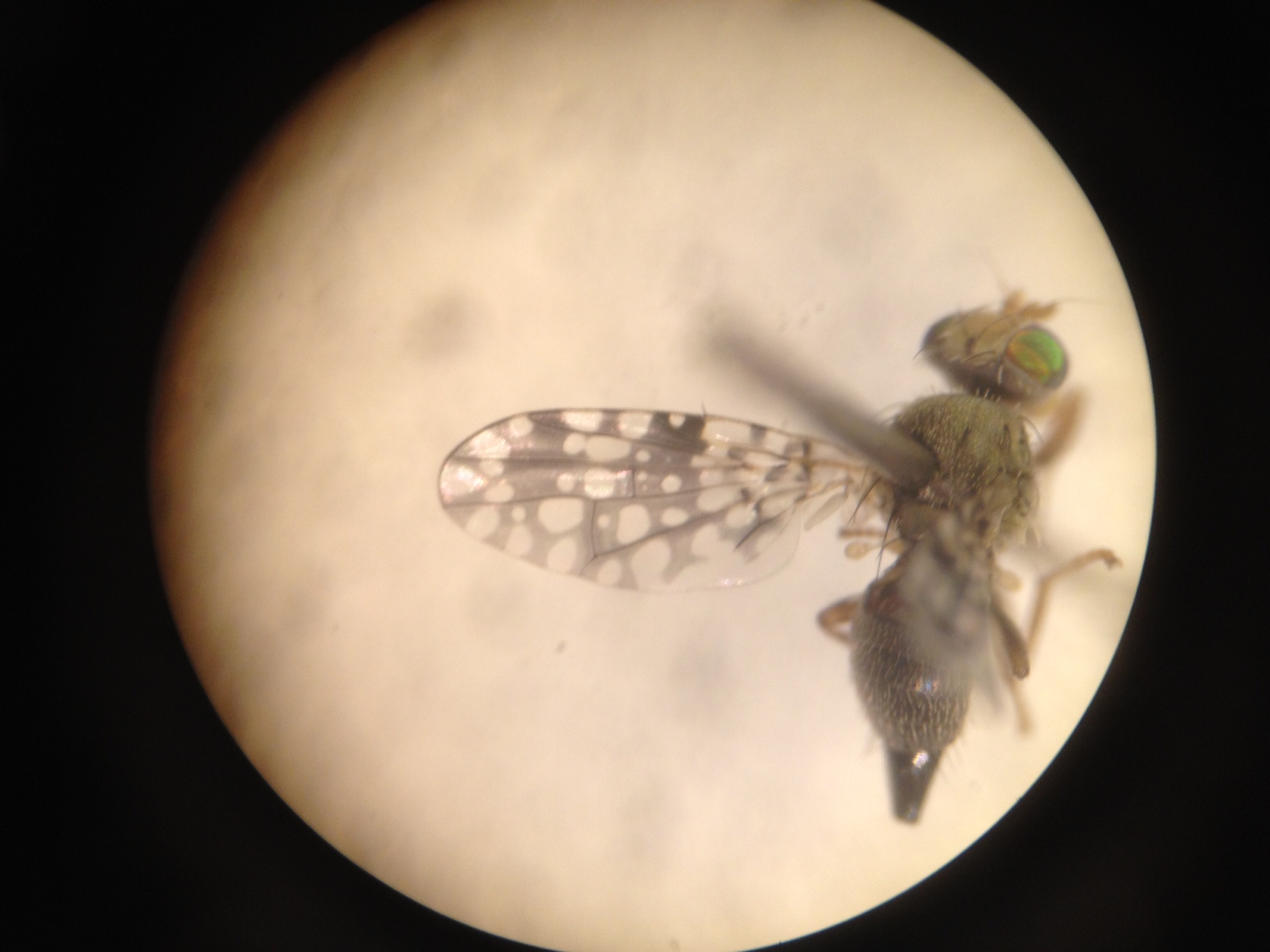
Not a bad photo taken on my phone

This is a photo taken on my phone, down the eye-piece of my old microscope. Not bad quality, I thought. Depth of field doesn’t really become an issue when it comes to photographing a fly wing, and luckily picture-wing flies (family Tephritidae) can be identified almost exclusively from the wing markings.

I found this fly sitting atop a hollyhock flower in my parents’ garden in Newhaven, Sussex. I was actually looking for a weevil, Rhopalapion longirostre, but there’s still no sign of it away from south-east London.

Instead, this appears to be Tephritis praecox, a fly thought to be extinct in Britain, until my father started finding it in a Malaise trap in his garden in 2003. It breeds in the flower heads of garden marigolds, Calendula species, of which there is a multitude around the house. There are a few scattered records elsewhere since, but the majority come from this small suburban plot.

Nice to know the colony is doing so well there.

How to be a curious entomologist — 2

I’ve just come back from the second “curious entomologist” workshop, this one held in the classroom at Devonshire Road Nature Reserve in Honor Oak. For useful links, lists of equipment and suppliers, and further suggestions on how to start making an insect collection go to the first report and scroll down. These workshops are funded by The London Borough of Lewisham’s Rivers and People Project.

*********************************************

How to be a curious entomologist

The title of these seminar workshops came, by way of flattery, from a book by Simon Barnes — How to be a bad birdwatcher. His proposal was that you do not have to be a great expert, or travel the world to exotic places, or own an eye-wateringly expensive pair of binoculars, to enjoy watching birds; you just have to look, and they will be there. He argued that no other group of animals was so amenable to being seen, as birds. Gazing out of the kitchen window of a winter’s morning, you are unlikely to see a mammal (even a grey squirrel) or a reptile, or an amphibian. But you will see birds. They are everywhere, and the fascination got from watching birds can be taken from their everyday behaviour, feeding, singing, flying, perching.

Even more so, insects are always there to be observed. No matter the season, or the weather, insects are so bewilderingly diverse and so mind-numbingly numerous, that you can always find them. And even more so than birds, they are strange beyond belief, bizarre verging on the mythical and, even under a simple hand lens, breath-takingly beautiful.

So why curious? I like this word and have applied it myself often enough. I’ve taken it from a 17th century apothecary and naturalist, James Petiver. Petiver is credited with coining the first English names for many of our butterflies. A few of his original names are still in use today (brimstone, for example), a few have changed, but are still recognizable (golden brown double streak is now brown hairstreak), but one stands out as the most intriguing of the lot.

In a list of newly acquired specimens published between 1702 and 1706 he describes (and later illustrates) Albin’s Hampstead Eye, “where it was caught by this curious person, and is the only one I have yet seen.” Eleazar Albin, like many entomologists today, may have cut a strange figure as he strode across the Heath with his insect net, muttering Latin names under his breath, but Petiver’s use of the word ‘curious’ is not to suggest some odd eccentric, but someone whose study of wildlife is fuelled by curiosity.

For most people, myself included, interest in the natural world is still fuelled by curiosity — the need to look, to discover, to find out things about the animals and plants we see all around us.

Today bird-watching is, perhaps, the most widespread manifestation of that curiosity, but it was not always so. In the past, the study of birds could really only be pursued by those from a wealthy background — the clergy, landed gentry, aristocracy. They had two things well out of the reach of the general public — guns, and the land on which to shoot their quarry. Entomology, on the other hand, was a much more egalitarian interest; insects could be studied by anyone, and often required little more than home-made equipment and a wander on the local common land.

We are very lucky that we have a proud tradition of amateur insect study in Britain. This ‘citizen science’ as it might now be termed, has given us a wealth of knowledge about British insects, their distribution, their ecology, their life histories.

It all started with insect collecting, but has now moved to collecting insects. There is a subtle, but important, difference here. Insect collecting, a bit like stamp collecting, was simply the amassing of pretty specimens for the sake of ‘getting the set’, making aesthetically pleasing displays, or even a competition to get more than other collectors. Many of these large collections, created by wealthy gentlemen, now repose in the natural history museums of the world, and although we might frown at their almost fanatical zeal nowadays, the specimens they accumulated still tell us much of what we know about these insects. Modern scientists and researchers continue to examine insect specimens collected centuries ago, and they continue to add new specimens to these collections.

Collecting insects, taking a few sample specimens for identification purposes, is the only way to study the vast majority of insects around the world. In Britain we have roughly 25,000 species. Of these perhaps 1500 can be easily identified from a photograph. That leaves 94% of British species where a photograph is little help. Added to this are larval or immature stages, different colour variations, sexual differences, local geographical races. Quite often the differences between species are minute — particular arrangements of individual bristles on individual legs, subtle distinctions in body sculpture and ornament, fine differences in the proportions of antennal segments, or barely perceptible variations in body shape. Even experts who specialize in particular small groups of insects are often pushed to identify specimens unless they can be examined under a microscope.

The reasons for collecting insects may have changed, but the techniques used are still the same as a century or two ago. Books written during the explosion of Victorian empire-expansion on how to collect and preserve everything from dried seeds to whale skeletons are remarkably similar to manuals still issued today. Thankfully, collecting and preserving insects is a relatively easy process. Insects, covered in a tough exoskeleton (hard armour-like shell) made of chitin, keep for many hundreds of years by the simple action of drying them, either on a pin, or glued to a card.

During these workshops we will be practising some straightforward techniques

— Finding insects

— Collecting insects

— Killing insect specimens

— Pinning, setting, mounting and carding specimens

— Labelling specimens

The specimens collected will form the basis for a resident collection at the centre, to be added to piecemeal as and when local workers find time or inclination. It does not matter if they remain unseen for years, or decades. Eventually a time will come when a local entomologist will look through them, and extract some of the records.

There may be marvels or mysteries hidden. The lone specimen of Albin’s Hampstead Eye, Hipparchia hampstedensis, the butterfly that Pettiver had seen only one of, and which had been parroted through 200 years of British butterfly books, was rediscovered in the Natural History Museum at the end of the 19th century. It turned out to be a specimen of the meadow argus, Junonia villida, a common enough butterfly, but only in Australia, New Zealand, Papua New Guinea, Samoa and a few Pacific islands. It would have been impossible for a live specimen to get to Hampstead, even brought back in foreign cargo; these were the days of sail and its native haunts were half a year’s journey away. The curious Albin had somehow mixed up his specimens. But at least his ‘Eye’ specimen was still there to be examined.

Making a collection of insects is not a trivial act or vainglorious pursuit, it is a practical and perfectly acceptable way of keeping records of insects, records that can be examined and re-examined again and again. Having the specimen, to look at under a microscope, is still the only way to correctly and certainly identify most insects.

The empty hoverfly?

Was Linnaeus having some sort of joke when he named this elegant and handsome hoverfly Volucella inanis? The ‘inane’ hoverfly? The ’empty’ hoverfly?

Perhaps we’ll never know. It is, though, one of the more striking and unusual insects I regularly find in the garden; along with the, if it is possible, even more striking and significantly larger Volucella zonaria.

Both are massive orange and black hornet mimics, both breed in wasp nests, the fat grubs eating the wasp brood in the paper combs, and both are relatively restricted in the UK.

It used to be that zonaria was the rarest. In Verrall’s 1901 monograph on hoverflies only a couple of presumed stragglers were known in Britain, but since a spate of sightings in the 1940s it has become firmly established here and is still spreading through England from Kent to Bristol. On the other hand inanis has always been a London fly and remains almost unknown outside the metropolis’s suburbs.

We get both in the garden, and although zonaria is the one that gets comments from the family because of its imposing size and soft low buzz, inanis, the empty hoverfly, is the one that fills me with delight.

It was only the first Jersey tiger of the year, the beetles were much more interesting

There was a time when I would have been thrilled to find such a spectacular, colourful and rare moth fluttering around the mercury vapour light. But I’ve grown blasé about the Jersey tiger, Euplagia quadripunctaria. Ever since it was first discovered in Lewisham, in 2005, it has appeared increasingly regularly all over south-east London. There are more of them here than in Jersey now.

Wednesday’s moth was the version with orange hind wings.

It is a pretty insect, and both hind-wing colourways were there, yellow on Tuesday, orange-red on Wednesday. The cats were pretty interested too, and I had to keep shooing them away with a broom. We had a few other moths too, the least carpet (Idaea rusticata) is apparently quite local in southern England, the dun-bar (Cosmia trapezina) is very common, and the old lady (Mormo maura) is big and black and irresistible to cats.

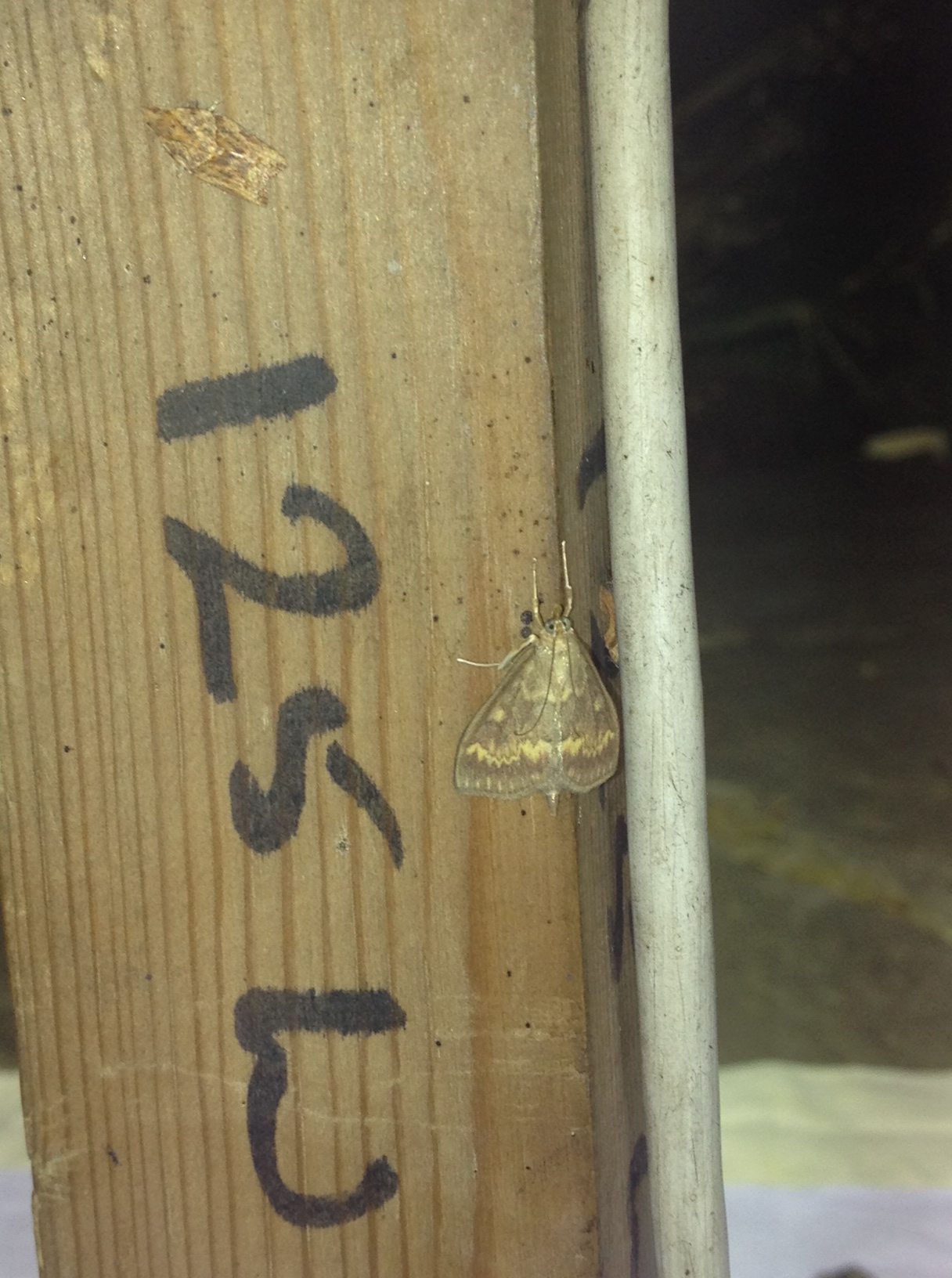
The European corn borer, Ostrinia nubilalis was new to me too.

It is never the moths, though, for which I put out a mercury vapour light. The flies and caddises came first, then a swathe of water-boatmen, one of the smaller Corixa species. Amara bifrons is an attractive little ground beetle, and not all that common. The lesser earwig (Labia minor) is much less common than a century ago, something to do with the lack of horse-drawn vehicles in the metropolis and horse-dropped manure in the streets.

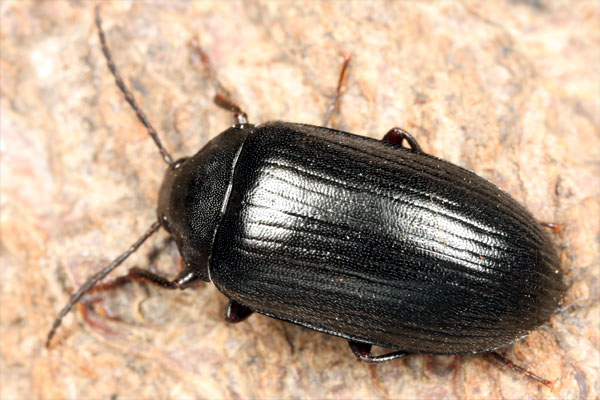
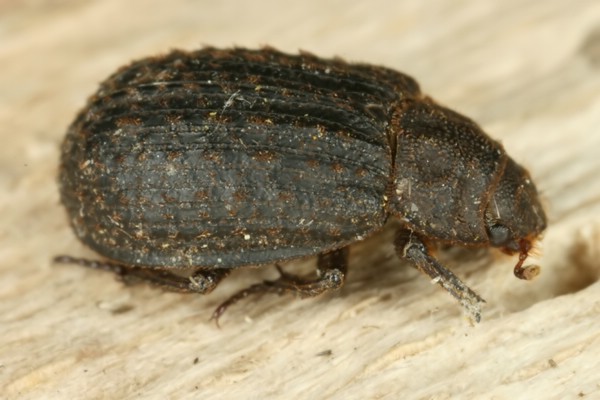
But the most interesting insects were two beetles. Prionychus ater is a handsome black tenebrionid beetle, nationally scarce, and associated with ancient woodland, where it breeds in fungoid wood. There is lots of old woodland in Dulwich, and I’ve also seen this beetle in Dulwich Park. Trox scaber is a short squat chafer that breeds in carrion and seems especially attached to owl nests in hollow trees. All the old books describe it as common, but it is certainly scarce nowadays, though probably still widespread. It seems unlikely that there are many owl nests around here and the suggestion seems to be that it is breeding in compost heaps where unwary householders are prone to dump roast chicken carcasses and bones from the Sunday lunch leg of lamb. We were guilty of this too, I’m afraid, until the rat-eviction clear-out.

Oh, by the way, don’t search on Google for images of Labia minor, it comes up with some very disturbing pictures of another sort of labia.

And still, the stag beetles keep coming

I have a firm memory of my first stag beetle. I must have been about 5. We were on a family holiday to Littlehampton and one day were walking around Swanbourne Lake in nearby Arundel Park. A man had waded into a swathe of long grass to recover a football, but was crying out in panic (he may actually have been waving his arms about in the air) — a large male stag beetle was clinging to his jeans, just below the hips. My father strode in, gently picked up the beetle and held it out in the palm of his hand for all to see.

*****************************************

It’s been a particularly good year for stag beetles so far. In East Dulwich, in 2012, we have been positively awash with them.

Yay, the first stag beetle of the year, 30 May 2012.

Since the first on 30 May, we’ve had a continuous procession of them. The females started to appear on June 10. They seem more reluctant to fly than the males, and are more likely to be found scuttling across the patio. Females are reported to be more often found squashed than males. Someone suggested that although the males, with their distinctive antlers, are recognizable to a non-specialist general public as stag beetles, the small-jawed females are perhaps mistaken for cockroaches and deliberately targeted by crushing feet. There may be something in this, but it may also be because females walk to their egg-laying sites, whilst males fly to their prospective mates.

OK, I posed them on the wooden sleeper edge of the pond, but they were all together in the grass when I found them.

There were four together on the grass near the pond on 19 June. Three males had homed in on a female. What’s the collective noun for stag beetles? A joust? A prong? A pincer movement?

Then, this one today 21 July.

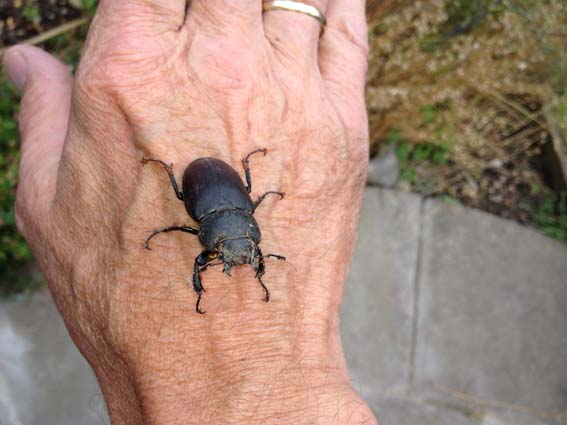
And still they keep shuffling past. This one was at the end of the garden earlier this evening, crawling by the shed. It was covered in mites, mostly on its legs. I’ve an idea that female stag beetles are far longer-lived than the males. I’m guessing that, if this is the case, it is maybe because the females remain mostly hidden, in the leaf litter, laying eggs and staying out of the way; the males on the other hand are more active, and constantly on the look out for mates, so are more likely to suffer injury or death.


Pernicious weeds

Am I missing something? This is Nunhead station in south-east London. Down the left, where old buildings along the platform have been demolished, there is a thicket of buddleja (buddleia if you like). Down the right, along the trackside, is a sea of Japanese knotweed.

The one is lauded as a valuable and important nectar source for bees and butterflies. The other is derided as a noxious invasive weed. Neither, in my opinion, has any part to play in nature, wildlife, or biodiversity.

The buddleja on Nunhead Station was being visited by one queen bee. One. This is the truth about buddleja. It is a waste of space, an invasive thug of a plant, a crowding shading useless shrub with virtually no value to wildlife.

Gone are the ox-eyes and St-John’s-worts, the hawkbits and wormwood and all the other lovely brownfield flowers that ARE so important. Buddleja, boo I say.

This is a pretty one

I still call it Strangalia quadrifasciata although I rather suspect it’s been shunted through several different genera over the last 30 years. I still regard it as a scarce species, much more restricted than the common ‘wasp’ longhorn, S. maculata which turns up in gardens, on roadsides and in woodland rides all over the place.

There are lots of them out today, on Addington Hills, near Croydon. This open space marks just about the eastern end of the Surrey heaths.

Also today, my first marbled white of the year, which ever of the native cockroaches, Ectobius species, occurs on acid grassland and Noeeta pupilata, a pretty and pretty scarce picture-wing fly.

Not bad for about the only day this month, so far, with no rain.