Monthly Archives: October 2013

Top snail

On 17 September 1967 the Jones family set off on a walk over the South Downs between Denton and South Heighton, in East Sussex. We’d moved to Newhaven a couple of years before, and such was the novelty of countryside (we’d lived in South Norwood, near Croydon previously) that we would still all go on family outings together — nature-watching, picnicking and mud-gathering. Even though I was only 9 I remember it vividly. My father was showing me some of the ‘sheep’ snails in the  grass growing at the side of the footpath.

These are small snail species, prettily marked with bands of black or brown, varying from stout globes to tight spires. Sheep snails are so named because, as the tale goes, they are so numerous in the downland turf that sheep can’t help but eat them inadvertently, and this gives a special flavour to Sussex mutton. It’s a nice tale, but who knows?

My mum bent down and picked up one from a grass stem and my dad’s face rose with astonishment. She had found the top snail, Helicella elegans, one of Britain’s rarest molluscs.

Helicella elegans, aptly named for its elegant conical form.

Helicella elegans, aptly named for its elegant conical form and delicately precise markings.

A cursory search showed that there were thousands of them along the bank of the deeply cut, and obviously ancient, trackway across the downs. And as the day progressed, it soon transpired that this was going to be the largest colony of the snail anywhere in Britain (actually there are only two other UK sites known). There were loads of them, extending for several hundreds of metres along the banks of the various byways hereabouts.

Over the next few months, whenever walks took us this way, we’d always stop and have a look for them, and over time we found the snail along several kilometres of pathway, the banks of which were remnant rough flowery grassland remaining where much of the gentler slopes of the downs had been ploughed for arable crops.

I can’t remember the last time I picked one up there, probably in the early 1980s when this photo was taken.

So what a delight to be walking out across these same tracks yesterday, now with my family in tow, and ‘Grandad’ as he is now telling the same sheep snail anecdotes. “What’s this one” says Lillian, plucking a small snail off a grass stem.

It can only be one thing.

Still as dainty as ever, but now Trochoidea elegans.

Still as dainty as ever, but now Trochoidea elegans.

A spider with hairy legs — you couldn’t make it up

You could not make it up. As Britain descends into arachnohysteria, schools are closed, bitten limbs swell to pus-filled bloat, carpets become dangerous minefields, and tabloid journalists up and down the country rub their hands with unbridled glee.

Have a look at this item, from the Bromley News Shopper:

Spider with hairy legs.

Spider with hairy legs.

Here are some highlights:

…spider with “hairy legs” that has been found in a Blackfen alleyway.

Mr Michael says he was routinely checking his garden for false widows when he spotted the orange monster on the wall.

The 37-year-old said: “It is unbelievable – I have never seen anything like it and I can’t find anything like it on the internet.”

“I have had the bloke next door who has been on the computer since 10am this morning looking for details”

“The closest thing we have come across is the potato spider. It says online that it is highly venomous.”

Potato spider? It’s worthy of the The Daily Mash, except…

The number of fatalities is currently hovering near the zero mark.

The number of fatalities is currently hovering near the zero mark.

The Mash’s supposedly satirical offering is completely level-headed. Thank goodness someone’s giving out sensible information.

Now I’m feeling smug

There is nothing better than receiving a glowing book review (unless it’s receiving a nice royalty cheque), so these words on Mosquito brought a great gladness to my heart. Now I feel smug.

Mosquito — review from Bulletin of the History of Medicine.

“…cheery British wit…”

Wildlife Photographer of the Year — an open letter

Yesterday (Tuesday 15 October 2013) was the annual Wildlife Photographer of the Year Awards Ceremony. It was held, as usual, at the Natural History Museum, in the fantastic setting of the main hall, with Diplodocus skeleton backdrop and high-end catering.

It’s always great fun to chat to people I know at BBC Wildlife Magazine, meet some of the world’s best photographers and generally hobnob with wildlife and media bods. As ever the photographs were stunning, but…..

I have a gripe. And I have a question.

From nearly 43,000 entries submitted by the photographers of 96 countries, none of the final 100 showed an insect. Not one. Zero. Nought. Nada. How can this be?

There are several possibilities.

Perhaps insect photographers are not very good. Maybe insects just don’t photograph well. Or is it that insect photographers are shy retiring types that shun competitions. I don’t believe any of this. Through the mastery of delicate optics and subtle light, the care and understanding of macro photographers reveals insects (and other invertebrates) as stunning and beautiful creatures; sometimes they can also be bizarre or unnerving, but insect pictures can still have great power and awe-inspiring impact beyond the measure of the subject’s diminutive size. Could it be that the judges are biased?

I have a suggestion to the competition’s organizers, the photographers, and especially the judges — have a care that you are not edging yourselves away from the wildlife you proclaim to support.

Flagship species, megafuna, icons, are all very well, but there seems to be an inward spiralling, a tightening, a contraction of the competition’s scope as each year passes. In my eyes, the competition is no longer about photographing wildlife, it is about photographing the types of wildlife that are likely to win prizes.

Should the competition by renamed?

The Cuddly-Wildlife Photographer of the Year

The Familiar Wildlife Photographer of the Year

The Wildlife (but not bugs please) Photographer of the Year

Or should new categories be added?

Nature at its most disturbing and alien

Creeping and crawling nature

Tiny things made big and a bit scary by magnification

I know this is me being facetious, and I apologise, but this is a complaint I have made before.

Invertebrates, it seems, have been edged out from the competition; whether this is through acquiescence or complicity, I do not know. Even the potential category ‘Behaviour: cold-blooded animals’ appears to have no place for insects, since by ‘cold-blooded’ the judges actually mean reptiles and fish.

The final clincher, the prejudicial insult added to the injury of exclusion, comes from the fact that an invertebrate does, actually, feature prominently in one of the photographs. A giant spider hangs threateningly in the corner of the frame, as the main subject of the image, a soft, sleek, beguiling bird, hangs with an almost melancholy expression, exhausted and helpless in the clinging silk fibres of the ensnaring web. The only invertebrate on show is there simply to add stereotypical menace to the composition.

I sometimes have a playful dig at BBC Wildlife Magazine because there are never insects on the cover. I do, however, accept that this single image displayed on a newsstand will make or break over-the-counter sales. There are plenty of insects inside though.

At the awards ceremony, much was made of the passion of the photographers, their dedication to stalking, waiting, understanding their subjects, and wanting to promote conservation and awareness of the vanishing wildlife of a planet under threat. The judges, too, are advocating these laudable intents, but I believe they are failing to address the wildlife of the competition’s title.

Insects are the most bewilderingly diverse and mind-numbingly numerous creatures on the planet. They occur everywhere from seashore to mountain top. They dominate the centre of virtually every ecological web imaginable. In fact, from an ecological point of view, it is arguable whether any of the iconic megafauna presented at the competition actually matters at all. Insects control the Earth. Insects ARE the wildlife of the Earth.

I challenge the judges of this most prestigious photography competition, to recognize this, and to reflect it in their choices in the future.

The greatest bug show on Earth?

Even the man in the Peckham Rye station ticket office knew it. I was buying tickets for me and the 8-year-old to go to Kempton Park. “Off to the races?” he asks. “We’re actually going to a bug show.” I tell him. “It’s today is it?” says he “I don’t go any more” Calvin points out the large spider tattoo on the man’s arm. “I’ve got 20 tarantulas at home,” he continues, “I don’t need any more”.

The Amateur Entomologist’s Society has been holding an annual ‘exhibition’ since 1939. It’s now less of a demonstration of entomological science (although there are a few exhibits) but it has become a huge trade fair.

I have a clear memory of first going with my dad; the show was in the assembly hall of a school near Victoria, it was in the mid 1960s and I must have been 6 or 7. I was mesmerized by the trays of exotic insects for sale and came away with a small cardboard box in which were pinned three or four large, brightly coloured exotic butterflies.

Today, my focus is on buying books and equipment, and chatting to people I haven’t seen since last year. There are large numbers of live-stock sellers nowadays — tarantulas, stick insects, cockroaches and millipedes are popular pet items it seems. But there are still many glass-topped drawers full of large butterflies, moths, beetles and other insects, pinned ready for purchase.

I’m rather ambivalent about this practice. Part of me shuns the idea that these beautiful and fascinating creatures have been debased to become commercial commodities; these specimens no longer have any scientific significance, most come without names, or data, or any indication of where or how they were collected. ‘Serious’ entomologists have struggled to throw off the notion that they are all grasping collectors, fueled only by the greed of ownership and the desire to possess prized display trophies. The overt display of buying and selling great showy insects at Kempton does nothing to dispel this impression.

However, trade is regulated, and there are legal rules about scarce or protected species. There are good arguments about promoting and financing local wildlife conservation by sustainable harvest. And there is still a lot to be said about the educational superiority of being able to pick up and touch a real insect specimen, pinned, dead or otherwise, rather than simply seeing a pretty picture on the telly or the interweb.

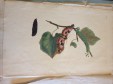
Today I came away with a 1911 monograph on tsetse flies published by the British Museum (Natural History), and full of early 20th century earnest solemnity. And my bargain of the day was a broken odd volume of Donovan’s famous 1801 Natural History of British Insects; twenty exquisite hand-coloured plates, a snip at £22. The 8-year-old came away with a crystal-filled geode and a large shiny rhinoceros beetle. I can say nothing against his choices.

It’s the size of a full-stop, must be interesting

I rather blithely tell that I usually ignore large showy insects like butterflies, moths, grasshoppers and dragonflies. They’re all very pretty, yes, but on the whole they’re mainly common and widespread species — I feign indifference to them.

But when a tiny speck of nothingness the size of a full-stop lands on my magazine in the garden and skitters down the page like a deranged apostrophe, I simply must scoop it up and see what it is.

Sericoderus lateralis, female (they're all females).

Sericoderus lateralis, female (they’re all females).

Here it is. Not a brilliant picture I know, but the best I can do at the moment, photographed on my phone down the barrel of the small cheap microscope I keep in the kitchen. And it’s only just over three-quarters of a millimetre long.

Sericoderus lateralis is ‘local’, according to various books; I’ve only found it a few times, but I suspect its supposed scarcity partly reflects the general scarcity of nutcase entomologists willing to look at something this tiny. Maybe there are fewer mouldy haystacks about now, this being the usual habitat mentioned in various Victorian monographs.

It’s a female, by the way — 10 antennal segments. Males of Sericoderus have 11 segments. But then, they’re all females in this species, it’s parthenogenetic; males are unknown, so the females lay unfertilized virgin-birth eggs that give rise to wholly female populations. Weird.