Category Archives: General Stuff

It’s lice Jim, but not as we know it

Tiny specks of creeping animated matter have been living in my kitchen for years. I’ve known vaguely what they were — psochids — but have never really paid them much attention. However, work continues on House Guests, House Pests, and as I weave my way through compiling the ID guide appendix, I feel it incumbent upon myself to have a closer look. I found this one in the bottom drawer of the pull-out larder, grazing on a drift of spilled self-raising flour.

Lepinotus patruelis, bottom drawer of pull-out larder, in spilled flour, 8.i.2013.

A Lepinotus species, but is it a book-louse or a bark-louse?

It’s probably one of the three Lepinotus species recorded as British. It was the National Barkfly Recording Scheme website that first alerted me to its identity. I’ve not had much luck trying to get beyond the genus, the Royal Entomological Society handbook relies on characters on the tiny wing scales, but my specimen is either not quite mature, or has lost them.

Being a synanthropic (domestic) insect, the word ‘barkfly’ seems a bit odd, especially as this species is wingless, and obviously can’t fly. It’s strange how even some biological recording schemes eschew scientific names — ‘The National Psochoptera Recording Scheme’ would have worked for me.

I tried referring to them as ‘book-lice’, but they don’t really live on books either. Even the psochid species recorded in ‘old libraries’ probably don’t eat the books, they most likely gnaw the fungal hyphae of moulds attacking the flour-based pastes and sizes used in traditional bookbinding.

Louse is a fine old word for any small mean creeping thing, and although it has been rather purloined by those ranting on about head lice, there are plenty of other examples including: woodlouse (the familiar domed garden crustaceans), hoglice (freshwater woodlice), fish-lice (flat prawn-like fish parasites), plant-lice (aphids and scale insects), bark-lice (as previously mentioned) run up and down on tree trunks nibbling lichens and mildew and book-lice (on festering tomes in decrepit libraries).

I’m going to coin the name flour-lice. Any objections?

So what’s a codling moth doing flying about in the kitchen on Christmas Eve?

At first I didn’t recognize it because it was so dark, and the usual grey wrinkled bars were barely perceptible. But under a microscope it has the distinctive brown ocellus, vaguely purpled, strongly edged by golden coppery arcs, and the dark tornus streak wrapped about its inner margin.

All the books say Cydia pomonella is double-brooded, flying end of May to October, so 24 December seems a tad late.

Admittedly my kitchen is not very seasonal, but I’m still left wondering what’s going on. I have only one suggestion.

Although we’ve been buying apples all month, the books also claim that codling moth is no longer a shop species, because of all the pesticides; instead it has become a garden moth, living in the random garden apple trees planted across the nation. We have one, and our apples are riddled with the insect every year.

All our home-grown apples are used up now, but what if a caterpillar crawled out of the infested fruit when I was storing it in the biscuit-and-cat-food section of the cupboard under the sink? The moth’s larva usually over-winters in the leaf litter, having gnawed its way out of the windfall in September. Perhaps it had been waiting for spring, tucked up behind a twist of plumbing. But it somehow got confused by the cooking heat and pupated early.

Does this seem reasonable?

Another museum, another comb

The Museum of London, today, with 120 seven-year-olds to study Roman Britain.

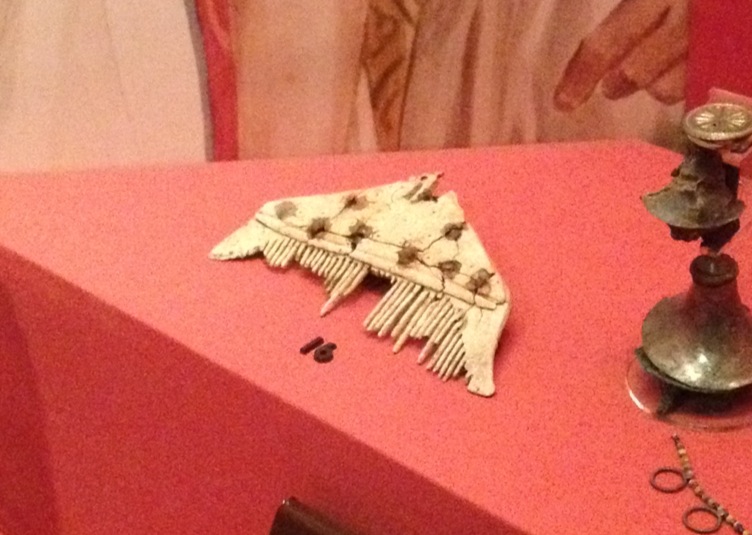
There was a comb. Just the one. But it didn’t look as if it would get out many head-lice. Even in pristine, non-broken condition the teeth were too widely spaced.

They were useless, them Romans. Really lousy.

First published review of ‘Mosquito’

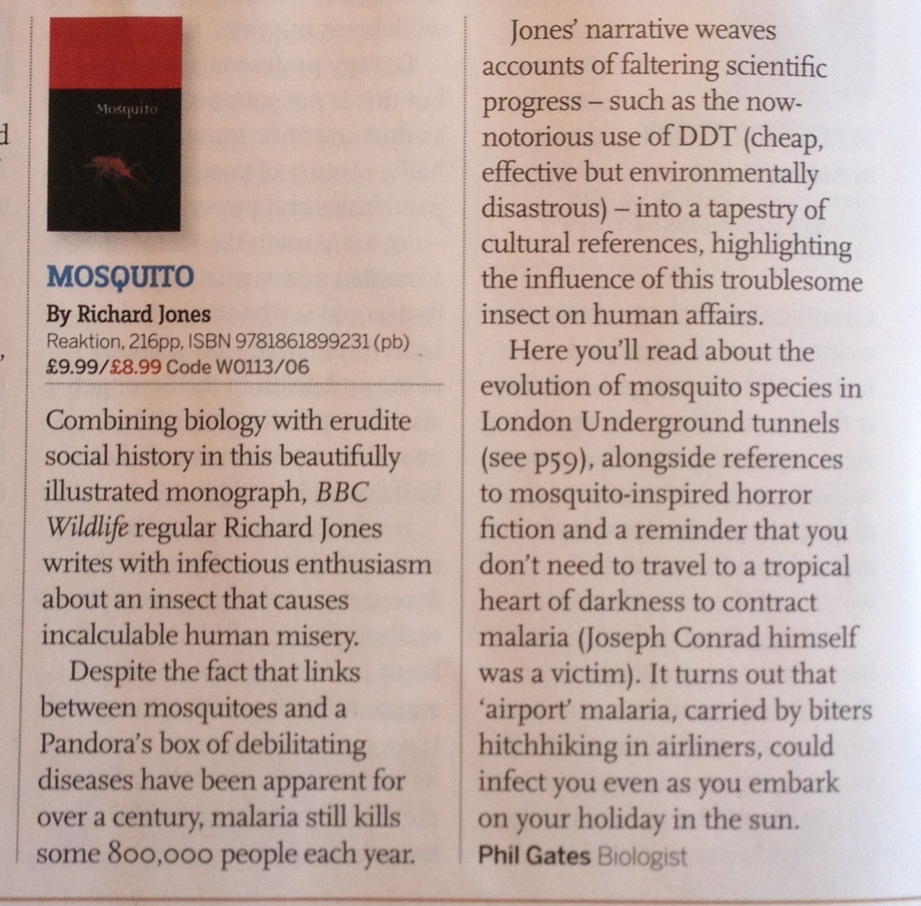
The latest issue of BBC Wildlife dropped through the letterbox this morning, and I’m rather pleased to note that it has a review of ‘Mosquito’ in it.
It’s only short but: “erudite social history”, “infectious enthusiasm”, “a tapestry of cultural references”. I’d like to infer that Dr Gates liked it.

A pest? For how much longer?

The good thing about insect pests is there is just so much written about them. So as I plough through endless books researching House Guests, House Pests, I am constantly distracted by loads of others. Rather poignantly, I came across this one.

The ash borer, Hylesinus fraxini, delightfully pointing out (a) the "mother" galleries.

The ash borer, Hylesinus fraxini, delightfully pointing out (a) the “mother” galleries, from which (b) the larval galleries radiate to (c) the pupal chambers.

This rather lovely plate is from the prosaically titled Report on the injurious insects and other animals observed in the midland counties during 1906 by Walter E. Collinge. This was a time of burgeoning interest in agricultural and forestry insect pests, fuelled by the advent of chemical sprays (notably Paris green, a highly toxic copper acetoarsenite) and the appearance of professional economic entomologists  to advise on pest destruction and yield enhancement.

Although the original image was made as a wood engraving, it has been reproduced by the then modern technique of photo-lithography, giving the background a ghostly pallor.

Even in 1906 I don’t think the ash borer could really have been much of a problem; “three cases of damage to ash trees have been reported upon”. Much more likely, I think, it was the perfect opportunity to insert an attractive plate into the book.

In life, the pretty little beetle is a delicate pinkish grey, mottled by the pattern of small scales covering its wing-cases. It has always been a widespread and common insect, appearing in the sweep net on woodland rides, field edges and road verges wherever their are ash trees about. With the ominous arrival of ash die-back disease, I’m left wondering whether it will go the way of the elm bark beetles, once so common in southern England, but now decidedly scarce, since the destruction of their host trees by Dutch elm disease back in the late 1970s.


At least it’s not called the fag-bug

Lasioderma001

It’s the cigarette beetle, Lasioderma serricorne.

I’ve been doing lots of research into household pests, for the new book on House guests, house pests, so I was excited to discover I’d found another of them myself. OK ‘excited’ might be exaggerating a bit, but there is definitely a sense of satisfied intellectual rigour and achievement on identifying a pale brown 1.75-mm-long beetle that I’ve never seen before.  Working at the microscope through some tiny specimens I’d collected over the year, I came across two specimens that had flown in, attracted to a moth light I’d run, just outside the kitchen door on 28 June 2012.

I should add, for the benefit of any North American readers perplexed by my title, that ‘fag’ is a quaint old British expression for cigarette; this, then, is the cigarette beetle, Lasioderma serricorne.

It supposedly gets its name for its habit of infesting tobacco, whether dried leaves, stored bales, cigars, and especially cigarettes. Related to the domestic woodworm beetle, Anobium punctatum, it will actually feed in a wide range of products including spices, beans, cereals, seeds and cocoa.

Being dull brown, I can only assume that in the days of pipes, cigars and chewing tobacco, this tiny beetle often went unnoticed by the smoker or chewer, much as another close relative the biscuit beetle, Stegobium paniceum, is still overlooked in the kitchen cupboard, unless the occasional struggling insect floats to the surface of the milk poured over infested breakfast cereal. But when  cigarettes started to gain serious popularity in the 1940s, the beetles’ neat round holes in the neat, clean, delicate, white, paper casings started to cause more than mild consternation.

It was during this period that a previously more or less ignored minor pest of such mundane items as ginger and liquorice suddenly acquired its common name. Thankfully, in an era before daft tabloid headlines and media inanity, it was never called the fag-bug.

Memories of a chainman

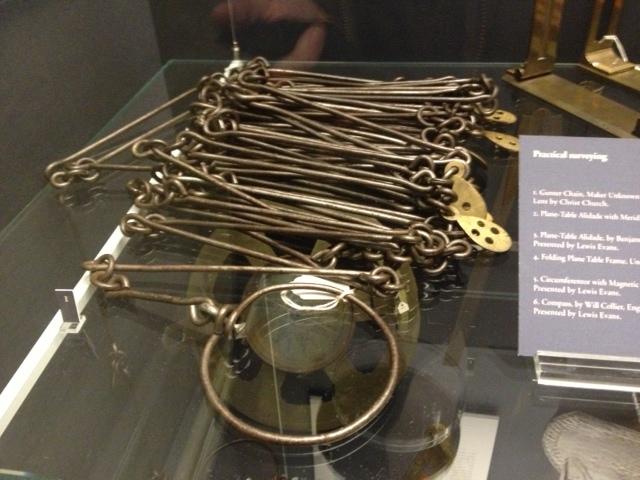
On my recent visit to Oxford, I spent a little time in the Museum of the History of Science, in Broad Street. And amongst all the ancient brass astrolabes, microscopes and alchemical glassware, I was pleased to see a Gunter chain.

My first job after university was working as a chainman on the construction of the Cuilfail Tunnel in Lewes. In an era before steel tape measures, laser-sighting triangulation and GPS, it was the chainman’s job to maintain and haul about the 22 yards of interlinked ironmongery of the Gunter chain. I’d never seen one before, although I had found some pictures in the historical section of one of the surveying basics books lying around in the engineers’ decrepit Portakabin on site.

By the late 1970s a modern chainman’s role involved carting about sighting poles, tripods and levels and setting up theodolites. My biology skills were not needed, but my maths was occasionally put to use in triangulating, or surveying to see if any of the houses above the tunnel had started to subside. They hadn’t.

My lasting memories of the tunnel are the mud, the Portakabin mice, a belligerently fascist South African engineer and the deathwatch beetle which landed on the collar of the site foreman one sunny autumn afternoon.

The best insect on Earth?

Well, this is the Oxford Entomological Society gleefully voting out my suggestion of Wallace’s golden birdwing, Ornithoptera croesus, from their X-Factor “What’s the best insect on Earth” show. Philistines.

I thought I’d done well with my simple premise: Ornithoptera croesus is the most beautiful insect in the world, backed up with that quote from Alfred Russel Wallace; you know the one:

“The beauty and brilliancy of this insect are indescribable, and none but a naturalist can understand the intense excitement I experienced when I at length captured it. On taking it out of my net and opening the glorious wings, my heart began to beat violently, the blood rushed to my head, and I felt much more like fainting than I have done when in apprehension of immediate death. I had a headache the rest of the day, so great was the excitement produced by what will appear to most people a very inadequate cause.”

I also produced the world’s simplest possible Power Point presentation of just one lone slide, and relied on my impassioned rhetoric. But I was defeated.

My competitors were:

Jeremy Thomas, President of the Royal Entomological Society, who proposed the mountain large blue butterfly, Maculinea rebeli, on account of its bizarre and complex life history as a cuckoo parasite in nests of a red ant;

Tim Cockerill, one-time Cambridge Zoologist, and billed on the poster as a ‘flea circus performer’, who espoused the dubious wonder of the human flea, Pulex irritans, and its history as one of the smaller money-making side-shows,

and Jake Snaddon, rainforest ecologist at Oxford’s Biodiversity Institute, who sang the praises of the daringly ocean-going sea-skater, Halobates micans, about which we know, er, virtually nothing actually.

The form of the discussion was to be a balloon debate, where an audience vote dictates which hapless victims are lobbed out of the balloon gondola. I’m afraid to report that birdwing and flea were the first to go. The two remaining finalists, (benefiting perhaps from some hidden Oxford home-ground advantage?) made last-minute pleas before the final vote ejected the sea-skater.

So, there you have it, apparently the best insect in the world is a rather dull blue butterfly with an unlikely and convoluted ecology involving subterranean parasitism and other, less than laudable, grubby behaviours. Harrumph.

But I’m ready for a rematch in 2013, when, rather than something straightforward and elegant, I shall be presenting an obscure nano-beetle with barely understood but obviously bizarre life style. It should be an easy walk-over.

I do quite like the Bug Czar tag, though.

Less is more

At 1.3 millimetres long, Liocyrtusa vittata is less than your average beetle, and tricky to identify even under a microscope, but it’s very scarce.

I’m wondering whether its scarcity has anything to do with its diminutive size. I’m not sure I would have noticed it ‘in the field’ but was able to recognize it as more than a shiny speck of protoplasm when it landed on the old sheet I was using as a backdrop to the mercury vapour moth light I’d lit up on 28 June 2011.

What is the collective noun for entomologists?

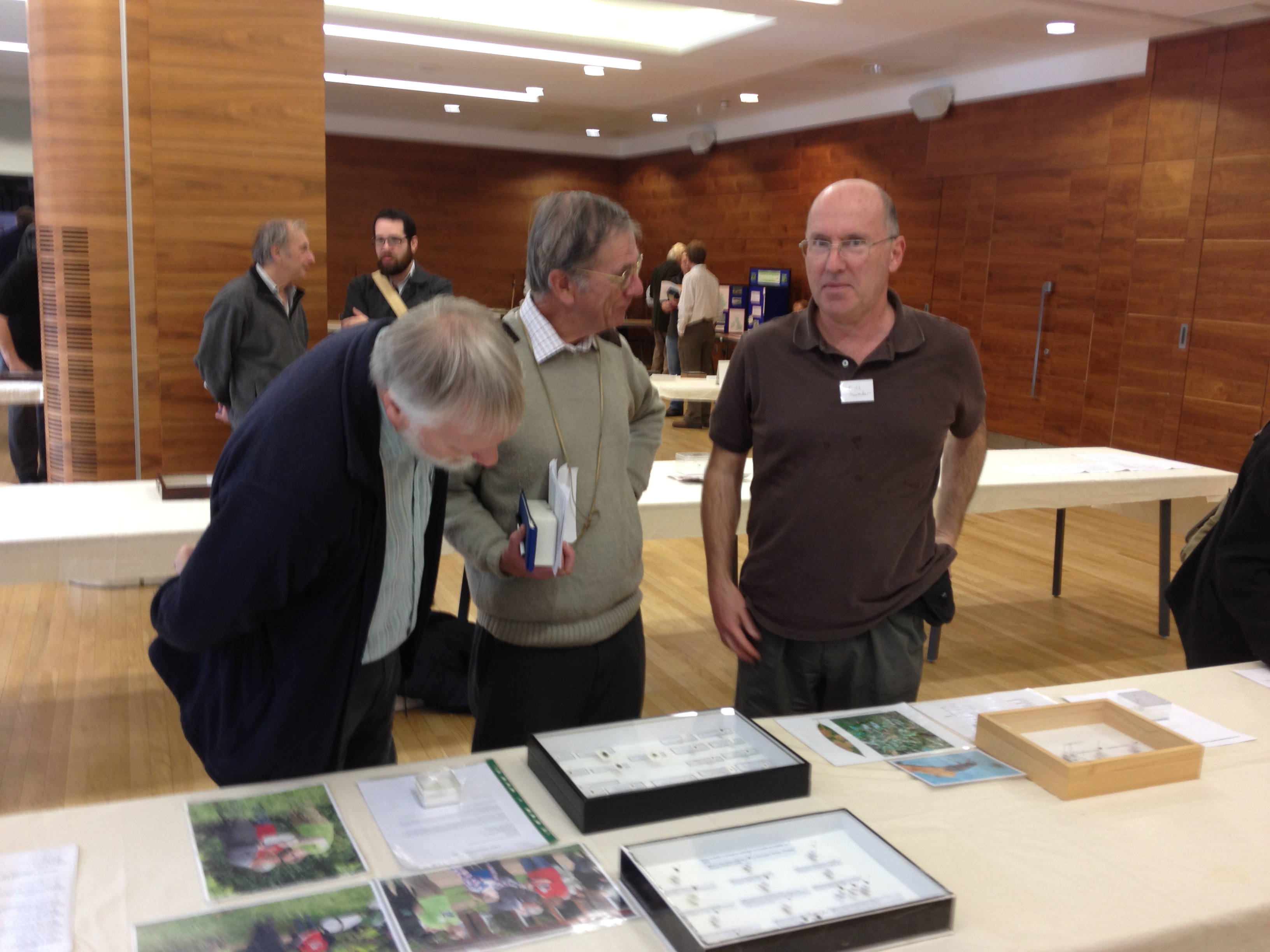
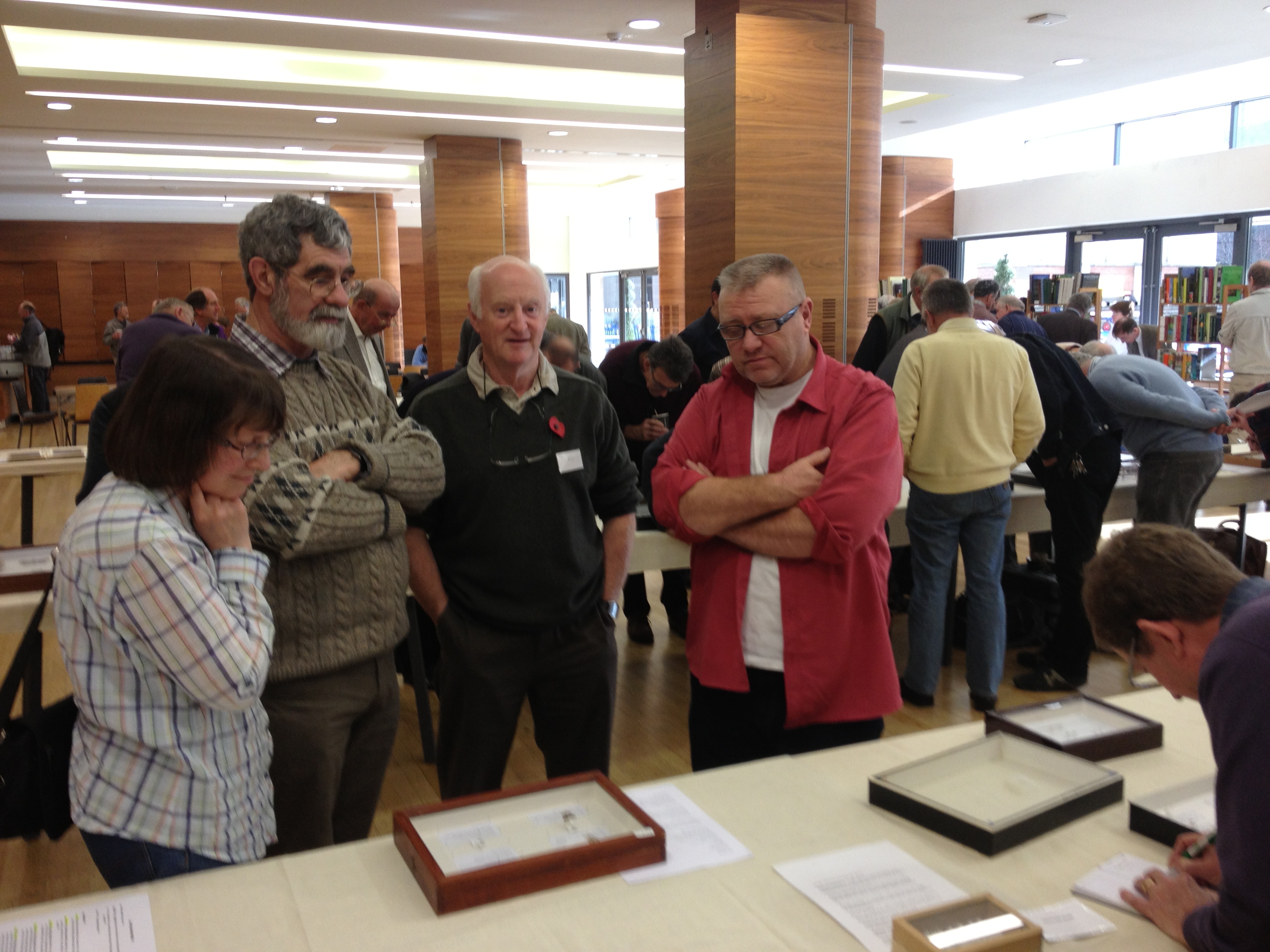
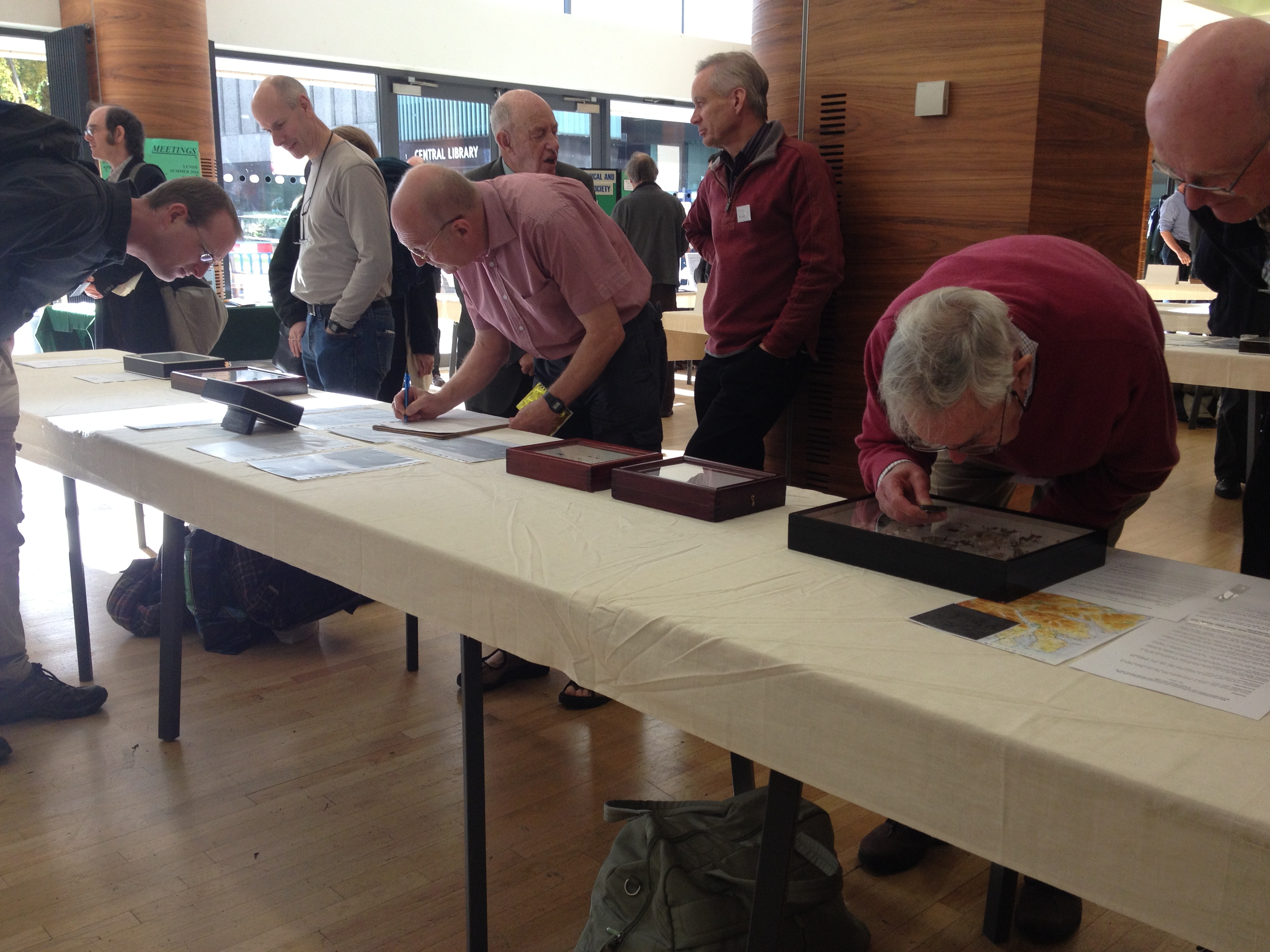
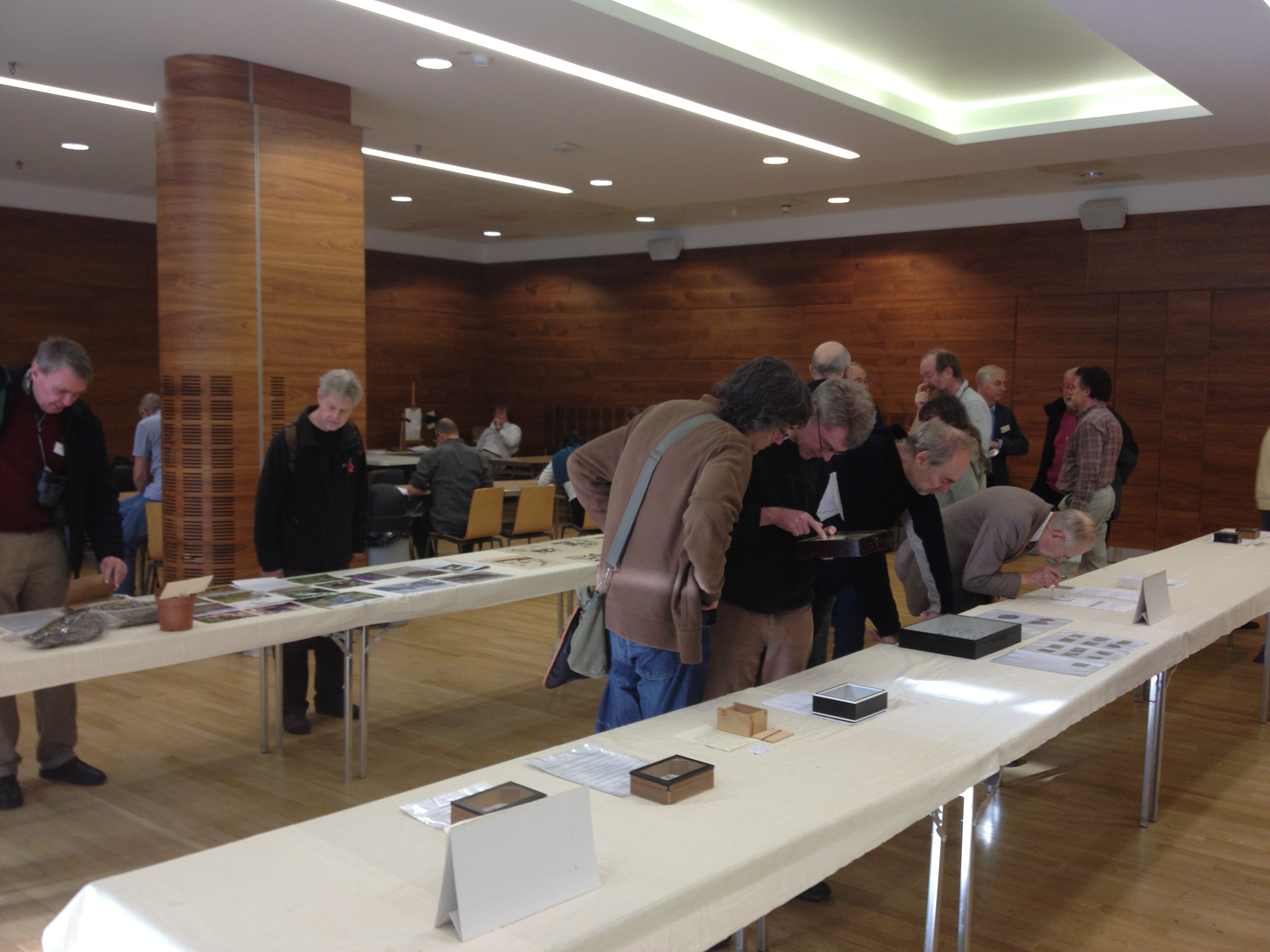
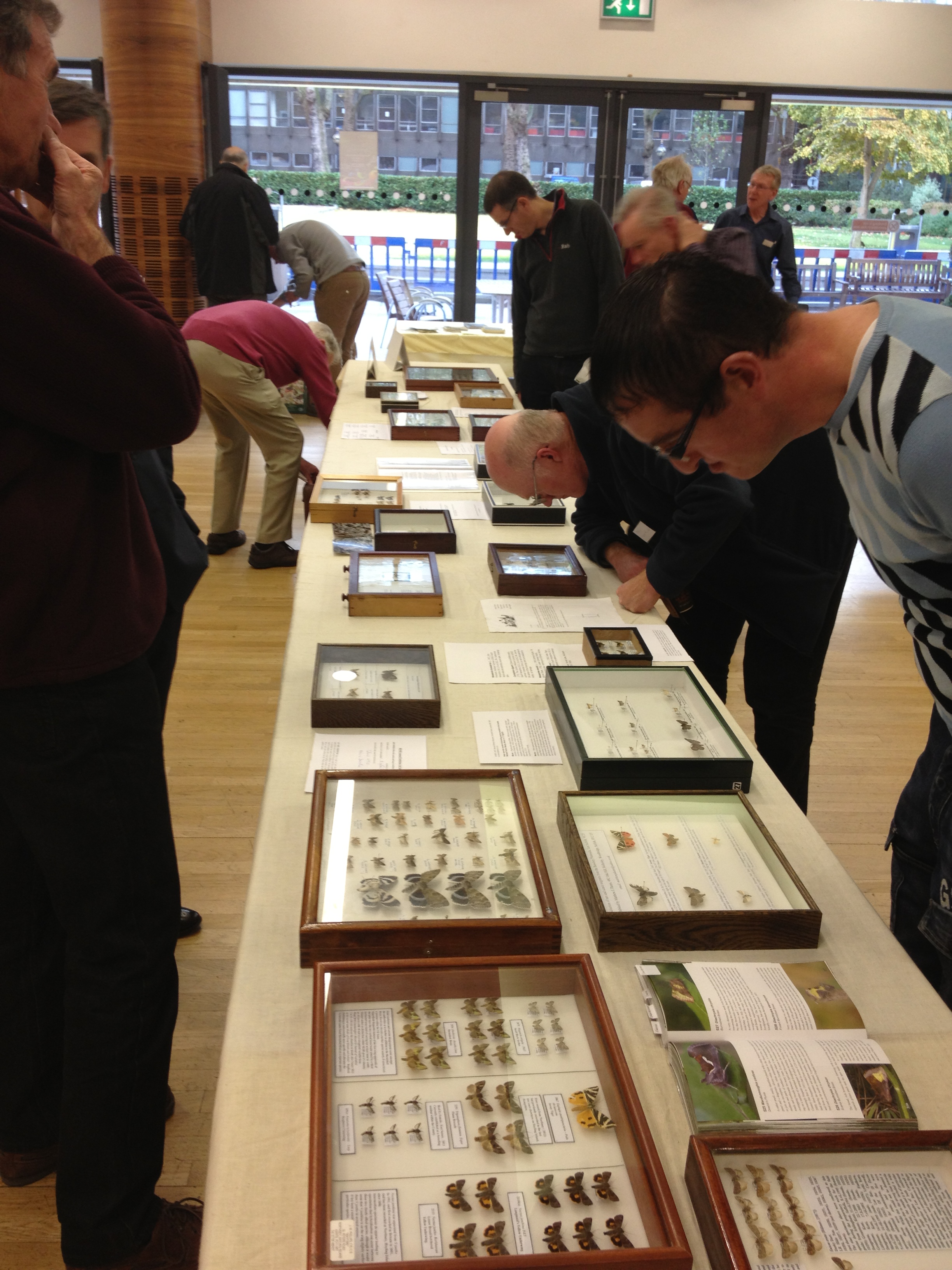
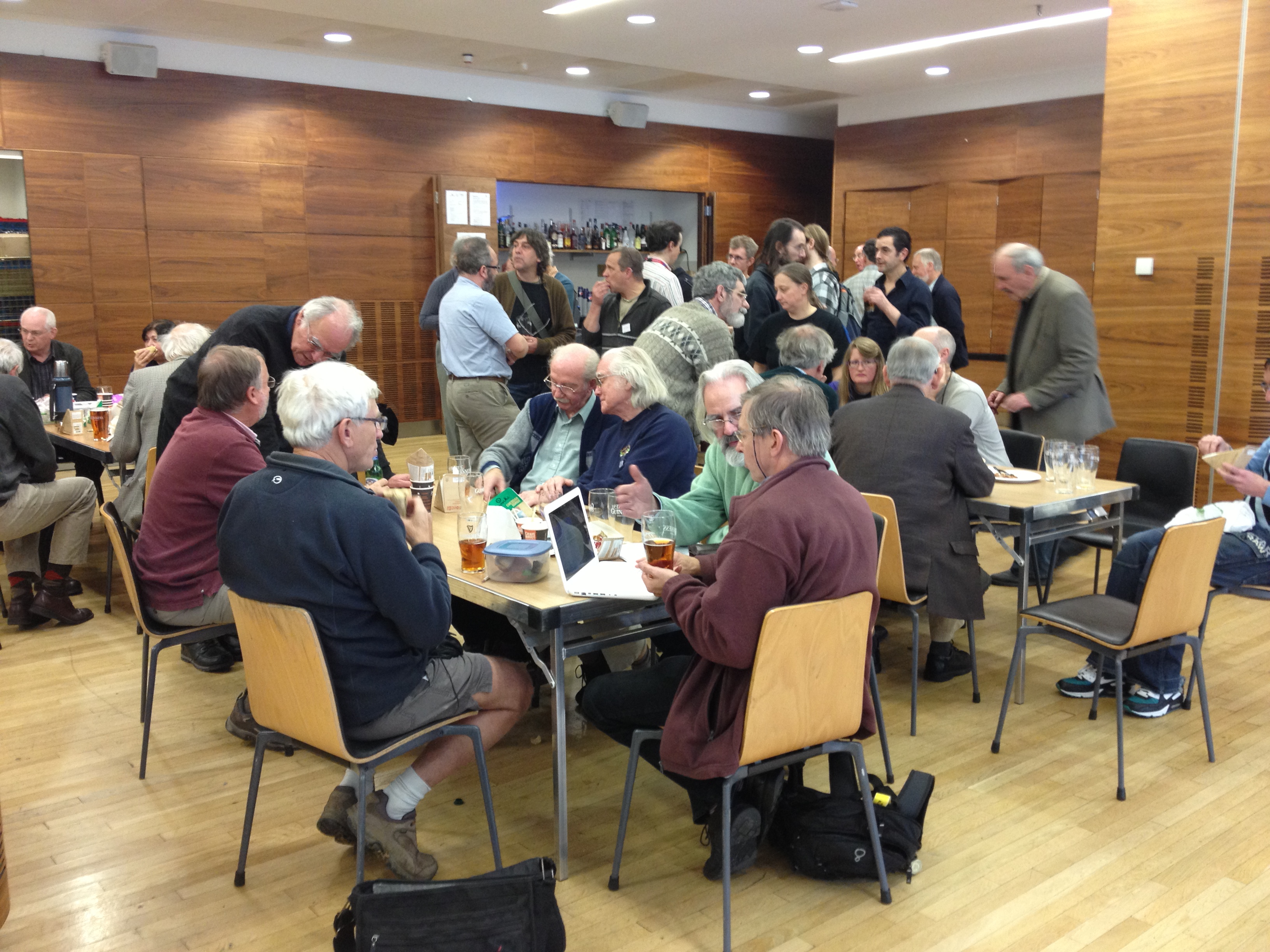
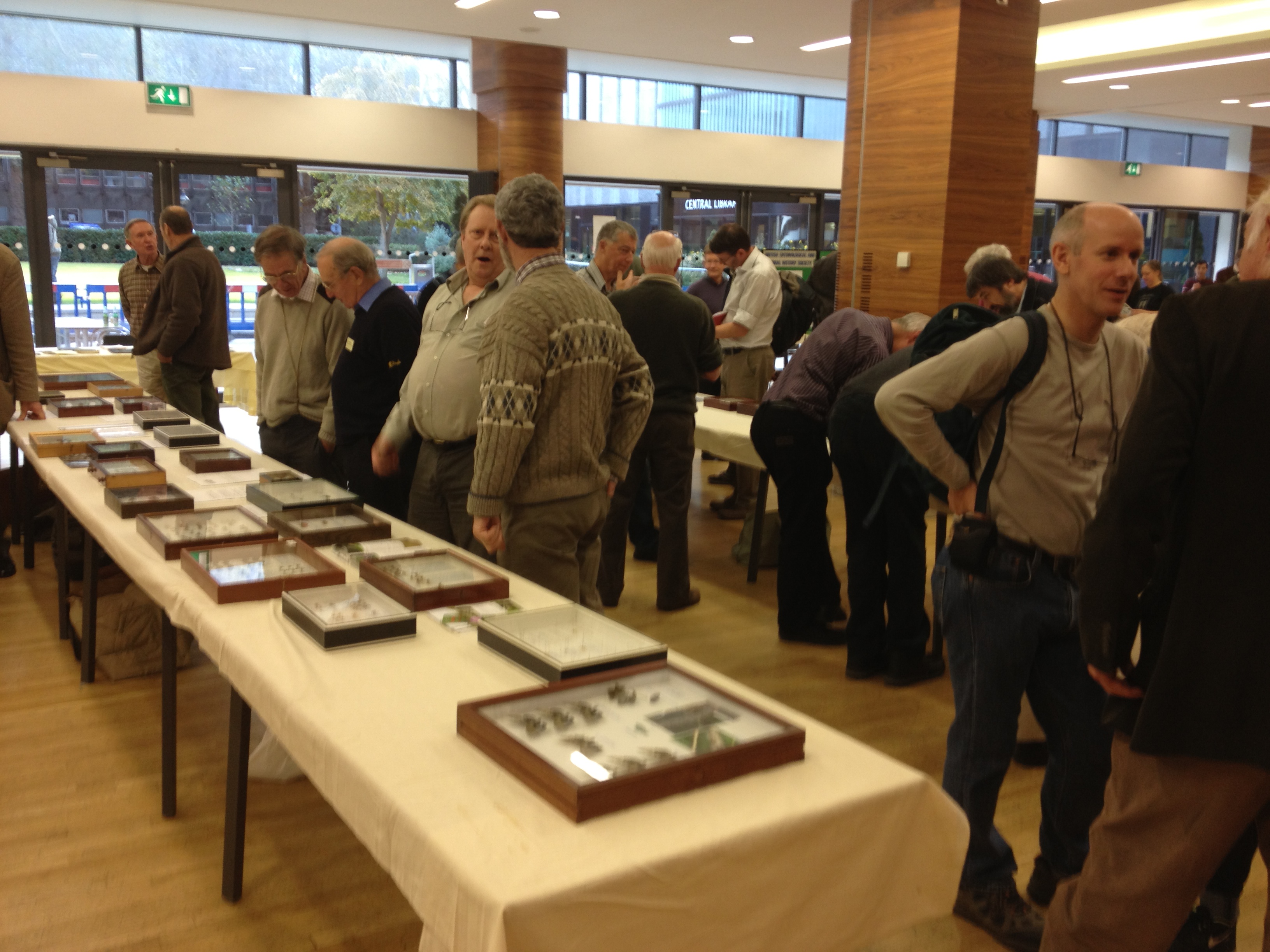
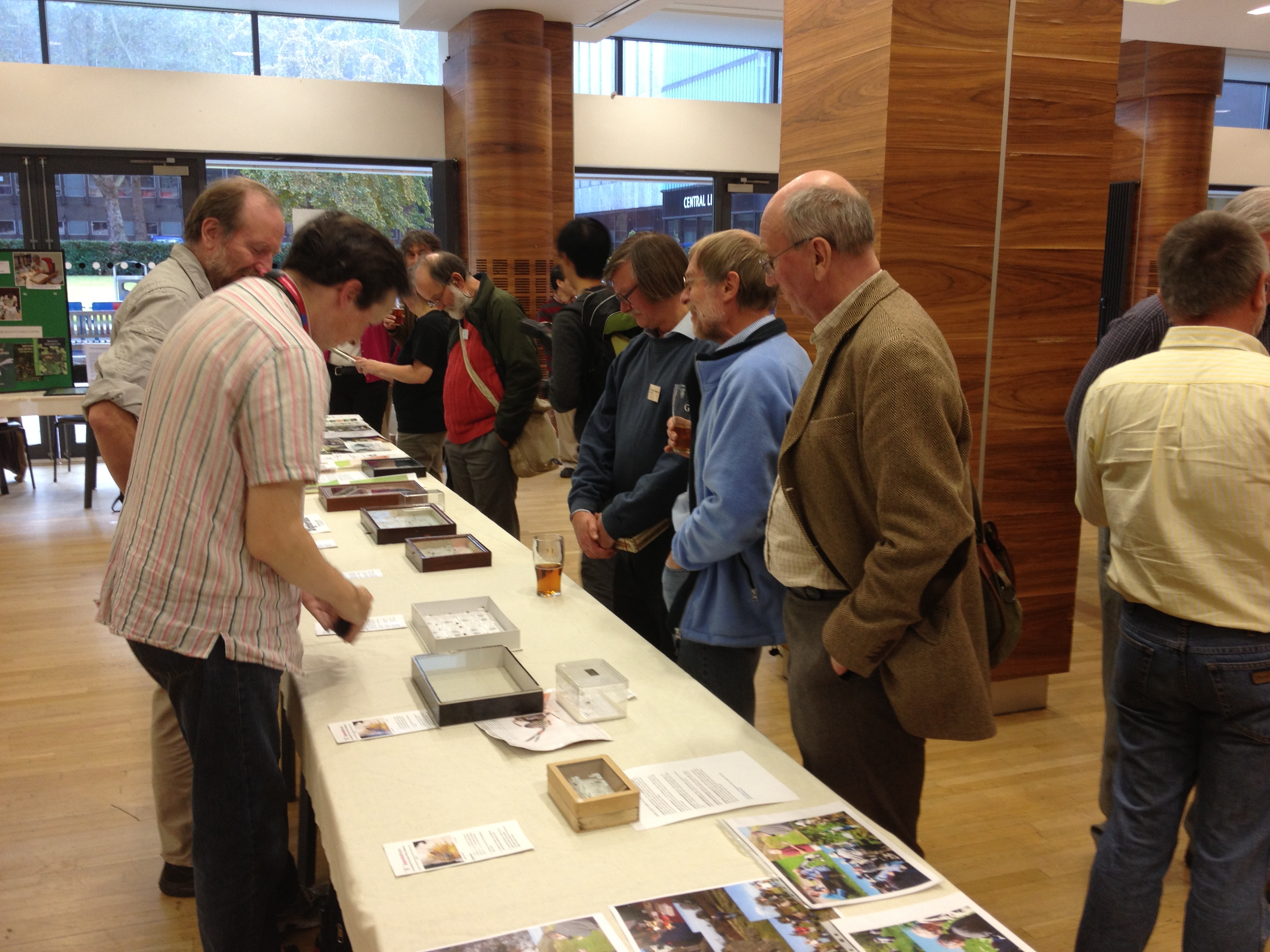
It’s a stoop. Other suggestions included a flutter, and a buzz. When entomologists come together at the annual exhibition of the British Entomological and Natural History Society, at Imperial College, they do two things: they talk incessantly in a strange dialect of copious Latin verbiage and abstruse jargon, and they stoop.

The stooping is done over  glass-topped display boxes showing the latest finds or discoveries. Here is the evidence.

This is one of my favourite meetings of the entomological year. It’s a chance to meet the faces behind the emails and the journal articles, to catch up and exchange the entomological news of the last 12 months, have a bit of a moan about the weather and pick up the latest books and journals.

OK, they do a fair bit of drinking beer too, but it’s the stooping that captures the mood of the day. So, there you have it — a stoop of entomologists.