Caterpillar, caterpillar

Anyone who’s ever read The Very Hungry Caterpillar, by Eric Carle, will know the usual story of maggot-to-butterfly transformation. Any entomologist who’s read it will wonder at the bizarre mix of foodstuffs consumed by the unlikely beast, and come to question whether poetic license has actually been stretched to the point of poetic nonsense.

So when my 15-year-old daughter told me that her English homework was to work on a caterpillar story-poem aimed at young children I was more than a little bit proud that she had decided to eschew chocolate cake, swiss cheese, lollipops and cherry pies.

Here is her work. And I think it’s a masterpiece.

The curious incident of the ferret in the night-time

There was a time when I was pretty familiar with early morning BBC World Service programmes — 1996 in fact. It was part of the night-feeding routine of our first-born, daughter Lillian. Just a few months old, she took a bit of settling after a feed, so we worked out a division of labour — Catrina would breast-feed her, then I would take Lillian downstairs and walk about until she burped and fell back asleep.

Sometimes it would take quite a time, so in the gloom of the moon-lit 4-o’clock kitchen I would shuffle a hypnotic triangular path — fridge to cooker to sink and back to fridge — with Lillian slumped over my shoulder. And as I walked, I’d listen to the radio on its lowest volume, reports from Ulan Bator, Bokhara and Vanuatu, and all the other weird out-of-the-way places in which the World Service specialized until Radio 4 came on air at 5.30.

Apart from the soporific drone of the radio, it was silent in Nunhead; too late for yowling cats, too early for the dawn chorus. But on this one occasion, there came an unfamiliar rattle of the cat-flap. We had one of those fancy flaps — magnetic rimmed, a key-coded lock set to the high-tech collar tags of our own animals, but keeping out the unwanted smelly ferals, and it had a clear plastic door.

What peered in through the flap that night, though, was no cat. Narrow pale head, pointed snout, tiny flat ears, more rat than cat it looked. I peered out through the window and was met with the sight of a small, slim creature slinking about outside the back door. A polecat? A ferret?

Lillian was now asleep. Perhaps some people would have gone back to bed and mentioned it, in passing, at the breakfast table:

“Oh, I saw a ferret in the garden last night.”

“Did you dear?”

“Yes, the poelcat kind.”

“Lovely.”

This would not have fitted my character. So instead I took Lillian back up to her Moses basket, settled her down, and went off to capture my quarry.

A large wicker basket, with a flip-down lid, home to various skeins of wool and knitting needles, would be a make-shift cage; I left it open, in readiness, as I unlocked the back door and padded outside in my bare feet. Mr ferret was still there, taking an interest in the French windows leading in to the living room now. It was at this point that I considered the likely outcomes of my avid curiosity.

My Uncle Geoff used to keep ferrets. A third- or possible fourth-generation Kent farmer, he had a half-dozen that he used for rabbiting. As children, visiting, we were never allowed to open the cage — they weren’t pets, they were ferocious working animals and I’d regularly seen them rip a pigeon or a handful of sparrows tossed into the cage, to nothing but a few floating feathers, in less than a minute.

I contemplated the delicate skin on the back of my hand and wondered whether I’d be ripped and bloody in a similar time. I knew how to hold a cat by the scruff of the neck; I took a deep breath and moved in for the grasp.

My fears were groundless. The soft little animal went limp in my fingers as I lifted it up by the nape and carried it indoors. Nary a frustrated grunt or timid squeak did it make as I plopped it into the wool basket and fastened the lid with a couple of clothes pegs. I could hear it examining the inside of the container, but it was obvious this was a mild pet, and not a savage hunter. Stage one complete, but what was stage two going to be?

In the more civilized hours of the morning the RSPCA and Battersea Dog’s home were moderately interested, but not very helpful about our find. No-one had reported a missing polecat ferret in Nunhead, but they might consider looking after it until an owner came forward. As it happened, this would not be necessary; pulling back the draft-proofing curtain across the front door revealed a worried and heart-felt circular stuffed through the letterbox.

NOT A RAT, NOT VERMIN, NOT DANGEROUS were the phrases that stood out. The worried owner awaited our call. The relief in his voice was palpable, and he was round in 45 seconds.

I’d never spoken to Mick before, even though he only lived three houses down the street — a big, beefy man, with a round bald head, he cut a slightly menacing figure, leather jacketed, shod in metal-trimmed boots, as he roared off on his large, loud motorcycle every morning. Today he shuffled timidly into our living room and looked anxiously as I opened the wicker lid; then he scooped up the ferret, clutched it to his chest, kissed it on the forehead and muttered: “Oh, Bill, Mummy and Daddy have been so worried”.

Bill, it seems, had slipped his tether when ‘Mummy’ forgot to take him in after a sunny day gamboling on the lawn. Convinced he’d be bashed on the head by some frantic rodentophobic neighbour, Mick had been beside himself with worry all night. But all was right now.

After that I was on good nodding terms with the biker in the street. And when it happened again, a few months later, I was able to trot round in the early morning darkness,  still humming the Radio 4 theme tune, ring on the doorbell and hand Bill to my bleary-eyed neighbour  offering: “I believe this is yours”.

Obeying the call of nature

This is the only euphemism I will allow myself.

When I worked in scientific publishing I spent some time editing out the word ‘sacrifice’ from manuscripts submitted to The British Journal of Experimental Pathology. The most famous article ever published in this respected and long-standing, but rather staid, journal was ‘On the antibacterial action of cultures of a penicillium, with special reference to their use in the isolation of B. influenzae‘ published in 1929, and written by one Alexander Fleming. It took a few years to register, but this is now seen as the seminal article that paved the way for the discovery, study, manufacture and widespread use of modern antibiotics.

By the early 1980s, much of the work published in the journal was on T-cells, ‘helper’ cells, ‘natural killer’ cells and various others, all types of lymphocyte (white blood cell) important in the body’s immune response. Living up to the experimental part of the journal’s name, the experiments were carried out in rats and mice, rather than in humans. Between the experimental disease development and the examination of the cells under the electron microscope (or in some biochemical analysis) there came the necessary procedure of quickly getting the cells out of the laboratory rodents.

It was at this point that many of the authors claimed to ‘sacrifice’ the experimental animals. Some even tried to suggest the animals were ‘immolated’. I was having none of this. The Incas (or was it the Aztecs?) sacrificed their unfortunate victims on the altars of pagan gods, cutting out hearts in unholy bloody rituals, by all accounts. Self-immolation is the protest suicide of many religious cultures, even in modern times, tolerated perhaps because of the cleansing, auto-cremation of the flames. Lab rats are neither sacrificed nor immolated in the name of some scientific pseudo-deity, they are simply killed. They are killed out of scientific necessity, or at least out of expediency, but they are killed, not sacrificed. Just as animals are killed for food, or because they are agricultural pests, or because they do us harm.

This was just around the time that antivivisection feelings were beginning to run rife. Words like ‘kill’, ‘death’, ‘slaughter’ were coyly avoided by some scientists, aware of the cultural weight these simple and previously convenient terms now carried.

Perhaps it was because I was an entomologist, so I was used to killing insects. I never sacrificed one at the communion table of entomology, and I never immolated any either.

I subedited the journal for a year or so. During that time I doubt anyone (certainly not the editors, and probably not even the authors themselves) noticed my attempts to cleanse their research papers of this particular euphemism. The next subeditor more than likely turned a blind eye to these particular turns of phrase. We all have our foibles. Abhorrence of euphemisms is mine.

Except….

When caught short, out in the wilds, obeying the call of nature is sometimes a necessary function. Two functions, perhaps. It can, on occasion, add several species of Scarabaeidae to a site species list, but on no account should the records give, as they did in several early 20th century beetle lists, ‘in stercore humano’.

Golden chafers

For this year’s Nunhead Cemetery Open Day, my 15-year-old daughter, Verity, drew me a golden chafer for the Bug Hunt certificates. Just sketching with pen and ink, she has perfectly captured the brilliant iridescence of these beautiful insects.

Image

Truly resplendent, Chrysina (formerly Plusiotis) resplendens we think.

It’s one of the Plusiotis beetles, gorgeously metallic silver or gold creatures from Central America, now generally subsumed into the large New World genus Chrysina, which also includes a whole series of bright green, bronze, brown and reddish beetles. I found a fantastic catalogue and gallery of the genus on the University of Nebraska State Museum website.

The moment I first saw a photograph of a golden chafer I knew they were special insects, imbued with an almost mystical significance. I’ve never seen one alive, but they are in one of the marked ‘tourist’ drawers of the Coleoptera section of the Natural History Museum, in London, where a guide giving a behind-the-scenes tour knows to stop and show them off. When we went on holiday to Costa Rica, in 1991, we dropped into the entomology museum of the University of San Jose to say hello, and were shown several pure gold and silver species in a similar tour of the collections. Needless to say I never saw a live specimen during our fortnight in the country.

[I did find a bright green Chrysina, with golden tail spots, in Guatemala, the next year, take a look if you’re an expert in the group — C. bruyeai/ crassimargo/ diversa/ flohri possibly?]

Of course it was the image of a Plusiotis/ Chrysina chafer that came to my mind when, as a teenager, I first read Edgar Allen Poe’s short story The gold bug. His description of “a scarabaeus which he believed to be totally new”…”of a brilliant gold colour—about the size of a large hickory nut”…”hard and glossy, with all the appearance of burnished gold”, perfectly fits this group. But it seems unlikely that Poe ever saw one. Although the broader genus of shining green beetles, Chrysina, was known from 1828, the first truly brilliant burnished gold species, were not described until the mid 1870s, fully 30 years after his mystery tale was published in 1843.

Various literary critics have sought to discover the sources of Poe’s entomological inspiration. The bright shining yellowish chafer Cotalpa lanigera is suggested by several writers, and this seems perfectly plausible. I’m much less enamoured with the suggestion that Poe combined features from a brilliantly metallic longhorn beetle, Callichroma spendidum, with a black-spotted click beetle Alaus oculatus; this is the notion put forward by the Wikipedia page on Poe’s story, but to be fair it is taken from a very scholarly biography of Poe. All of these large and dramatic beetles are to be found on Sullivan’s Island, South Carolina, where The gold bug is set.

Certainly, Alaus has dramatic black ‘eye’ spots on the thorax, and part of the twist of Poe’s story is the skull-like appearance of the beetle, which, according to the main protagonist in the story, William Legrand, who first find’s the insect, is marked with two black spots like hollow eye sockets near the head end and a black oval, like a toothless grinning skull mouth near the tail. But this also misses the point that these marks are a literary feint of coincidence to draw the reader in when the unnamed narrator sees, instead  of Legrand’s sketch of the marvelous gold beetle, the image of a skull, revealed on a parchment scrap. We later discover that this is part of a secret message, revealed from invisible writing by the action of heat, leading to a real golden pirate treasure, buried nearby.

In reality, I suspect that, when analysing his story, we have no need to invoke any first-hand entomological knowledge that Poe may or may not have had of South Carolina beetles. Odd though it may seem, chafers were much higher up in the general social awareness of the times than they are today. During the 19th century brightly coloured chafers and handsome scarabaeids were amongst the most prized of natural history specimens, and large beetles vied with colourful butterflies and unlikely birds of paradise for glitter and glamour. These beetles were the mainstays of many an auction of wildlife booty collected by travellers and explorers, at that time bent on exploiting and cataloguing all that the natural world had to offer. Leaving aside any parallels with the sacred scarabs of the ancient Egyptians, which were also popular museum artefacts at the time, Poe would have come across specimens of exotic chafers at auctions, in museums, and in the collections of his wealthy or intellectual friends. He may not have seen one of the golden Plusotis chafers, but would have come across other fabulous scarabs with glinting metallic shells, in shining greens and browns, and with golden highlights. He knew, very well, what his scarabaeus was, and it was nothing to do with longhorns or click beetles.

Anyway, back to Nunhead. Nobody found any sort of chafer, golden or otherwise, but the certificate for bug-hunters looked fine. Thanks Verity.

Even reduced to black and white, the golden beetle keeps its beauty and power.

Even reduced to black and white, the golden beetle keeps its beauty and power.

Let’s just forget about habitat destruction, shall we?

The idea of habitat destruction has had it’s day. I think we need to move on.

Anyone who has ever seen the ulcerated sore of an open-cast mine, or the mud-slide run-off from a deforested tropical hillside will know what habitat destruction is. But neither of these is very common in Britain. There is the occasional gravel pit or chalk quarry, but even quite large new building developments or road schemes seem relatively minor scrapes when viewed in aerial photographs, we have Google Earth to thank for this calming revelation.

And yet conservationists, especially entomologists, are always barking on about declines in biodiversity due to habitat destruction. It has become a mantra of our times. The trouble is, no-one is really listening. The reason they are not listening is because, intuitively, they don’t believe it. They look out at the world, from the car or train window, or even when they walk down a country lane, and the world out there is still obviously green and pleasant. Where is all this destruction that’s supposed to be going on?

Talk of habitat loss isn’t much better. It simply conjures up images of minor landslips in Dorset or Lincolnshire. Dramatic they may appear on the pages of the red-tops, and sad, yes, for the people whose houses are plunged into the sea; but, again, these are minor plots of land — nothing to get het up about, and no serious sway on environmental opinion.

We should stop talking about habitat destruction, it isn’t helping much.

Of course, what we can’t see, are the subtle, insidious changes that have been going on cankerously since the 1940s, with the intensive industrialization of agriculture and the demise of traditional rural husbandry.

Woods are still full of trees, and they all look very green. But close inspection shows that they are gone to pot. Coppice cycles have been abandoned and woodland management is now, very often, no management at all; the once rich, varied mosaic of copses has become crowded, overgrown and dark, and the delicate woodland flora has been replaced by dull uniformity.

Even the language of green fields is skewed by the obfuscation of farming propaganda; at best it is counter-productive, at worst it is directly misleading. Contrary to any reasonable understanding, ‘improved’ grassland actually means ruined grassland; it is only improved for agriculture. Fertilized beyond care with chemical preparations or over-manured beyond its natural capacity, the thick, lush grasses useful only to the commercial dairy farmer are increased, at the expense of a broad, mixed, flowery richness, which is everywhere diminished. The hay meadows of blessed memory and literary allusion, alive with butterflies, bees and all those other insects, are now the empty fields of factory silage — virtually green deserts. Still green to the eye, though.

Elsewhere the insipid dilution of natural wonder gives us dank secondary woodland dense with sycamore, flailed hedges thick but dull, roadsides rank with nettles, riverbanks polluted with invasive balsam and once smoothly undulating chalk grazing hills now encrusted with the erupting pustules of scrub encroachment.

It all looks green, though. Very green indeed. But it is becoming more uniform, less varied, less diverse. As hedgerows are removed piecemeal (hardly warranting the title ‘destruction’ though?) the mosaic of small diverse fields becomes a mundane prairie. The embroidered quilt, rich in a million shades of verdant emerald, pea, jade and lime, tinged with russet, gold and ochre, is becoming a bland process colour, and if the landscape designers working for agribusiness and housing developers are to be believed, I expect we could identify it as a single Pantone number.

Green blandness captured in Anville. With apologies to Dr Seuss, I've grabbed this screen image from the Universal Pictures adaptation of The Cat in the Hat.

Green blandness captured in Anville. Pantone 378-3 seems about right. With apologies to Dr Seuss, I’ve grabbed this screen image from the Universal Pictures adaptation of The Cat in the Hat.

Diversity is failing, species (plants and animals) are lost. The habitat has not been lost, or destroyed, though. Instead it has been floristically and faunistically cleansed. Talk of habitat ‘destruction’ no longer serves this danger. Instead, we have to move on — we need a new vocabulary of environmental alarm.

I offer these:

habitat corruption

habitat degradation

habitat degeneration

habitat decay

habitat debasement

habitat adulteration

habitat blight

habitat impoverishment

habitat impairment

habitat disruption

habitat desecration

habitat mutilation

habitat ruination

A most serendipitous insect

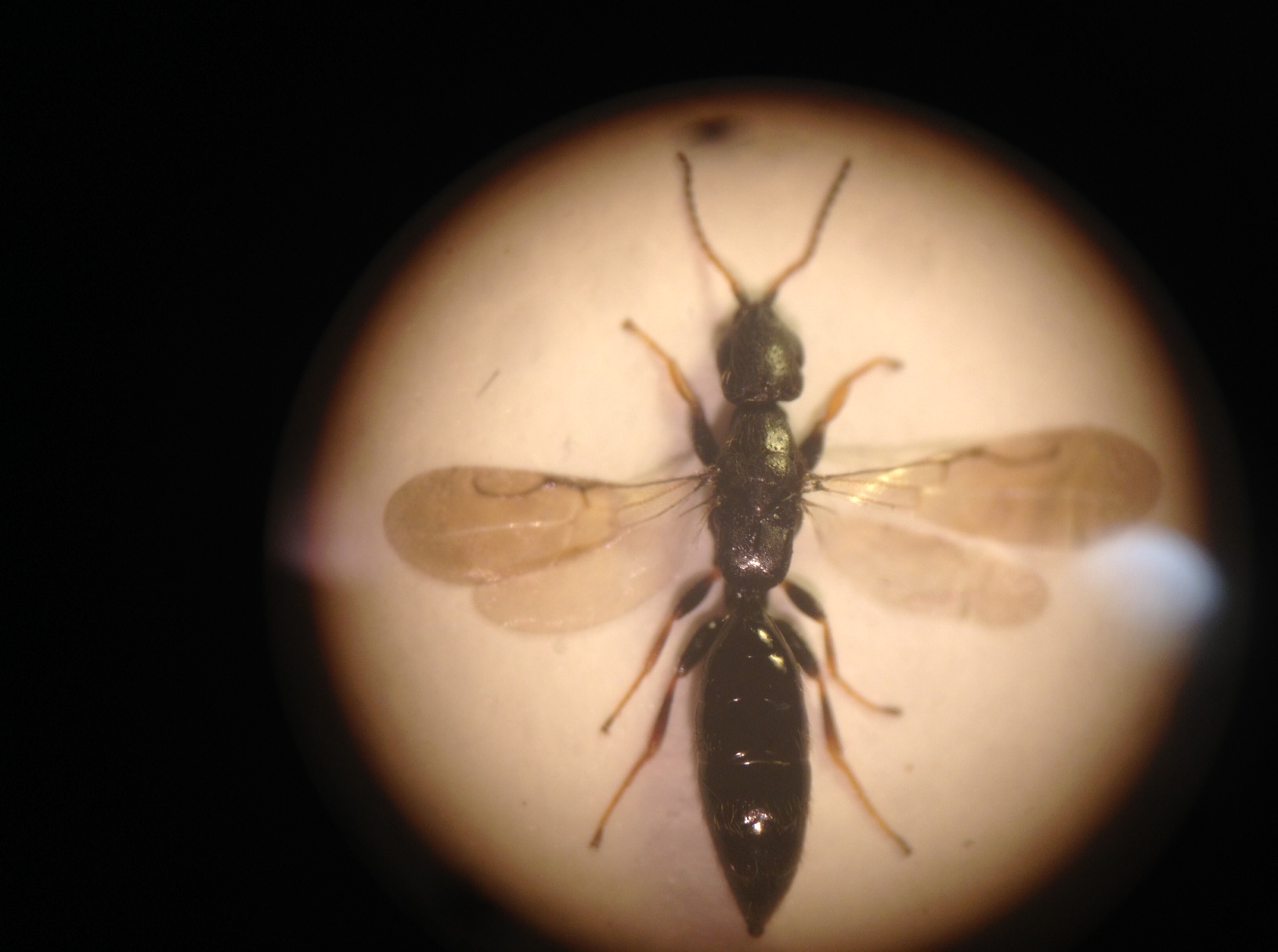
The sunny weather drew me out on Wednesday. There are a few things about — the odd bee-fly, some solitary bees, a comma and peacock butterflies. I bashed a stand of ivy covering an old tree on Honor Oak’s One Tree Hill, and out fell a couple of bethylids. I like these curious creatures. Although given honorary aculeate (ant/bee/wasp) status, they actually run around like tiny rove beetles in the net, an impression emphasized by their stout triangular or pentagonal heads.

At 4 mm, Bethylus boops is not large; dainty, more like.

At 4 mm, Bethylus boops is not large; dainty, more like.

These ones were Bethylus boops (pronounced “bo-ops”), a species dear to my heart because it was the first insect species I ever found ‘New to Britain’ — running about on my newspaper, as I sat reading in the garden in Nunhead, in 1992. I tentatively identified it as something highly unlikely, but when I sent it to the UK bethylid expert to check, he told me no, it was a new one. The hairy eyes are a dead give-away.

It turns up regularly in the London area, and I’ve found it several times. The National Biodiversity Network distribution map is patchy, to say the least.

Mostly, distribution maps show the distribution of searchers, not what is being sought.

Mostly, distribution maps show the distribution of searchers, not what is being sought.

London and Gretna(?), apparently. Not sure I believe that.

I’ve been a bit tardy on this one

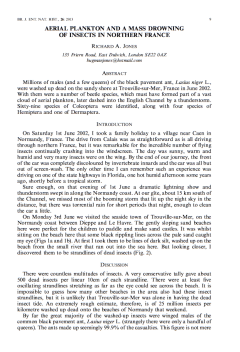
How long does it take to publish a scientific article? In my case, just over 10 years. I’ve had a box full of specimens that I picked up on the beach in Normandy in 2002, but I only got around to working through them last autumn.

Picture 3

I quite like the idea of aerial plankton.

My excuse is that there is always something else that needs doing. Pathetic I know. Sorry. I’ll try and do better in future.

. . . . . . . . . . . . . . . . . . . . . . . . . . . . . . . . . . . . . .

And, by the way, thank you to John Badmin, editor of British Journal of Entomology and Natural History, for permission to post the PDF of this article.

Trespassers W

The Isle of Wight is an old haunt for me. For several years in the 1960s it was the summer holiday destination of choice for the Jones household. Over the many visits we trooped up and down the disused railway lines, which thanks to Dr Beeching were now converted into byways, and we rambled the hills and woods which are criss-crossed by more miles of footpath than almost anywhere else in southern England. We did a bit of sight-seeing, a minor concession of my naturalist father to his slightly reluctant children: there was the Godshill Model Village, Sandown Zoo, Bembridge Waxworks and Osborne House. Well, not the house at Osborne, just the gardens actually. And there was an ulterior motive here.

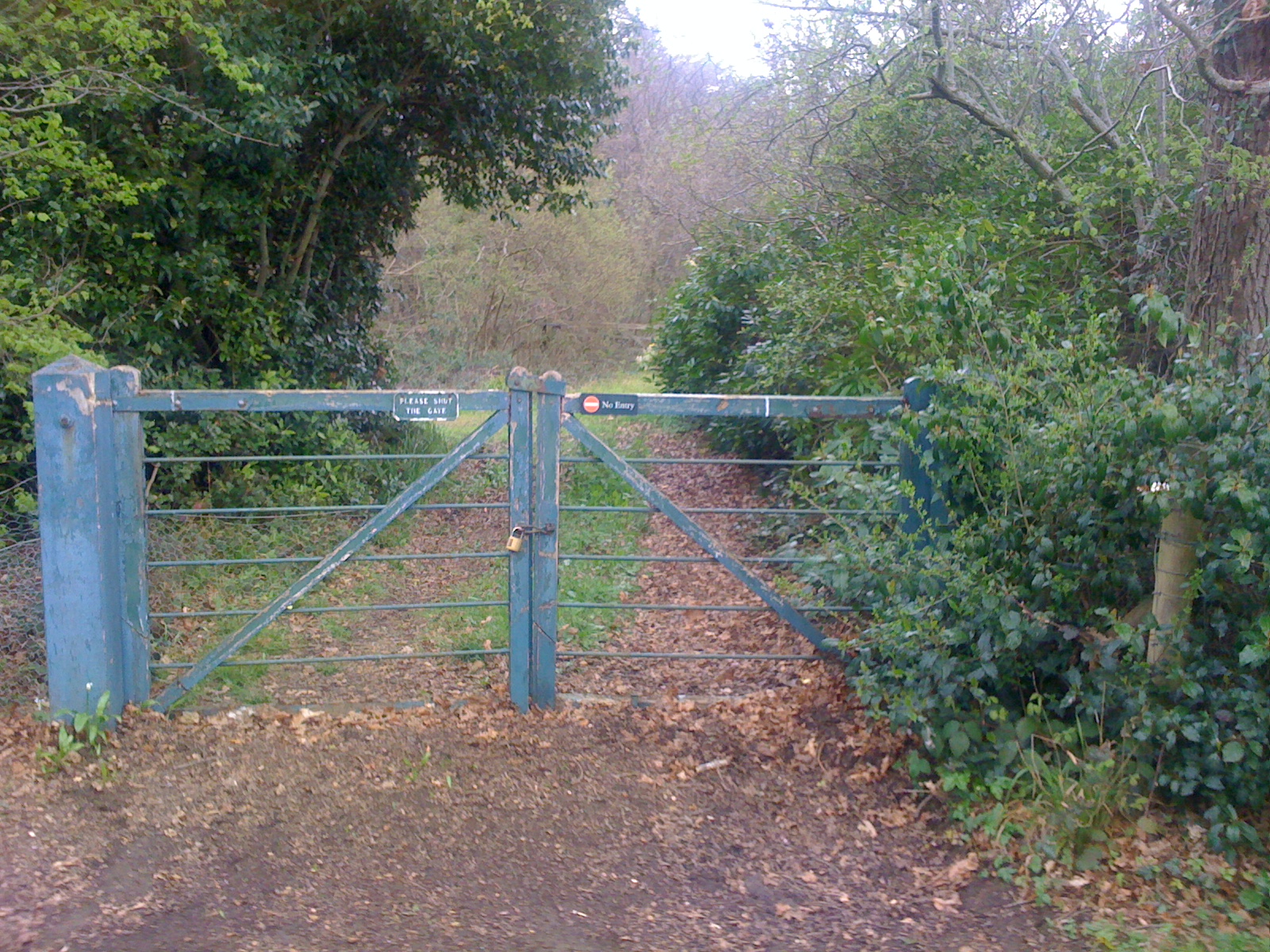
Mostly, of Osborne House, I remember, down by the royal children’s Swiss chalet-style ‘playhouse’, this gate:

Keep out.

No entry. The gate is shut. And locked. Photographed April 2012.

For it was over this that my father dragged a hesitant 10-year-old to go exploring in the woods that ran down to Spithead (incidentally one of the best-named tracts of water anywhere on the planet). Because of its royal history, there  remained at Osborne a large segment of the island that was footpath-free and very private. This did not suit my father’s inquisitive need to check out the plants and insects, so we took it upon ourselves to go trespassing.

Trespassing comes naturally to a Jones. Through all the years of traipsing across the English countryside, either with my dad, or off on my own, a “PRIVATE — KEEP OUT”  sign was of no consequence. We went where we would.

On the whole we never met anyone, or if we did a gentle polite conversation was usually enough to show that we were doing no harm. The insect nets were always good ice-breakers and obvious signs that we were either nutty or scholarly, but not dangerous. Very often the convivial conversation would turn to country matters, wildlife, nature or the obscure history of individual pollard trees. My father always wore a tie, and usually a suit. When I realized that power-dressing could have influence on the game-keepers, woodmen or occasional owner on horseback, I too kitted out in worsted or tweed, and knotted a smart tie. I sometimes still do.

I can’t really remember what we found down in the lower Osborne woods, we certainly didn’t meet a soul there; but I do have a memory of the flotsam-covered beach, and the broken concrete runway down which Victoria’s wooden cart-wheeled bathing machine was run into the sea whenever she fancied a dip.

Now it’s my turn to take family holidays on the island. We do more sightseeing than trespassing. We always head to Osborne to marvel at its kitsch bling interiors and take a wander around the beautiful sweeping grounds.

Now, however, that gate is open wide:

Come on in.

Come on in. Photographed April 2013.

The private beach is now accessible to visitors; the bathing machine runway is still there, the old queen’s ‘alcove’ (ludicrously ornate covered seat) has been renovated, the beach has been tidied up and cleared of driftwood, there’s a cafe and everything. Spithead is still a wonderful sight, filled with sails and ships.

But it’s not quite as exciting as trespassing.

House guests, house pests

I’ve just received the approved ‘blads’ for House guests, house pests. They’re based on a few pages of sample text I wrote when the publishers agreed the contract. Their main purpose is to be shown off at bookfairs, to secure foreign rights and to drum up trade interest. I’m very pleased with the look of them. [Illustrations/design by Morphart Creation, Hintau Aliakse, Yingko and Shutterstock.]

Picture 6 Picture 7
Picture 9 Picture 8
Picture 10

For the last year I’ve been trawling the latest research and the strangest anecdotes ready for an autumn writing blitz. I’ve more or less completed the Appendix/ rogues gallery/ identification section. My favourite so far is Scobicia declivis, the lead cable borer also known as the ‘short-circuit’ beetle. Primarily a wood-borer, it will also damage soft metal (lead) casings, probably because of textural confusion rather than nutritional need, hence its common name, and this  leads it to cause a unique type of damage. It has a penchant for the lead sheath of aerial telephone cables, close to where they attach to a building. The bores are made next to the cable support rings which are thought to give the beetle enough leverage to chew into the metal. In California, the damage is only revealed on the first serious rains after the adult beetle has emerged, when water entering the borehole causes short-circuits. Brilliant.


Now how did that get in there?

This, it appears, will have to count as my first hoverfly of the year. It’s a drone fly, Eristalis tenax, fished out of the salt-filled outer compartment of the built-in water softener attached to washing machine and dishwasher in our holiday house in Yarmouth, on the Isle of Wight. Now how did that get in there?