Wildlife Photographer of the Year — an open letter

Yesterday (Tuesday 15 October 2013) was the annual Wildlife Photographer of the Year Awards Ceremony. It was held, as usual, at the Natural History Museum, in the fantastic setting of the main hall, with Diplodocus skeleton backdrop and high-end catering.

It’s always great fun to chat to people I know at BBC Wildlife Magazine, meet some of the world’s best photographers and generally hobnob with wildlife and media bods. As ever the photographs were stunning, but…..

I have a gripe. And I have a question.

From nearly 43,000 entries submitted by the photographers of 96 countries, none of the final 100 showed an insect. Not one. Zero. Nought. Nada. How can this be?

There are several possibilities.

Perhaps insect photographers are not very good. Maybe insects just don’t photograph well. Or is it that insect photographers are shy retiring types that shun competitions. I don’t believe any of this. Through the mastery of delicate optics and subtle light, the care and understanding of macro photographers reveals insects (and other invertebrates) as stunning and beautiful creatures; sometimes they can also be bizarre or unnerving, but insect pictures can still have great power and awe-inspiring impact beyond the measure of the subject’s diminutive size. Could it be that the judges are biased?

I have a suggestion to the competition’s organizers, the photographers, and especially the judges — have a care that you are not edging yourselves away from the wildlife you proclaim to support.

Flagship species, megafuna, icons, are all very well, but there seems to be an inward spiralling, a tightening, a contraction of the competition’s scope as each year passes. In my eyes, the competition is no longer about photographing wildlife, it is about photographing the types of wildlife that are likely to win prizes.

Should the competition by renamed?

The Cuddly-Wildlife Photographer of the Year

The Familiar Wildlife Photographer of the Year

The Wildlife (but not bugs please) Photographer of the Year

Or should new categories be added?

Nature at its most disturbing and alien

Creeping and crawling nature

Tiny things made big and a bit scary by magnification

I know this is me being facetious, and I apologise, but this is a complaint I have made before.

Invertebrates, it seems, have been edged out from the competition; whether this is through acquiescence or complicity, I do not know. Even the potential category ‘Behaviour: cold-blooded animals’ appears to have no place for insects, since by ‘cold-blooded’ the judges actually mean reptiles and fish.

The final clincher, the prejudicial insult added to the injury of exclusion, comes from the fact that an invertebrate does, actually, feature prominently in one of the photographs. A giant spider hangs threateningly in the corner of the frame, as the main subject of the image, a soft, sleek, beguiling bird, hangs with an almost melancholy expression, exhausted and helpless in the clinging silk fibres of the ensnaring web. The only invertebrate on show is there simply to add stereotypical menace to the composition.

I sometimes have a playful dig at BBC Wildlife Magazine because there are never insects on the cover. I do, however, accept that this single image displayed on a newsstand will make or break over-the-counter sales. There are plenty of insects inside though.

At the awards ceremony, much was made of the passion of the photographers, their dedication to stalking, waiting, understanding their subjects, and wanting to promote conservation and awareness of the vanishing wildlife of a planet under threat. The judges, too, are advocating these laudable intents, but I believe they are failing to address the wildlife of the competition’s title.

Insects are the most bewilderingly diverse and mind-numbingly numerous creatures on the planet. They occur everywhere from seashore to mountain top. They dominate the centre of virtually every ecological web imaginable. In fact, from an ecological point of view, it is arguable whether any of the iconic megafauna presented at the competition actually matters at all. Insects control the Earth. Insects ARE the wildlife of the Earth.

I challenge the judges of this most prestigious photography competition, to recognize this, and to reflect it in their choices in the future.

The greatest bug show on Earth?

Even the man in the Peckham Rye station ticket office knew it. I was buying tickets for me and the 8-year-old to go to Kempton Park. “Off to the races?” he asks. “We’re actually going to a bug show.” I tell him. “It’s today is it?” says he “I don’t go any more” Calvin points out the large spider tattoo on the man’s arm. “I’ve got 20 tarantulas at home,” he continues, “I don’t need any more”.

The Amateur Entomologist’s Society has been holding an annual ‘exhibition’ since 1939. It’s now less of a demonstration of entomological science (although there are a few exhibits) but it has become a huge trade fair.

I have a clear memory of first going with my dad; the show was in the assembly hall of a school near Victoria, it was in the mid 1960s and I must have been 6 or 7. I was mesmerized by the trays of exotic insects for sale and came away with a small cardboard box in which were pinned three or four large, brightly coloured exotic butterflies.

Today, my focus is on buying books and equipment, and chatting to people I haven’t seen since last year. There are large numbers of live-stock sellers nowadays — tarantulas, stick insects, cockroaches and millipedes are popular pet items it seems. But there are still many glass-topped drawers full of large butterflies, moths, beetles and other insects, pinned ready for purchase.

I’m rather ambivalent about this practice. Part of me shuns the idea that these beautiful and fascinating creatures have been debased to become commercial commodities; these specimens no longer have any scientific significance, most come without names, or data, or any indication of where or how they were collected. ‘Serious’ entomologists have struggled to throw off the notion that they are all grasping collectors, fueled only by the greed of ownership and the desire to possess prized display trophies. The overt display of buying and selling great showy insects at Kempton does nothing to dispel this impression.

However, trade is regulated, and there are legal rules about scarce or protected species. There are good arguments about promoting and financing local wildlife conservation by sustainable harvest. And there is still a lot to be said about the educational superiority of being able to pick up and touch a real insect specimen, pinned, dead or otherwise, rather than simply seeing a pretty picture on the telly or the interweb.

Today I came away with a 1911 monograph on tsetse flies published by the British Museum (Natural History), and full of early 20th century earnest solemnity. And my bargain of the day was a broken odd volume of Donovan’s famous 1801 Natural History of British Insects; twenty exquisite hand-coloured plates, a snip at £22. The 8-year-old came away with a crystal-filled geode and a large shiny rhinoceros beetle. I can say nothing against his choices.

It’s the size of a full-stop, must be interesting

I rather blithely tell that I usually ignore large showy insects like butterflies, moths, grasshoppers and dragonflies. They’re all very pretty, yes, but on the whole they’re mainly common and widespread species — I feign indifference to them.

But when a tiny speck of nothingness the size of a full-stop lands on my magazine in the garden and skitters down the page like a deranged apostrophe, I simply must scoop it up and see what it is.

Sericoderus lateralis, female (they're all females).

Sericoderus lateralis, female (they’re all females).

Here it is. Not a brilliant picture I know, but the best I can do at the moment, photographed on my phone down the barrel of the small cheap microscope I keep in the kitchen. And it’s only just over three-quarters of a millimetre long.

Sericoderus lateralis is ‘local’, according to various books; I’ve only found it a few times, but I suspect its supposed scarcity partly reflects the general scarcity of nutcase entomologists willing to look at something this tiny. Maybe there are fewer mouldy haystacks about now, this being the usual habitat mentioned in various Victorian monographs.

It’s a female, by the way — 10 antennal segments. Males of Sericoderus have 11 segments. But then, they’re all females in this species, it’s parthenogenetic; males are unknown, so the females lay unfertilized virgin-birth eggs that give rise to wholly female populations. Weird.

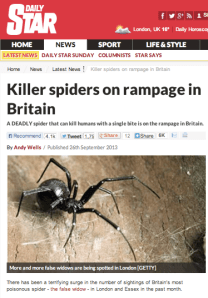
A painful death from a dangerous spider that can kill you with a single bite? No.

I’ve just been reassuring my sister that, no, even if she continues to pad about the house in bare feet, she will not suffer an agonizing death from an invasion of deadly spiders.

She has been finding Steatoda nobilis in the house. Sometimes, rather unhelpfully, called a ‘false widow’, Steatoda is vaguely related to the infamous black widow, Latrodectus mactans, but only in that it is in the same spider family (Theridiidae), along with a host of tiny, insignificant (and harmless) critters often called tangle-web spiders because of the messy silk strands they weave. Theridiids have a special comb of stiff hairs on their back legs, to better help them wrap their prey with silk. Unfortunately this small detail of comparative anatomy is lost on most journalists and this is the type of headline we have to contend with

Give me strength.

Give me strength.

I had a look at the jaws under a microscope. Surprisingly, the fangs look rather short and blunt, nothing like the needle-pointed scimitars of the woodlouse spider, Dysdera crocata, which understandably can give quite a nip if picked up injudiciously. So I’m wondering how Steatoda can get through human skin. Next time I see one, I’m going to pick it up and see.

The noble spider.

The noble spider.

This is one of the specimens I was sent, photographed down the microscope. I’m struck how the pattern on the abdomen (this one a male) looks rather like a fleur-de-lys — truly a noble symbol, and well befitting such a noble spider.

Cabinets of curiosity

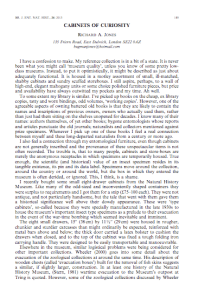
I was quite pleased that one of my odder submissions to the British Journal of Entomology and Natural History was actually published. Similarly titled to this blog post, it’s about insect cabinets.

I’ve got a motley bunch of cabinets, nothing fancy, nothing expensive, nothing antique. But each of them has a story. So too do the cabinets of many other entomologists, apparently.

The editor, John Badmin, has kindly allowed me to make the PDF freely available:

Jones, R.A. 2013. Cabinets of curiosity. Br. J. Ent. Nat. Hist. 26: 149-155.

Jones, R.A. 2013. Cabinets of curiosity. British Journal of Entomology and Natural History 26: 149-155.

And here's one of the most curious.

And here’s one of the most curious.


A pragmatic acceptance of pain

“Don’t get me started” was how it all started.

Except it was actually Sally-Ann Spence of Minibeast Mayhem who really set the touch-paper going.

“Reports everywhere of ‘drunk, disorderly and aimless wasps’ having a laugh stinging humans. I’d love to read your take on this”.

Well, my take was that more people ought to get stung by wasps, then they’d realize how petty and pathetic it is to winge on about them. Not my most diplomatic pronouncement, perhaps, but it’s difficult to be completely judicious in the ferociously concise dictate of Twitter’s 140 characters.

This article from the Independent was the sort of thing Sally-Ann probably had in mind. It’s a good thing she doesn’t read the Daily Mail, or she might have stumbled across something like this. Urgh. Ironically, earlier this year the Express was spouting on about the sparsity of wasps. All utter hooptedoodle, of course.

Every year a bunch of hot and bored journalists realize they’ve seen a wasp some time in July, August or September, and the result is a spate of ridiculous articles about wasp plagues, wasp perils, or wasp invasions. It can get rather tedious. I’m not even going to make a list of the straightforward errors of scientific fact that are constantly trailed out.

Last week I was interviewed by ITN simply because they’d noticed all the other news reports about increasing wasp numbers. They were at least open to squashing the doom-laden stories rather than the wasps, and their piece did explain the normal, natural, peaceful reasons behind the seasonal increase in wasp numbers in late summer and autumn.

The Guardian also put out a much more measured article and if anyone wants the biology behind wasp numbers, greater this year, or not, I recommend this as a good place to start.

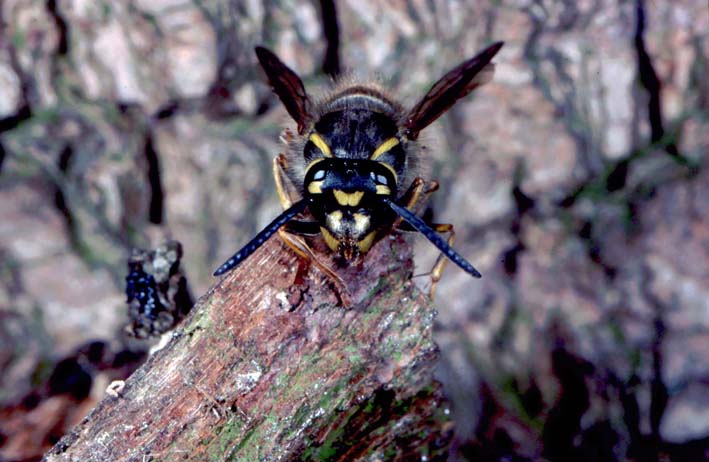
Handsome beast or villainous foe? You decide.

Handsome beast or villainous foe? You decide.

With my slightly flippant Twitter comment, I wanted to make another point. In the great scheme of things, a wasp sting is really very insignificant. It’s an almost infinitesimal dose of  venom, and it’s purpose is simply: ‘Oi get off!’

I know that in (thankfully) extremely rare cases, a single sting can be dangerous — in mouth or throat it can seriously interfere with breathing, or in a particularly unfortunate victim the body’s self-destructive overload of anaphylactic shock can be fatal.

Ordinarily a wasp sting is painful, yes, but no more so than stubbing a toe or shutting your finger in the door. A sharp pin-prick, a localized throbbing, and a dull ache for an hour or so, maybe an itchy tender spot for the rest of the day. It’s actually no big deal. It’s much less painful than a honeybee sting, that’s for sure. But what gives it a more sinister impact is the  notion that the wasps are, somehow, after us, that we have been targeted. What becomes anthropomorphized into an evil vicious premeditated attack, is really a normal and natural defensive reaction of a few small creatures in fear of their lives, or their nest.

The trouble is that humans have forgotten what is natural.

A short while ago I was reading Urban Entomology by William Robinson (London: Chapman & Hall), published in 1996. His first paragraph gave some fascinating figures: in 1800 only about 1.7% of the world’s population lived in towns and cities, humans were rural and primarily agrarian; but with the industrial revolution the trend to urbanization was set, by 1950 the urban population had increased to 28% and by 1985 it was 42%. When he wrote the book, he envisaged that by the year 2000 half of the world’s population would be living in towns and cities. In the end this milestone was passed in 2008. We are now, primarily, an urban species. We have left the fields behind and we have forgotten what is natural.

Now I don’t want nostalgia to cloud my argument. I’m not suggesting that pre-urban humanity was living in some golden age of idyllic natural balance. It was not, it was living in an era of disease and pestilence and hardship. But what it did have was a slightly more pragmatic acceptance of some of the more minor ailments by which it was afflicted — things like wasp stings and mosquito bites; house flies, bed-bugs and larder beetles too, come to that. These were all part of the natural environment, annoying they may have been, but they were familiar, part of every-day living, something to deal with, yes, but nothing to worry unduly about.

Modern urban life is about as far removed from natural as you can imagine. Houses are hermetically sealed by double glazing, weather is banished by central heating and air-conditioning, anonymous food is bought in bland packets and locked away in tupperware containers and fridges, we have more clothes and ‘stuff’ than we know what to do with. The natural world is shut out, and that bit closest to us — the garden — is manicured to within an inch of its biodiversity. So when a small part of the natural environment, be it hibernating ladybird, housefly, larder beetle, clothes moth or carpet beetle, comes visiting us indoors, rather than simply getting on and dealing with a few small insects, the now alienated humans see a veritable invasion of dangerous undesirables. Unlike their more pragmatic non-Daily-Mail-reading rural forebears, modern urbanites seemingly don’t know what to do, other than complain, flap about, or reach for the bug spray. It’s the fear of the sting, rather than the sting itself, which is the problem. Is it any wonder that people no longer know how to cope if some wasps are attracted to a few jam sandwiches on the patio?  Is it any wonder that needless panic ensues?


—————————————————————————————————

Post script

Although of a completely different insect, my father tells a revealing anecdote from his childhood. When, in 1944, aged 14, he manhandled a second-hand bedstead through the bombed out streets of Shepherd’s Bush and Paddington on a borrowed costermonger’s barrow, he was pleased with his thrifty purchase, but not at all surprised when blood-spots appeared on the sheets a few days later. These were the tell-tale evidence that he had also carted bed-bugs through west London in his newly acquired furniture. Instead of panicking, or trying to sue someone, he and his mother set about dismantling, stripping, and cleaning the bed, and removing the vermin. Patiently, pragmatically, they coped.
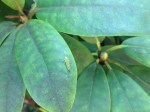
Dulwich Park’s rhododendrons

Rhododendrons are all very nice, but they sometimes get a bit of bad press, especially in the north and west, where they have become an environmental nuisance, labelled with that dreaded appellation — invasive alien pest.

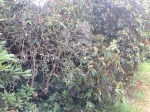
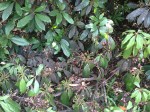
In the semi-formal ‘American’ garden in Dulwich Park, they are pretty well contained, and, as yet, show no signs of taking over. In fact, they may be having a hard time of things. I took a wander round on Monday (26 August 2013), and found them looking rather disheveled.

According to the Dulwich Park Friends website, the bushes suffered from Phytophthora fungus during 2010. I’m not sure what the problems in the garden are now, but many bushes were covered with mildew, and others appeared dead, with leafless patches and broken twigs. Elsewhere, white waxy patches showed major infestations of cottony cushion scale, Pulvinaria floccifera (thanks Claudia Watts for identifying it from a tweeted photo).

I’d gone looking for the rhododendron leafhopper. There were hundreds of them. I love the way they play hide-and-seek at the leaf edge — sidling out of sight as you approach. If you twist the leaf to reveal them, they sidle back round the other side again. Eventually they get bored and hop away, only to open their smoky grey wings and fly right back to land on another rhododendron leaf a few feet away. Judging by the empty nymphal skins that littered the leaves, the population had only recently reached adulthood.

I also had a look for the rhododendron lacebug, Stephanitis rhododendri. I found this back in 1992, and although I noticed the distinctively damaged leaves for a few years after that, I have not seen the insect for at least 15 years. Thanks to the generosity of the Biodiversity Heritage Library, I’ve been able to download a PDF of my short Stephanitis article published in 1993.

At that time, this pretty lacebug was thought, possibly, to be extinct in Britain, having almost vanished, where 75 years earlier it was common and widespread. I don’t know of any recent sightings, and its absence from the splendid British Bugs website suggests it remains extremely scarce.

Post-apocalyptic entomology

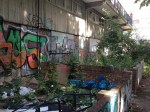
I’m left wondering if the Heygate Estate, at Elephant and Castle, South-East London, was ever the site of a gate through which hay was brought. For the last 40 years it has been the site of brutal concrete monolithic blocks of flats towering over small gloomy ‘communal’ gardens. Ever grim, in my memory, seen from the top of a passing bus, the estate became even grimmer as it was cleared of tenants, and boarded up in preparation for demolition. A year on from its final closure it stands as a Chernobyl-like shell, abandoned, desolate, empty — just the sort of place to do an environmental survey.

That’s where I’ve been today.

Actually, it was nowhere near as unnerving as I thought it might be. The sun was shining brightly, the air was alive with bees and butterflies. The gardens have run wild, the mown grass has grown shaggy, the pavements and cracked tarmac have acquired a green haze of thin vegetation. Overhead sparrowhawks were squealing.

And almost the very first insect of the day was a silver-washed fritillary. Ordinarily a relatively scarce creature of old woodlands, where the caterpillars feed on violets, growing in the dappled sunlight of coppice cycles and cleared glades, I’d have been pleased to find this in any Wealden forest. But in Elephant? Amazing.

I’m heading back there next week, for another look around. Purple emperor maybe?

—————————————————————————————————-

Incidentally, I love the fact that, in London, you can get into a bus or a taxi, say “Elephant please mate” to the driver, and yet this is accepted as perfectly normal behaviour.

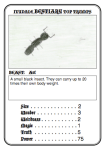
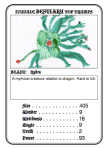
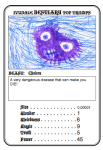
Ivydale School Bestiary Top Trumps

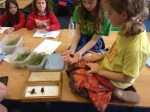
For the last few years I’ve run a small lunch-time club at Ivydale Primary School, mysteriously entitled “Bestiary”. I wanted a novel way to engage the year-6 children in natural history, when they are already barraged with stunning TV wildlife documentaries and almost every animal has a wikipedia page for them to browse at their leisure. So instead, we went back in time.

Despite modern advances in science, there is still a tendency to look back in fond admiration at the arcane and sometimes potentially secret knowledge of the ancients. In some fields (herbalism maybe?) there seems a certain professional snobbery in quoting the overly famous Gerard’s herbal, and it’s easy to forget that not one of the plant preparations was ever tested with any rigour, and the whole thing is more or less based on anecdotal reports of recovery from ill-understood medical conditions suffered by old wives. True, some modern drugs hail from traditional plant extracts (aspirin and digitalis the most oft-quoted), but most seem unlikely, except to enfreshen the fetid air of the sick bed.

The animal equivalents of herbals — bestiaries — contained an equally mixed hotch-potch of the familiar and the fantastical, mundane and mythical creatures sat haunch by jowl, often beautifully painted, but sometimes comically misportrayed, as if (as is quite likely) drawn by the figurative equivalent of Chinese whispers. Rabbits and hares are reproduced with the accurate, but blunt, knowledge of the butcher, whilst unfeasible elephants look like overweight, tusked deer with trumpet trunk and floppy-toed feet. And as for sea serpents, griffins and chimaeras….

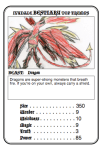
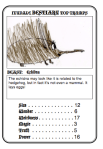
So here was the perfect opportunity to incorporate natural history with legendary history, artistic license with anarchic fun, science with silliness. They’ve been making their own bestiaries. And this year they created Ivydale Bestiary Top Trump Cards. They are brilliant.

The mix was just as quirky as in any medieval bestiary. Alongside familiar critters like chickens, slugs and fox were some more unusual beasts such as echidna, seahorse and hippo. There were mythical marvels like roc, dragon and hydra, and (just for completeness) a few plants (venus fly trap, mandrake) and geophysical entities (northern lights, meteor, tsunami). Then there was the just plain odd — an alien called Zwg from the planet Poggle, the God of Death and the Count Van Evil Sock, yes an evil smelly sock that wants to take over the world, very strange.

In the end Isobel, Kristen, Saoirse , Sidney and William (together with Eliza and Tariq in 2012) produced 72 cards. I think they are wonderful and offer them here to anyone who wants to download them and play.

Then it was stag beetle time again here

The stag beetles came back. This is South London’s equivalent of the wildebeest migration across the Serengeti. Every year, with luck, at the end of May and beginning of June, the gardens of East Dulwich are abuzz with the whirr of stag beetle wings, as these magnificent beasts fly at dusk in search of mates and egg-laying sites.

As luck would have it, the beetles started to appear in the garden on June 18, two days before Ivydale Natural History Club’s regular Thursday meet, so I took them along. Obviously.