Call of nature — the secret life of dung

We have a cover concept, and a title. And I’m very pleased to see that the spine of the book will be adorned with an elephant’s bottom. Publication, some time in October I think.

Elephant trumpeting = calling; there's a visual pun thing going on here too.

Elephant trumpeting = calling; there’s a visual pun thing going on here too.

From chapter 13, Glossary: Call of nature, idiomatic expression of a general need to urinate or defecate. The only euphemism I will allow myself, but only if accompanied by the natural act itself, somewhere out in nature.

Well, I’m calling it the woodhopper

Not a woodlouse, but Arcitalitrus dorrieni, Britain’s only terrestrial amphipod. A native of Eastern Australia, it was first found in the UK, in the Isles of Scilly in 1924, and has been spreading across the West Country ever since. I found it in Battersea Park some years ago, but these were found in Nunhead Cemetery earlier this afternoon.

The first click is the loudest

Between Friston Forest and the cliff-tops of the Seven Sisters is a rolling chalk downland of arable fields, hedges and grazing meadows, and when my family first moved down to Newhaven, in 1965, it was an easy bus journey away for a ramble in the countryside. It was here, I must have been about 10, so perhaps 1968, that I was ambling along behind everyone else examining the contents of my sweepnet, when I saw a large (15 mm) long, narrow, brown beetle at the bottom of the bag. I picked it up and was immediately jolted by its violent twanging in my fingers.

Humans are born coleopterists, otherwise why would we have such perfectly cushioned pads on finger and thumb to hold beetles gently but firmly in place? I held it there, softly, but it kept pinging away. I put it up to my ear to listen to the crisp clicking sound. Wow. I realized that this was something terribly exciting, so off I ran to show my find to Mum and Dad.

My father immediately recognized it as a click beetle; from memory it was probably the exceedingly common Athous haemorrhoidalis. The power of the jack-knifing beetle was amazing, and of course it was all the more impressive to see one flip right up into the air, spinning wildly, in its escape bid, a superb predator-avoidance tactic.

The clicking noise is highly reminiscent of the deathwatch tick. My father later told of the occasion he was sitting quietly at home when he suddenly became aware of a soft clicking noise, repeated erratically, but insistently from somewhere over in the corner of the room. Deathwatch beetles only occur in old buildings where massive hardwood beams and joists were already infested when the building was erected centuries before. Though they feed slowly and laboriously, scores of generations later they have hollowed out large voids, enough to seriously weaken the structural integrity of the woodwork, with sometimes catastrophic results. Our 1930s Newhaven house seemed a highly dubious locality, so what was this?

On hands and knees he started investigating the dusty corners of the bookcase and the underside of the armchair. Nothing. It seemed to be coming from the unlikely piece of spindly display shelf furniture referred to as the whatnot. Well, it was made of wood, but there was so little of it that a colony of deathwatch seemed implausible. The noise was definitely coming from underneath the bottom whatnot shelf, and gently tipping the thing on its side revealed a small grey lump of something dangling by a thread.

It was a click beetle, caught in the web of a house spider. It was still alive, barely, and despite its seemingly hopeless predicament, its flicking, jolting, predator defence mechanism had kicked it. It was struggling, flexing ineffectually, to escape the bonds of an undesirable fate. Another entry in the book of family legend.

I never pick up Athous haemorrhoidalis now, it’s probably Britain’s commonest click, and pretty easily named in the field, either on a flower, or at the bottom of the sweep net. Next time, though, I’m going to hold it gently but firmly, between opposable forefinger and thumb pads, and hold it up to my ear, to revisit that memory of a summer long ago.

My head just grew two sizes bigger

CbF0P9gW0AAd6Fw.jpg-large

The young paperbacks are released out into the wild.


If it wasn’t enough that m’latest book has appeared in paperback, then the book review in the Guardian was the icing on the cake. What can I say? I am scarlet with smug embarrassment.


Screen Shot 2016-02-26 at 22.11.19

I keep going back to check that it really is a review of my book.


Dung — what could be more natural?

Dung — a natural history is almost there. The typescript has been delivered to the publishers. We have a cover concept. We have most of the illustrations. Finding pictures to illustrate the book has been fun. There will be an identification guide to dung users; mostly beetles and flies, but a fair few oddities in there too. And there will be a field guide to the dung parcels themselves. I’m not a very good artist, but after sketching quite a number of animals’ pellets and deposits, I now regard myself king of the stipple. Verity has come to the rescue on some of the more challenging pats — those with more subtle sheens and textures. She has also painted some of the more obscure dung beetles.

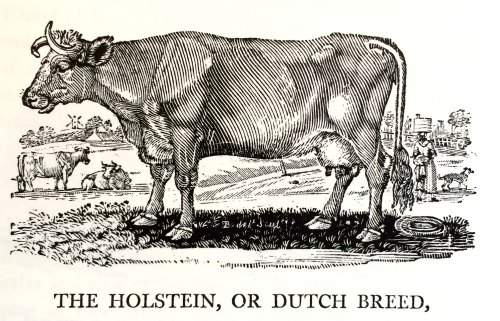
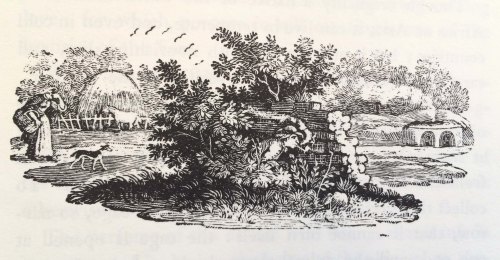
Most of the pictures I have been able to find in old books. These are often exquisite engravings, perfect for the job, but out of copyright — so free to use. And it was whilst I was leafing through Bewick’s A general history of quadrupeds (originally published 1790) that I came across these superb illustrations.

IMG_3380

A fine cow and obligatory pat.

IMG_3374

When was the last time you saw a picture of a defaecating dog in a children’s book?

IMG_3378

Yes, A general history of quadrupeds was intended as a book for children.

There can be no doubt what this chap’s up to. The smoke from the charcoal oven and from his pipe clearly indicates which way the wind is blowing. And the woman is not holding her hat on against the wind, she is quite clearly holding her nose.

And, in case you’re interested, that means the dung beetles will soon fly in from stage left too, flying up-wind into the plume of volatiles which include tasty signals like skatole, phenol and 2-butanone.

The curious incident of the dung beetle in the night-time

My father made eye contact and said something along the lines: “Can you hear that?” To start I wasn’t sure whether he meant Radio 4 droning away in the corner of the room, my brother careening down the stairs, or the kettle whistling on the gas in the kitchen. No, he was referring to an almost inaudible tick, tick, tick, coming from the window. He had the knowing look of someone who is about to show off something new.

As a 10-year-old, it was not unusual for me to be sitting in the lounge, as we called my father’s book-lined sitting room. Whilst he sat in the centre of the room behind the large polished wooden desk strewn with pens, papers and books, perhaps a microscope and a drawer of insects, I’d be perched at the smaller bureau-style table against the wall. Maybe I’d be doing homework. Actually, I’m not sure 10-year-olds had homework then. More likely I’d be writing up my own nature diary from whatever family trek we’d been out on that day. I might even have been pinning my own insect specimens, or doodling a sketch of a plant, or a map.

The tapping was definitely coming from outside the window. We drew back the curtains, but the brightly lit aura of the room barely penetrated the dark outside. There was nothing I could see. My Dad knew better. Slipping on shoes we tripped round to the front of the house to see what was going on.

The noise had stopped when we got to the window, but Dad pointed to the windowsill, probably just at or above the level of my eyeline. There, crawling across the yellow paintwork was a beetle.

Medium-sized (12 mm), elongate, parallel-sided, subcylindrical, dark brown nearly black, it had shortish stout legs and strongly clubbed antennae. Aphodius rufipes was my first dung beetle. It had flown in from the flood-plain grazing meadows that flanked the River Ouse hereabouts. Many hundreds of metres probably. Quite an achievement for a half-inch insect.

Aphodius Reitter 3 copy

Some handsome dung beetles. Aphodius rufipes is top right.

I strain now, but I can’t quite remember whether I thought this an odd thing for a beetle. Maybe the notion of dung recycling had already crossed my radar. I certainly understood about stag beetle larvae living in rotten wood. I probably knew about drone flies breeding in flooded tree holes. It’s all decaying organic matter.

It wouldn’t be long before Dad would also show me the huge dumbledors, Geotrupes spinipes, or maybe it was stercorarius, heaving its juggernaut way through the fingers of my clasped hand, then flying off, like a miniature helicopter. The power of the toothed legs amazed me, and the feeling of that downdraft as it buzzed away stays with me still.

Dissecting a cow pat came naturally to me. Other dung beetles followed. The great glossy Aphodius fossor, slightly shorter, but thicker and heavier than rufipes, was a favourite, so too was the small mottled and rather rare Aphodius paykulli. The chunky earthmover shape of Onthophagus coenobita appeared when I graduated to dog dung, and the mythically horned Minotaur beetle, Typhoeus typhaeus was eventually dug up from under rabbit crottels in Ashdown Forest.

I still find Aphodius rufipes occasionally. In cow or horse droppings. Never at my lighted window though. But whenever I hold its  smooth elegant shape in my fingers, I still think back to the warm summer Newhaven evenings, and the delicate head banging on the lounge glass.


This year I was feeling guilty so I did take an exhibit along

Saturday 14 November 2015 and the BENHS Annual Exhibition trolled around again. It was the second year at Conway Hall in Holborn and by way of a contrast and comparison to last year, here’s another photo-essay, facetiously captioned but otherwise comment-free.

My only criticism of the place is that the lighting there could do with some oomph, even if this were a series of table lamps.

See you again next year.

Small, but perfectly puzzling

You’re just going to have to take my word for it that this was the most interesting insect I looked at down the microscope today.

What's this then?

What’s this then?

Two millimetres long, black, moderately shining, averagely punctured, appallingly carded at an inconvenient skew, it was not immediately obvious what it was. And that was the point. That was why it was interesting.

It’s not very often I look at an insect and can’t even work out what family it’s in. This one just did not look right. My normal method of identification is to think something along the lines of “That’s a ground beetle, maybe an Acupalpus or similar”, “Ah, a robberfly, one of the shiny black ones”, or perhaps “That’s a very small Dolichopodid”. I know where to start — what family, often what genus, and very often which species group, and off I go to find a key or a picture to settle the matter.

But here I was, dithering. I just could not summon up a mental image of which group of beetles this one fitted in with. I started flicking through picture books, but the trouble with small black slightly shining beetles, is that they all  look just like every other small black slightly shining beetle. I peered at the antennae, counted the tarsal segments, eyed up the bristles on the underside of the abdomen, admired the flattened legs. Nothing.

Back to basics then, and a wade through the laborious dichotomous keys to identify which beetle family, until I eventually get to Phalacridae, pollen, flower or smut (fungus) beetles according to which book you use. But I’d already dismissed this distinctive group because it didn’t look like one. Except, now I look again, and trying to overcome my preconceived suspicions read through the descriptions given in volume 3 of the Rev. Canon W.W. Fowler’s excellent Coleoptera of the British Islands (1889) where the key immediately splits off Phalacrus caricis — the only British phalacrid that doesn’t look like a phalacrid because it is not convex and shiny enough.

And that’s what it is. It’s not rare, it’s not pretty, it’s not striking. It’s nothing out of the ordinary, except that it’s slightly flatter and slightly more granular than the others in the family. But I had never seen it before, and it presented a puzzle to me, which I eventually solved.

This, then, is my utter delight in nature. Not finding great big flashy brashy bits of animated insect bling; not rediscovering some rarity last seen a century ago; not seeing the spectacle of mass migration, or observing a deadly pursuit, or a bizarre mating ritual. It is in the simple intellectual puzzle of finding something slightly different, slightly unusual, and working out what it is, and how it fits in with the world.

I’m easily pleased.

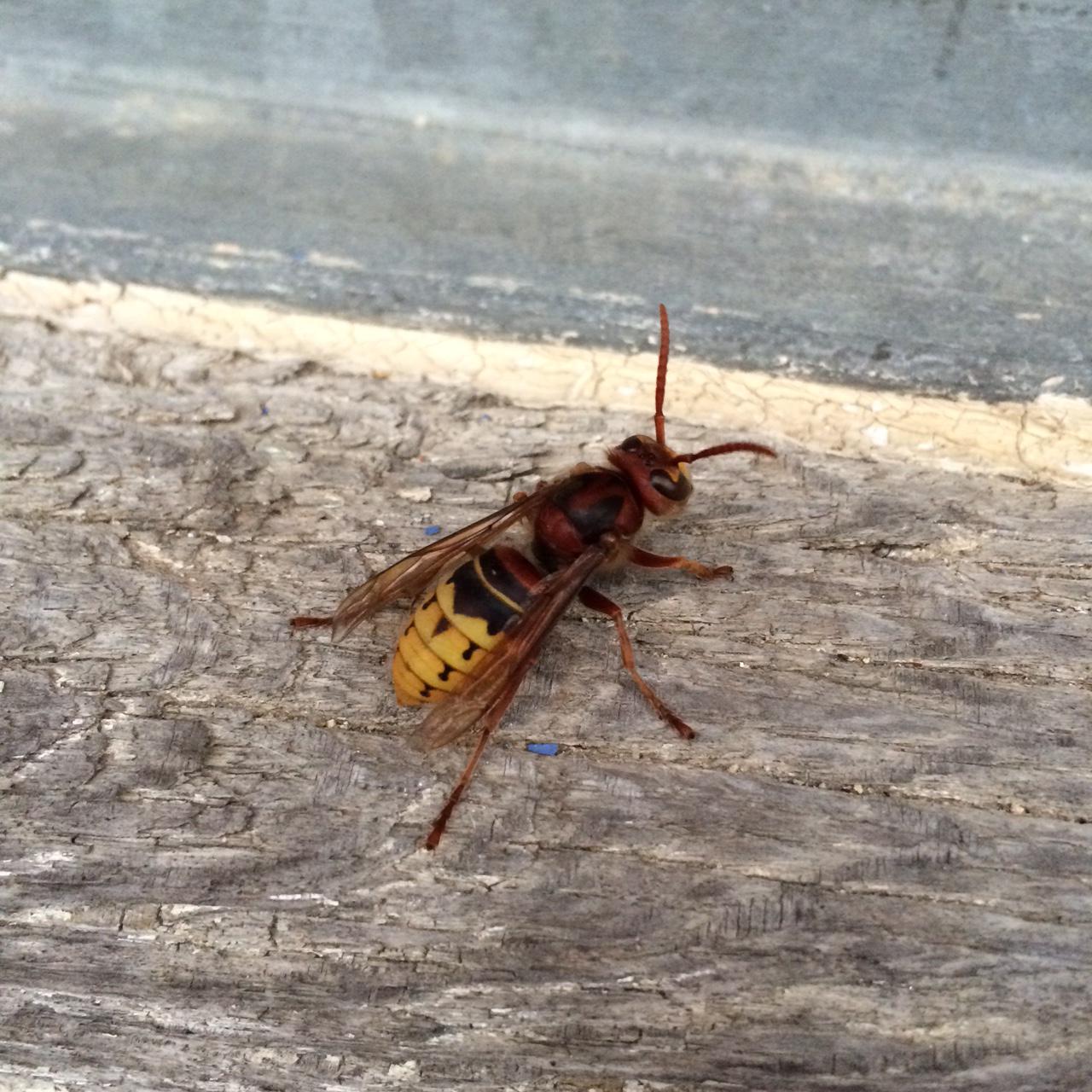
At first I thought we had a pet hornet

When I let the hornet out for the third time, I’d begun to think she may have been part of a slightly worrying in-gîte colony. I love hornets, but my family are slightly less enthusiastic about them, and because we don’t see them very often they always look huge. Hence also threatening. They are much more common here in France, than in southern England.
So I am mightily relieved, later, when It transpired that the well-worn wooden threshold to the upstairs doorway is perfect hornet nest material and she (or maybe several different shes) has simply taken a wrong turning into the bedroom after a chewing session, and become disoriented by the skylight. We’ll probably be seeing her again, but this time we’ll know what she’s after.

Another larder invasion, and a lesson in biogeography

Another average day in the life of an itinerant entomologist as I receive the following photo from Viv via Facebook.

"Richard — do you know what this is? They are ant size and invading my kitchen and I can't work out where they are coming from or what to do about them.

“Richard — do you know what this is? They are ant size and invading my kitchen and I can’t work out where they are coming from or what to do about them.

Shortly after comes the report that they are emerging from a bag of bird seed in a cupboard. My suspicions centre around the grain weevil, Sitophilus granarius, perhaps the world’s most devastating pest of stored food, but not something you come across very often nowadays. Tupperware, clingfilm and fridges have done away with so many previously important household pests, which can now no longer find their way into our food reserves. The grain weevil is not a very 21st century household pest anyway, since we no longer store whole grain wheat, ready for milling into the daily loaf, in our houses any more.

Back in a pre-industrial world, the household or village grain store would have been constantly under attack from grain weevils, laying their eggs, one in each kernel, which would then be hollowed out by the grub until the adult beetle chewed the distinctive circular hole and emerged a few weeks later. The beetles, and the hollowed remains of wheat seeds are a regular find in archaeological digs throughout the Old World. Despite being flightless, completely lacking wings, it was already cosmopolitan, occurring throughout the Middle East, Europe, North Africa and Central Asia, something like 8000 years ago, as agriculture took hold on civilized humanity. Its origins are frustratingly unknown, it has never been found in any truly natural habitat and is only known from human granaries. It does not even occur in wheat fields, or in the Horn of Africa where our cultivated wheat progenitors are thought to be native, and still grow wild.

I don’t usually make house calls, but since Viv lives just up the road I called round at no extra cost. It’s easy to collect a few specimens; one just inside the front door, several in the kitchen and one from the cat’s water bowl. Now for a closer look.

Ah, so not the grain weevil after all. But I was close.

Ah, so not the grain weevil after all. But I was close.

Turns out it isn’t the grain weevil after all, but its congener the rice weevil, Sitophilus oryzae. It has similar life history, but is Far Eastern, breeding in rice grains, rather than wheat. It will also attack other seeds and grains.

IMG_1788

Oh look, I know someone who’s written a book about household animals….

Unlike the grain weevil Sitophilus oryzae can fly, and also unlike the grain weevil it is found out in the wider world, creating natural breeding reservoirs in spilled grain near the paddy fields.

So, Viv, you’d best revisit the pantry and check out the biosecurity of your basmati, arborio, lentils and pearl barley.