A woodlouse as big as a hen’s egg it seemed

There are some events significant well beyond the moment of the actual encounter. They become seminal memories, key turning points in a life, or major influences on future choices. For me, many of these moments appear to involve finding a particular insect. Or in this case a crustacean.

Aged 11, I started at Newhaven Tideway Comprehensive School. It was right on the other side of the town, a good 2 miles walk away;  there were various possible routes, but to start with I took the Drove Road into town, then along the West Quay Road, and finally up Gibbon Road to the school. Things have changed a lot since — at that time there was a bustling harbour with a good dozen or so large wooden jetties along this side of the River Ouse, each with several fishing trawlers moored. There was also a large quay area with scoop-cranes to unload gravel and sand from cargo ships. It wasn’t the most direct way to school, and usually took me nearly an hour, but it was the most interesting.

When the tide was out, the muddy and rocky river bank was exposed, and dawdling home I would often go right down to the water’s edge to skim stones or turn over rocks looking for small shore crabs. It was on one such slippery exploration that I hauled over a slimy algae-covered boulder to reveal a biological marvel — the biggest woodlouse I had ever seen. It seemed as big as an egg when it first scuttled off. It was certainly very large, probably the maximum 30 mm that this fantastic creature can reach.

It could have been the Kraken.

It could have been the Kraken.

I had never seen anything like it, and knew I had to show it to someone, or they would never believe me. Armed only with a battered briefcase full of exercise books I had nothing to contain my treasure. I was not to be daunted. I walked the rest of the way home with the beast trapped in my cupped hands.

I was slightly deflated to learn that the sea slater, Ligia oceanica, was a widespread and common sea critter, but nothing could take away from me that initial sense of wonder. I still get a thrill when I find one now, under a stone by a rock pool or on the saltmarshes of the Thames Estuary. I was most pleased to find them crawling up the rotten wooden fenders deep in Deptford Creek (where this photo was taken in May 1998) and at the outfall of the River Wandle at Wandsworth, I think the UK’s most inland record.

But despite my childish over-exageration, in the intervening 40 odd years, I still don’t think I’ve ever seen one quite as big as that first.

Paying lip service to earwigs

Recently going through a couple of year’s worth of specimens, having the usual clear-out of duplicates and spares, I came across this.

Not your average earwig.

Not your average earwig.

The lesser earwig is mostly famed for producing some unusual results when googling images using its scientific name, Labia minor. Quite what the labia (lip) it is named for, I have been unable to ascertain; never mind, this didn’t stop me punning my title here. Sorry.

Anyway, it’s an interesting beast. Since Britain’s earwig fauna is sadly inconsequential, anything that is not the common earwig, Forficula auricularia, is worth a second look. It’s much smaller (4–7 mm) than the familiar garden species (12–15 mm), narrower, and with the tail forceps straighter and slimmer. It flies readily, and although there are rare reports of Forficula taking to the air, Labia is almost always found flying — it regularly flies into moth traps, and this specimen was attracted to a mercury vapour light put outside the kitchen door.

It’s widespread, but not common; I’ve only found it a few times, and it’s certainly not as common as it once was. My informant for its previous abundance is, of course, my father, who recounts that it was very frequent in the London area, when he was a boy in the late 1930s. And this seems to fit with the reports that it is a denizen of manure heaps, because in the days of greater horse-drawn transport, there was always horse dung to be found strewn across the metropolitan roadways.

Tidiness, it seems, has done for the lesser earwig as it has done for so many critters from our unhygienic and unsanitary past. A sad loss.

The most obscure entomological Christmas present, ever

Catrina is usually very wary when it comes to getting me insect-related Christmas presents. It’s not that I’m overly picky. I don’t turn my nose up at tawdry insect-themed nicknacks. I’m happy to wear ladybird-patterned bow-ties or beetle-infested socks. And it’s not as though I have a complete entomological library and reject anything unless it’s over 150 years old and comes in an antique gilt leather binding. No, it is just that she is usually reluctant to feed my insatiable addiction.

So I was very surprised, pleased, but surprised, when this arrived.

Does not produce a musical note when blown.

Does not produce a musical note when blown.

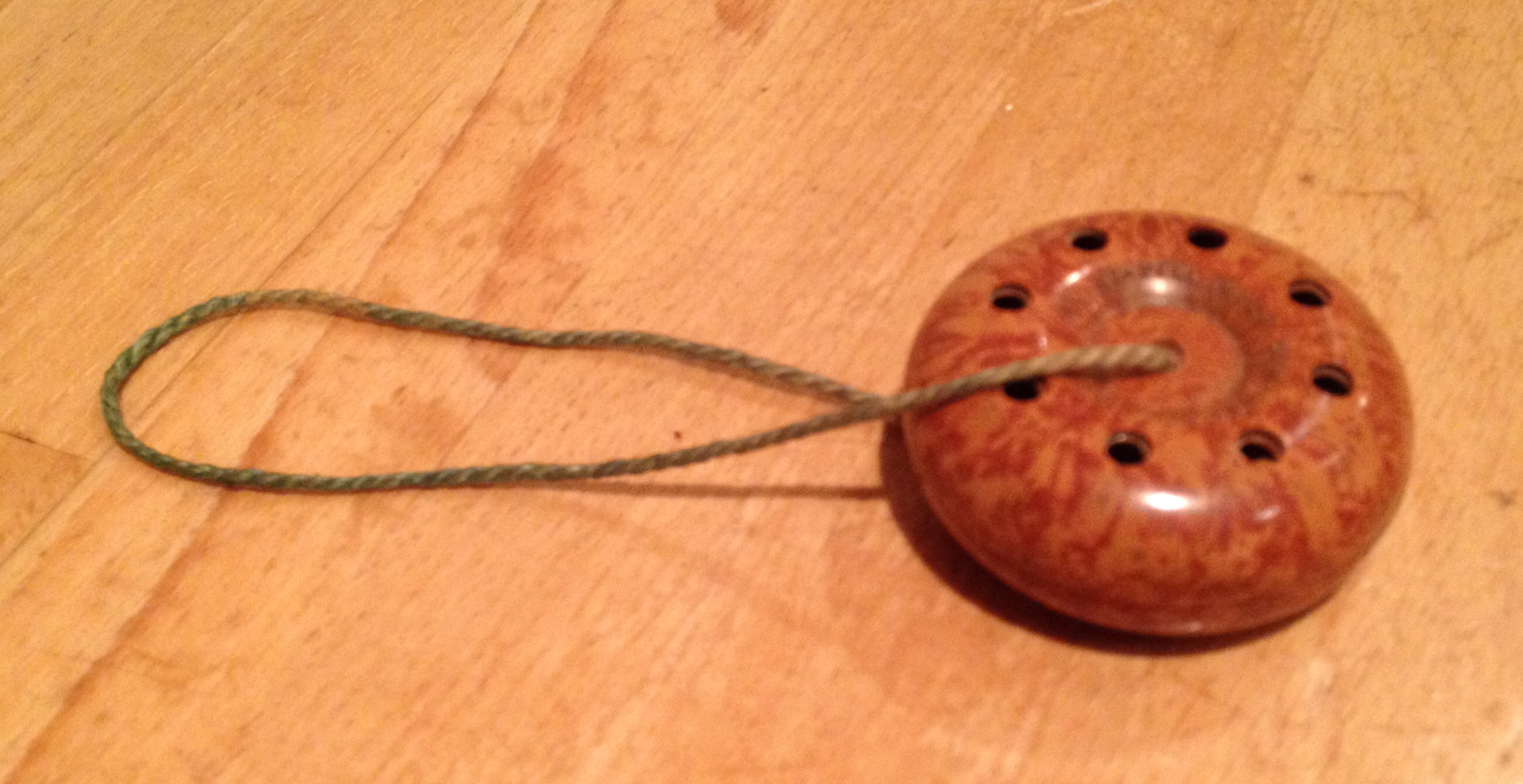
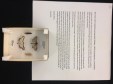
It is, without doubt, the most obscure entomological item I have ever been given. It’s about the size of a yoyo, made of bakelite, and is hollow.

It is a vintage mothball holder. Brilliant.

Embossed on one side is says:

GUARDIAN ANTI-MOTH CASKET      BRITISH MADE

and on the other:

TO RE-FILL WITH CAMPHOR — UNSCREW

I’m guessing it’s from the 1950s or 60s. It’s sculpted to take mothballs, and has a hole in the centre so it can be strung up in the wardrobe. At the moment it’s hanging as an additional bauble on the Christmas tree.

What is even more intriguing, is how she found it. The Interweb is a wonderful place, but Catrina does not spend all her time searching out odd insect-related stuff for me. She was actually looking for a retro bakelite wool holder. Something like this maybe.

When it popped up on eBay she hesitated for all of 1 second.

I have promised not to start collecting them.

Not a bad review

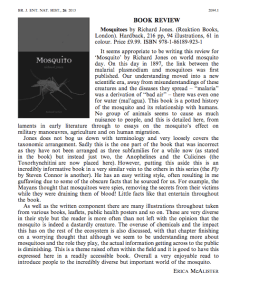
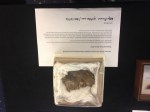
This just in from British Journal of Entomology and Natural History:

It's always gratifying to think someone can guffaw when they read what you have written.

It’s always gratifying to think someone can guffaw when they read what you have written.

Apart from being taken to task over my interpretation of mosquito subfamilies, I’m quite pleased with this review. Thanks Erica.

Insective adjectives

A chance tweet from the Horniman Museum Walrus (yes, he has his own Twitter account) suggested that the English language was all the poorer for not having an adjective for all things of a walrus nature. His own suggestions — walrussian, walrusite — were quickly followed by walrusful, walrusellian, tuskous, odobensine and, my own modest contribution, walrish.

This immediately got me thinking that there are also precious few insectival adjectives.

A quick search comes up with just a very few in common use, many of these pejorative:

Antsy (like an ant), Apian (of, or belonging to bees), Formic (of or from from ants, but really limited to acid), grubby (having lots of grubs, slightly archaic), Larval (like, or of, a larva, mostly technical talk though), Lousy (like, or infested with lice), Maggoty (full of maggots), Mothy (really just an alternative for moth-eaten), Waspish (although this is not often applied to wasps).

Admittedly there are plenty of pseudo-English adjective-like words, but these are merely clipped versions of Latin names used in academic texts — things like carabid, tachinid, capsid, for example, from Carabidae, Tachinidae, Capsidae, or dipteran and lepidopteran from Diptera and Lepidoptera. Dropping one of those casually into the conversation usually means stopping and explaining, something not very helpful to the flow of easy dialogue.

I’ve had a go at drawing up some more colloquial adjectives. So here are a few to be getting on with. First the easy ones: Aphish (like aphids), Beey (like a bee), Bugly (I prefer this over ‘buggy’), Bumblebling (just to differentiate from bumbling, which is unfair on bumblebees), Caterpillory, Caddish, ChaferousCicadian (like a cicada), Clegular (like a cleg, or indeed other horsefly), Crickish, Dumbledoric (like the large black dungbeetle of that name), Earwiggly, Grasshopeful, Locustardly, Mantish (or Mantic), Gnatty, Midgely, Roachy, Scarably, Silverfishy, Sticky (like a stick insect, obviously), Termighty, Thripsical (like or of thrips), Whirligiggly (like a whirligig).

Several butterflies and moths can have their own adjectives: Angleshady, Bloodvain, Brimstoney, Burnetly, Cabbish-white, Clifden-unparalleled, Eggarly, Fritillarious, Hairstreaky, Looperior, Orange-tipical, Peacocky, Reddish- and Whitish-admirable, although I’m not quite so sure about Speckled-woody, Small-coppery or Small-heathy.

And finally, a few slightly more subtle ones, based on my best bastard pidgin Latin: Cicindelicious (of tiger beetles, or glow-worms, depending on your classical bent), Coccinelly (to do with ladybirds), Grylled (of crickets), Libellulous (of dragonflies), Sphingy (like a hawkmoth).

All further suggestions welcomed….

More peering into glass-topped cases is called for

Saturday saw the return of the British Entomological and Natural History Society (BENHS) Annual Exhibition. I’ve been before, many times.

For the last….what, 20 years?… the Annual Exhibition has been held at Imperial College, in South Kensington, but the hall hire there finally got too much, and this year it removed to the Premier Suite of the grandstand at Kempton Park Racecourse.

People and exhibits seemed a bit thinner on the ground than last year. It’s always difficult to compare when moving to a new venue. But those who were there got straight down to the important business of peering into glass-topped cases.

Here is a more or less random selection of snapshots. Next year, a return to Central London (Holborn) has been mooted. Watch this space.

Surely it’s a bit late to find new things in the garden?

Actually, no. Apparently not.

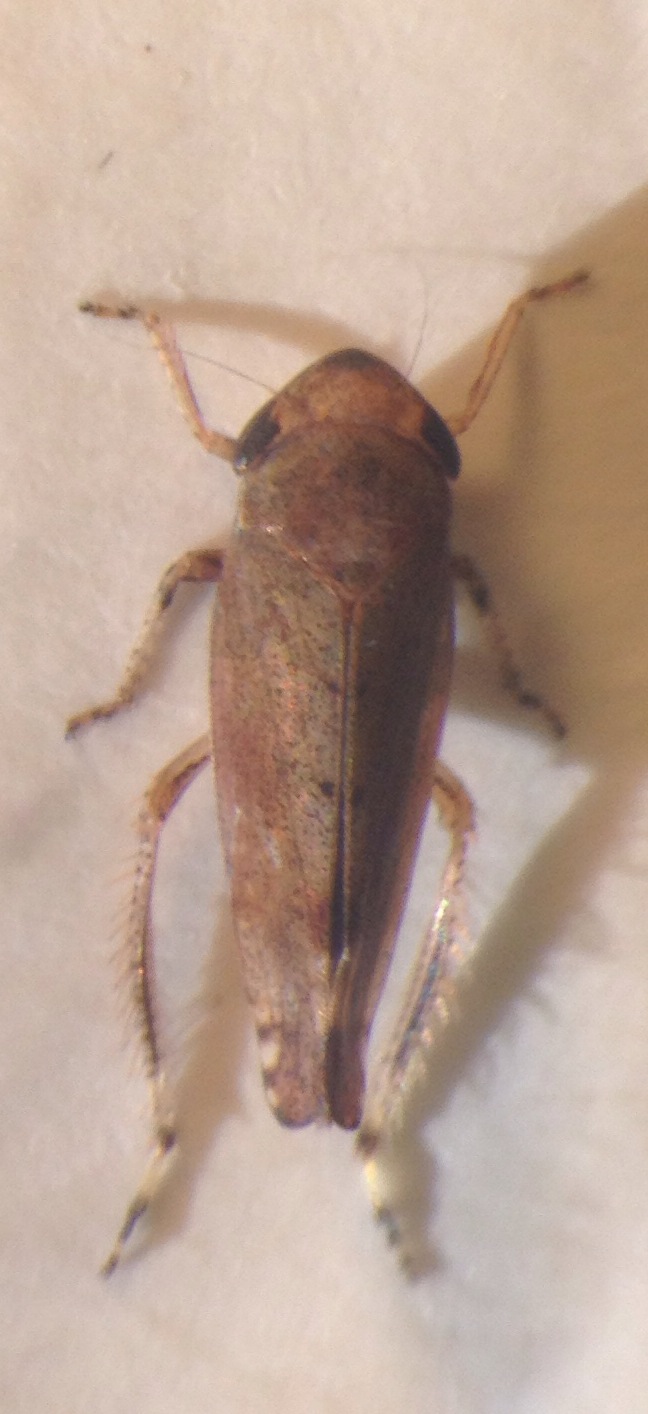
Otherwise I would not have noticed an odd-looking leaf-hopper sunning itself on an ivy leaf in the afternoon sunshine. Sleeker and a tad longer than the common spittle bug, Philaenus spumarius, it had a couple of pale flecks at the wing-tips. And I wondered…..yes, Fieberiella florii.

Fieberiella florii.

Fieberiella florii.

As usual, this is a pretty rubbish photo, taken on my phone down the barrel of a microscope. Much better images here on the British Bugs website, take a look.

First discovered in the UK in 1998 (its originally from North America), it’s been found a few times in the London area. But this is the first time I’ve come across it.

Top snail

On 17 September 1967 the Jones family set off on a walk over the South Downs between Denton and South Heighton, in East Sussex. We’d moved to Newhaven a couple of years before, and such was the novelty of countryside (we’d lived in South Norwood, near Croydon previously) that we would still all go on family outings together — nature-watching, picnicking and mud-gathering. Even though I was only 9 I remember it vividly. My father was showing me some of the ‘sheep’ snails in the  grass growing at the side of the footpath.

These are small snail species, prettily marked with bands of black or brown, varying from stout globes to tight spires. Sheep snails are so named because, as the tale goes, they are so numerous in the downland turf that sheep can’t help but eat them inadvertently, and this gives a special flavour to Sussex mutton. It’s a nice tale, but who knows?

My mum bent down and picked up one from a grass stem and my dad’s face rose with astonishment. She had found the top snail, Helicella elegans, one of Britain’s rarest molluscs.

Helicella elegans, aptly named for its elegant conical form.

Helicella elegans, aptly named for its elegant conical form and delicately precise markings.

A cursory search showed that there were thousands of them along the bank of the deeply cut, and obviously ancient, trackway across the downs. And as the day progressed, it soon transpired that this was going to be the largest colony of the snail anywhere in Britain (actually there are only two other UK sites known). There were loads of them, extending for several hundreds of metres along the banks of the various byways hereabouts.

Over the next few months, whenever walks took us this way, we’d always stop and have a look for them, and over time we found the snail along several kilometres of pathway, the banks of which were remnant rough flowery grassland remaining where much of the gentler slopes of the downs had been ploughed for arable crops.

I can’t remember the last time I picked one up there, probably in the early 1980s when this photo was taken.

So what a delight to be walking out across these same tracks yesterday, now with my family in tow, and ‘Grandad’ as he is now telling the same sheep snail anecdotes. “What’s this one” says Lillian, plucking a small snail off a grass stem.

It can only be one thing.

Still as dainty as ever, but now Trochoidea elegans.

Still as dainty as ever, but now Trochoidea elegans.

A spider with hairy legs — you couldn’t make it up

You could not make it up. As Britain descends into arachnohysteria, schools are closed, bitten limbs swell to pus-filled bloat, carpets become dangerous minefields, and tabloid journalists up and down the country rub their hands with unbridled glee.

Have a look at this item, from the Bromley News Shopper:

Spider with hairy legs.

Spider with hairy legs.

Here are some highlights:

…spider with “hairy legs” that has been found in a Blackfen alleyway.

Mr Michael says he was routinely checking his garden for false widows when he spotted the orange monster on the wall.

The 37-year-old said: “It is unbelievable – I have never seen anything like it and I can’t find anything like it on the internet.”

“I have had the bloke next door who has been on the computer since 10am this morning looking for details”

“The closest thing we have come across is the potato spider. It says online that it is highly venomous.”

Potato spider? It’s worthy of the The Daily Mash, except…

The number of fatalities is currently hovering near the zero mark.

The number of fatalities is currently hovering near the zero mark.

The Mash’s supposedly satirical offering is completely level-headed. Thank goodness someone’s giving out sensible information.

Now I’m feeling smug

There is nothing better than receiving a glowing book review (unless it’s receiving a nice royalty cheque), so these words on Mosquito brought a great gladness to my heart. Now I feel smug.

Mosquito — review from Bulletin of the History of Medicine.

“…cheery British wit…”