There is a housefly

There is a housefly, flying around in the kitchen. There is an irony here. Despite its name and its reputation, the ‘common’ housefly, Musca domestica, has been very uncommon in houses of late. I was saying this, just last night, on the phone to my Dad. He remembered them by the swarm when, as a child, a lifetime ago, he lived in London. Where have they gone?

The ‘lesser’ housefly Fannia canicaris, is still frequent, zigzagging madly underneath the hanging lampshade, but it is not attracted to food and has never been so horribly implicated in disease spread. Why has it survived so well, but the ‘common’ has all but vanished?

We live in a modern urban environment these days, sterilized, hermetically sealed, cut off from wild nature out there. Unless you live on a farm, or in a cottage deep in farming country, you are unlikely to have M. domestica buzzing around the food plates. Refrigerators, Tupperware and cling film can now keep the germ-ridden flies away from our food, but why have they declined so?
Modern sewage disposal appears to have done for the housefly in towns and cities. Horse-drawn transport, with its associated waste product, is no longer the norm here either. Farmyards and manure heaps are now the fly’s only breeding grounds and increasing rural remoteness takes the flies further and further from our metropolitan centres.

Meanwhilethe ‘lesser’ breeds everywhere in the garden soil, quietly scavengingwhatever organic decay it can find. It comes into homes, not attracted by food, but by the promise of an aerial territory under the hanging light. In the wild, Fannia species select a sweeping tree bough as the roof of their territory and patrol left and right to maintain their air space.

The ‘lesser’ remains common in cities. The ‘common’ becomes uncommon enough to be worthy of note, like this blog for example.

A walk in the park

I was what my granddad might have called ‘courting’. A walk in the park with my girlfriend. The exact details of the rendezvous are, like the weather, a bit hazy. It was a bright sunny day — might have been a weekend, and St James’s Park was a neutral point halfway between my flat in Willesden and her home in Bromley.

Whether we were later heading off to the theatre, or cinema, or gig I cannot now remember, but whilst we were wandering through the park, our paths took us down to the lake. As ever, deck chairs were lined up against the very edge of the path, as the tarmac sloped gently to the water’s edge. The water was busy with ducks, and coots, and geese and all the other assorted waterfowl, and there were plenty of families feeding them crusts and sandwich ends.

We sat briefly in a pair of the deck chairs and watched the hubbub on the water. This was suddenly interrupted by a plaintiff peeping from underneath us. A lone duckling, an ungainly fluff of dirty yellow was waddling along through the chair legs. Lost from its mother, it was making that heart-rending alarm call easily audible to us on the bank, but probably smothered by all the frantic quacking and honking of bread-induced feeding frenzy out on the water.

We were not the only ones to notice the duck chick. It was being slowly pursued, rather pathetically I have to say, by a small middle-aged man. He was holding out a  folding take-away box which had once held a big mac or a quarter pounder with cheese, and was following the lost duckling as if he expected it to jump in, a willing victim into the gaping jaws of his expanded polystyrene alligator.

Needless to say the duckling was having none of it, and shortly after it bumbled under our deck chairs it took to the water to avoid him. Weaving its way round the squabbling mallards and bullying Canada geese, it continued its piping search for its lost parent a few yards offshore.

Without warning — gallomph — it was gone. A huge herring gull dropped on it, scooped it up in its beak and took off in the space of a single broad wingbeat. Barely a ripple disturbed the now quiet water.

It was an astonishing and brilliantly executed manoeuver, and I was really impressed. Not everyone with me, however, was quite so clinically detached, and expressed, let’s say, mild anguish at the poor duckling’s demise. My mind was with the seagull, though, at least it would be able to feed its chicks today. Almost without conscious effort I then uttered the now immortal words: “Nature is not sentimental”.

Perhaps it’s a wonder I was not lynched on the spot. We’re still on speaking terms; then girlfriend is now the mother of my three children, but even 30 or so years later I am often reminded of that dark day’s events, and those haunting words are still regularly thrown back at me.

A gnat-infested woodland near Polegate

Copies of Mosquito should be available in August, ready for the ‘official’ launch in October. In the end, I had to cut quite a lot from my initial over-ambitious plan. It would all have made the book too long and too rambling. As I constantly remind my long-suffering family in grumpy-old-man style: less is more.

There are a few things, however, that I don’t want to consign to the editorial dustbin. This one, in particular, is very personal.

There are plenty of mosquito-named places in the world. Google Maps are very helpful here. Some of these find their way into chapter 4, but this one was excised.

Gnat Wood, near Polegate from the mid-19th century Ordnance Survey map.

In the 19th century, a very likely marshy buggy wood at Polegate (near Eastbourne, East Sussex) was called Gnat Wood. Perhaps, like the Mosquito Range in the Rockies, Mosquito Island in the British Virgin Islands, many Mosquito Harbours, Mosquito Creeks, Mosquito Lanes and Mosquito Roads around the world, it was named by the natives vexed by their local biting flies.

It doesn’t sound very enticing; not the sort of place you might consider taking the family for a country stroll. Nevertheless, it was included in the Ward Lock Guide to Eastbourne as part of a ‘Pleasant Circular Run’ through Pevensey, Wartling and Hurstmonceux, and was constantly referred to by Freeman Clark Roper in his 1875 Flora of Eastbourne.

In fact, Gnat Wood, though it was not necessarily called such, was a much-loved haunt of Victorian Naturalists, being part of the well-known, (verging on famous) Abbot’s Woods. Like many prominent localities of the time, its proximity to a railway station, at Hailsham, may have made it attractive to the London entomologists.

I never knew it as Gnat Wood,  by the early 20th century it had split into the adjoining Nate and Gate Woods. Nor did I go there by train, it was a relatively easy bus journey from my parent’s home in Newhaven, and when we moved there from Croydon in 1965, Abbot’s Wood was one of the first places we would visit on our regular weekend family rambles.

Screen grab from the current Ordnance Survey map of the south-east section of Abbot’s Wood.

I have many fond memories of Abbot’s Wood. I was always amused by the first wood over the wooden gate from the bus stop and down the ancient hedge-lined greenway; the rather grunt-sounding Oggs Wood reminded me of Stig of the Dump (I was 7 or 8 at the time), and I imagined it had been there since some vague indeterminate stone age settlement. I half expected to glimpse dark, shadowy, tassel-haired figures wielding flint-tipped spears and wearing loin cloths, hopping about between the coppice stools.

Abbot’s Wood was probably the first place I ever saw green tiger beetles or harlequin frog-hoppers, or wood ants. I was never very interested in butterflies, but here were pearl-bordered fritillaries, small pearl-bordered, silver-washed, and dark-green. There may even have been the occasional Duke of Burgundy. This was where I first saw a grass snake, as long as a broomstick and as thick as my arm, crashing off into the undergrowth, and seeming to me like a writhing anaconda. I found its sloughed skin and took it home in my empty sandwich box — a wilderness treasure to be sure.

I have clear memories of finding the startling ‘bug fly’, Alophora hemiptera, and of watching the brown hawker dragonfly, Aeshna grandis, swooping over the small artificial lake, of picking red leaf beetles, Chrysolina polita, from water mint leaves, and catching the wasp longhorn, Strangalia maculata, in my bare hands. It was also the first time I was ever bitten by a horse fly, probably the common Tabanus bromius.

Ah, such times! I don’t remember mosquitoes, or midges or gnats though. But perhaps that’s nostalgia editing my memories.

Another year, another Bug Hunt

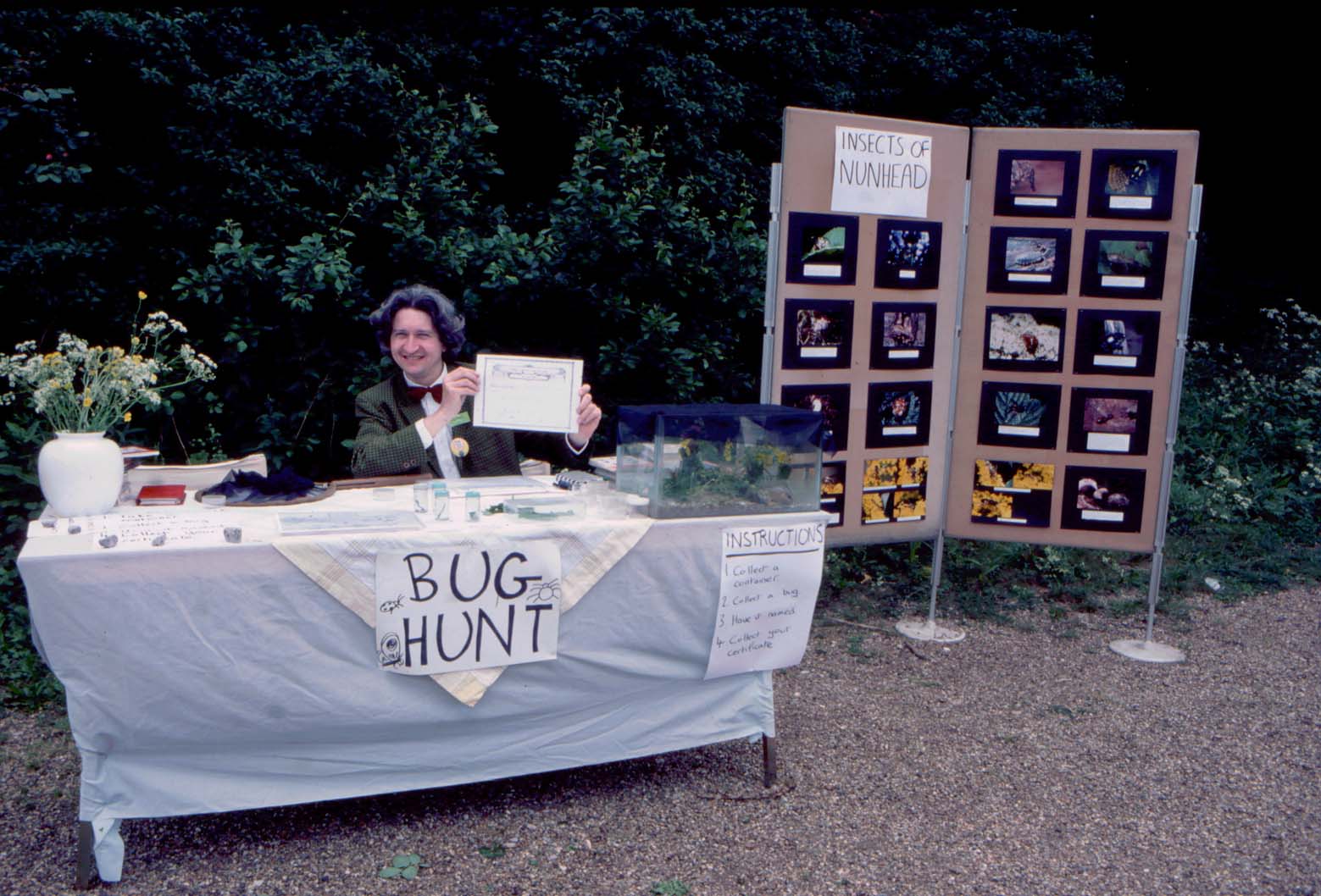
Perhaps I should have been thinking about the long game, when we first started running Bug Hunts at Nunhead Cemetery’s annual Open Day. I can’t actually remember when we began. The consensus seems to pick 1986 as our starting point. The Open Day had been run for a couple of years before, but this was to be the big one, and the Bug Hunt was born.

The premise was easy, the kids would come up and collect a plastic container, see what bugs they could find whilst they wandered about through the huge overgrown burial ground, bring them back to the stall to have them identified by yours truly, and receive a really cool certificate with what they found, Latin names and all. We were mobbed. And we have been every year since.

Pleasing simplicity from 1988

At first, it was just me, a few photographs and a simple trestle table. We were a bit more formal in them days. One dressed for the occasion, of course. That’s my favourite red bow-tie, I still wear it. I probably used a fountain pen to write the certificates.

The 1990s was all about big hair and shoulder pads.

I’m still not entirely sure what was going on with my hair in 1990. I vaguely remember thinking it was my Oscar Wilde look. I just looked like my mother. We had splashed out on a table cloth, but the signs were still all hand-written.

2002 — I have an ice-lolly pout and that’s first-born with the ice-cream.

Every so often we would be caught out by the weather. The Bug Hunt would become a Slug Hunt and I would have a raging cold from sitting in the drizzle. By 2002 we had a gazebo to offer some protection from the elements. My father would come and help with the hordes (he’s just out of shot here), and my children would loiter in the background, peering over at the prizes brought back by eager bug-hunters. I’d usually still wear a tie, but the seriously greying hair is starting to look like faded astroturf.

For the last three years Lillian has been my amanuensis.

So this is us in 2012 — casual chic, sans tie, sans hat. My father has decided, aged 82, that he no longer fancies the long drive up into the madness of London’s congested roads, so Lillian has been roped in to help. She writes out the certificates as I breeze on about woodlouse names (Porcellio scaber = “scabby little pig”), pretend to eat the occasional strawberry snail or describe in elaborate gory detail just how a parasitic wasp’s maggots eat the poor caterpillar alive, from the inside, to a disgusted, but enthralled, 5-year-old.

It’s usually a sedate and easy start.

But we soon get hemmed in by the queuing bug-hunters.

It’s all great fun. It’s exhausting, but immensely satisfying. Some of the kids come back year after year, and their parents proudly tell us that they have kept all the Bug Hunt certificates going back to… well, however many years it might be. And occasionally, it really comes home to us how long this has all been going on — when someone arrives with her 3-year-old, to do the bug hunt, just like she herself did it, 25 years ago.

I like cheese

I like cheese. I especially like strong French cheese and one of my favourites is Epoisse de Bourgogne. It’s got a soft ripe paté (that’s the technical name for the runny bit in the middle) and a moist wrinkled rind flavoured with Burgundy marc. It’s particularly delicious on plain digestive biscuits  — the slight malty sweetness of the biscuits complementing the milky tartness of the cheese. The trouble is it’s rather strong smelling, and the rest of my family have either got more sensitive noses or (and I’m inclined to thing along these lines) less discerning palates, because they complain that it STINKS.

The first complaint came soon after the supermarket visit, as the car gradually filled with the smell of old socks. Even though it was a cold March morning I was commanded to open all the windows to let in fresh air.

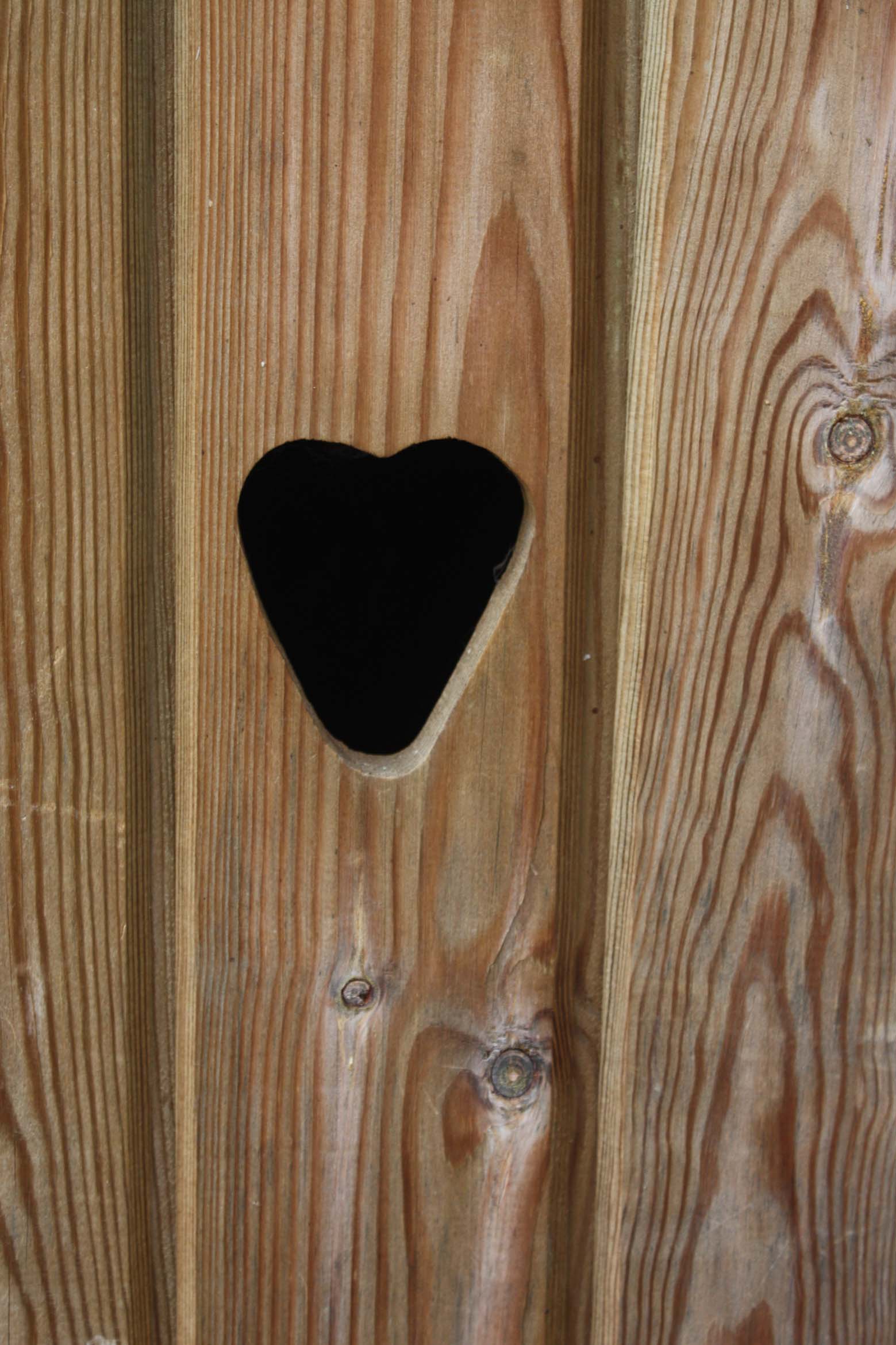
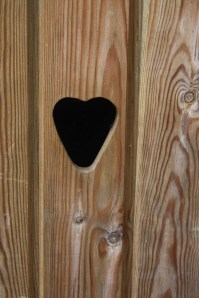
The second complaint came when the fridge began to honk. I was instructed, in no uncertain terms, to get rid of the offending item. Put it in the shed I was told. So I did. Luckily we have two sheds: the usual one full of push-bikes, lawn-mowers and tool-kits, hidden down at the end of the garden, and another, a small upright construction shaped like a sentry-box, just outside the back door. It’s got gloves, trowels, secateurs and a few other small implements inside. It’s rather twee, with its cute heart-shaped cut-out hole in the door, but it does the job. And it was just the place to hide the cheese near enough at hand for when I fancied a bit, yet outside enough to calm my nasally-challenged family.

It was several days later that I thought I needed a little savoury something-or-other, after a glass of wine or two at the end of a hard day. I retrieved the unopened box, fashioned out of paper-thin wood with its discrete black and red appelation contrôllée label, and I carefully plucked open the flimsy plastic wrapping. The air suddenly clouded with the wonderful thick aroma and I eagerly scooped two dripping spoonfuls onto my wholemeal biscuit. Mmmmm, it melted in my mouth. You’re not suppose to refrigerate runny cheeses anyway, the weather had been cool-to-mild, and by now the texture was perfect. My nostrils quickly filled with the heavy scent of creamy cellar-fermented curd with that rich aftertaste of wonderful Burgundy marc. Another, I thought, yes. Delicious. And another, and another. Despite the strong flavour, there is nothing cloying about Epoisse, every mouthful was as succulent as the last.

Now, as an aside, I have to admit that I’ve been thinking about my eyesight recently. I can’t seem to focus quite so close, and I think I’m going to have to get reading glasses. I thought perhaps my migraines were something to do with eye strain. I’m lucky though, I don’t get the brain-numbing thunder shocks of pain experienced by some people, I just get a wide arc of flashing wiggly lines across my vision for twenty minutes or so, then I’m back to normal. I’ve often wondered whether these attacks were food-induced. So when I caught the familiar wiggles out of the corner of my eye I fancied that the cheese, a no-no for many migraine sufferers, might be a cause of mine.

But no, it was all right, the wiggles weren’t in my eye…they were in the cheese; all around the edge of the cheese in fact, where the slightly wrinkled rind sat against the pale wooden container. They were maggots — white and wriggling. At least 50 of them. And judging by their size, about 7 or 8 millimetres long, and their plump appearance, they obviously loved the cheese too.

Suddenly all became clear—the large mottled grey blow-flies I’d seen settling around that cute heart-shaped hole hadn’t been basking in the morning sun after all. They’d been drawn irresistibly to the subtle ammonium scents that I thought were part of the natural aroma of this delicacy, but which were identical to the subtle ammonium scents given off by carrion as it reaches a state of semi-liquid putrescence.

The idea of nervousness bringing on ‘butterflies in the stomach’ took on a slightly more sinister form for a few moments as I held my breath and clutched my belly. Was anything moving down there? Several silent moments passed whilst I thought of what to do next. Should I stick my fingers down my throat to vomit it all up? Should I take some laxative to expedite emission at the other end? Should I seek medical advice? In the end, reason got the better of me, I drank another glass of red wine, well, quite a few glasses actually, to drown the little blighters, just in case.

It took several days of soul-searching and stool-watching to reassure myself that I had, indeed, escaped some foul gastro-intestinal infestation.

I now had to grapple with the wider consequences of the situation. Did I keep this to myself, or reveal it to my family. Well, I’m a blabber-mouth, so I told all. Big mistake. Having been interested in insects from boyhood, and now rather reckoning myself something of an expert, I felt a little foolish at my greedy error of judgement. The irony wasn’t lost on my family either. So now, whenever I’m pontificating about bugs to my children and their friends I’m constantly asked ‘Tell them about the cheese, Daddy’. And I have to confess all. There’s no escaping. Afterwards, they all stare up at me with an expression that’s half way between paralysed revulsion and bewildered astonishment that I’m still alive. Then they all fall about laughing. I am never going to live this down.

The streaked bombardier beetle needs you — now

This just in, a plea from Buglife…

Buglife urgently need some volunteers to help us create habitat for the rare and endangered streaked bombardier beetle.

Brachinus sclopeta, the streaked ground beetle, painfully beautiful and mythically rare.

Why do we need help? The streaked bombardier is one of the UK’s most endangered invertebrates. It lives on brownfield sites that have been abandoned and where nature has taken hold.  It is only known from 2 sites in the UK both in London. One of the sites is in the process of being destroyed and we want to create suitable habitat for the beetles to move to. It is crucial that the habitat is created ASAP to prevent the beetles from becoming extinct.

What is the task? Creating habitat mounds for the streaked bombardier beetle. The work will involve loading wheel barrows with soil, bricks and chalk and moving it 30m then positioning it in ‘S’ shaped mounds. After the mounds have been created we need to plant plug plants and sow wildflower seeds.

Where: University of London Docklands Campus

Easy to get to via public transport only a short walk (less than 5 mins) from Cyprus station on the Docklands Light Railway. Buglife staff will meet you at the station. Or if travelling by road the postcode is E16 2RD, University Way.  Once on University Way, take 2nd barrier on the right going into the Sports Centre car park.  At the barrier, press the button and state you are here for the Buglife work on the Teardrop site. Once through the barrier, take an immediate left on the red bricked path, through the gates and park in the tarmac area. Once at the site please call Buglife staff and we will meet you.

When: Thursday 3rd May and Friday 4th May

What time: 10am- 4pm

What you need to bring: warm water-proof clothes, stout boots (steel toe capped if you have them). Buglife will provide thick gloves and eye protection. Bring a packed lunch too!

Contact details:  If you can help please contact Sarah Henshall on 07968 976213 or email sarah.henshall@buglife.org.uk

Bricking it

It was a detailed knowledge of the bovine alimentary tract and thorough research of fermented grass digestion that made my Lego cow pat so realistic.

All it needed now was a couple of dung beetles.

It was all started by a visit to Legoland one Sunday a couple of weeks ago, with newly 7-year-old and friend. They were particularly keen on the ‘Miniland’ Lego models. The Sacre Couer, Houses of Parliament, Gerkin and Italian street cafés were favourites. The more rural scenes were also fun, but we all noticed that the Lego cows were lacking pats. Not very realistic at all.

I can see a new project emerging before me. The 7-year-old is slightly reticent, odd given his usual amused fascination with all things faecal; his argument is: “This isn’t what Lego was made for”. He may be right, it is rather low-brow, but I’m on a mission. First there was the cow dung, drying in the sunshine. Then…

Fox dung is smaller, smoother and more fragrant, with a little twist.

Water vole droppings. This one was easy.

An owl pellet. OK, strictly speaking not dung, but still 'waste'.

Civet coffee. Yum.

This one could run and run. I am only constrained by the limited number of brown bricks we own.

Caution — entomologists at work (or is it play?)

I usually work alone. It’s much easier to just look out of the window, take a measure of the weather and decide “yes, I’ll head off to…” wherever it might be. Almost inevitably, trying to organize meeting someone on site is fraught with the usual difficulties of fitting in with their office work, avoiding their important meetings, or being let down at the last minute by the weather.

But there was a time when an organized visit would work out very well. I recently came across these photos from a trip to Wicken Fen and the Breck near Mildenhall, in 1983. Peter Hodge and David Porter drove up in David’s slightly ramshackle half-timbered Austin traveller to pick me up from Willesden Green before we set off up the A11 to East Anglia.

David owned several of these charismatic cars, but mostly only one worked, whilst the others mouldered in the garden to be cannibalized for spares, or to provide a breeding ground for a series of pretty bracket fungi on the wood-framing. Rather unnervingly, every time he went round a left-hand bend at speed, the driver’s door would fly open, causing more than some danger to passing motorcyclists.

David Porter (left) and Peter Hodge display the usual beetle-collecting attitude — head down finguers in the turf. Looking for Hypera dauci in the Breck I think.

At Wicken we met Tony Drane and the reserve warden, who showed us the classroom/laboratory where we could set specimens, and to the dormitory crowded with bunk beds, where we would spend the night. Wicken is known for a number of wetland specialities; I had hopes of perhaps spotting the musk beetle, Aromia moscata, but mostly it was small fry we found, sieved onto a plastic sheet or dredged out of the dykes.

At one point Tony spotted Donacia crassipes sitting on a waterlily leaf in the middle of a dyke, he was not going to be foiled by its inaccessibility, so he stripped off to his undies and waded in. I have to say, I was mightily impressed by this dedication, and tried to stifle a snort of laughter as the beetle flew off just as he got to within inches of it.

Tony Drane beetle hunting in a drain.

I’m sure we saw more Donacia later, along with plenty of the usual reedbed and marsh fare including Demetrias imperialis, D. monostigma and Rugilus fragilis. I’ve no doubt forgotten most of what we saw, but I do remember the mosquitoes, and the snoring. Oh, and the coasting in neutral down hills on the way home to save petrol until a service station came into view.

What's that drying on Tony Drane's water net? Doesn't he know to always carry a spare pair of Y-fronts, for aquatic beetle failure emergencies?

What did biscuit beetles eat before humans invented the custard cream?

Our kitchen hygiene has improved of late. I have not seen a biscuit beetle, Stegobium paniceum, for over a decade. They are, methinks, a declining species in East Dulwich. I blame all the new grand kitchen extensions being built, with sliding glass doors, picture windows, flush-fitting cupboards, and Tupperware storage boxes.

Our previous house, over in Nunhead, had a very unfitted kitchen. We unfitted it ourselves. And in place of the crammed and cramped wall units and plastic work surface, we stuck in a salvaged (for which read ‘old’) chest of drawers for the plates and saucepans, and put some shelves into the old larder alcove to make…well, a larder. This was cutting-edge kitchen chic at the time, or so we thought.

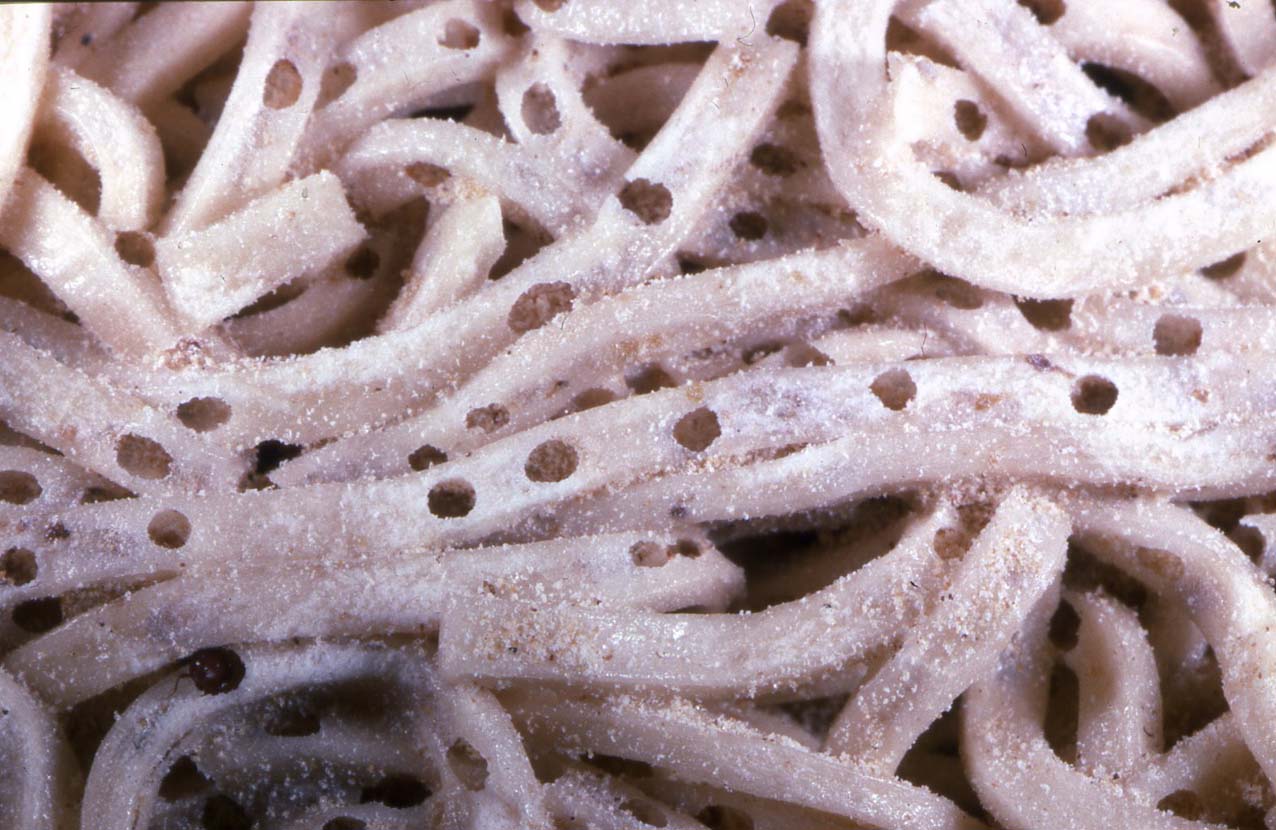
It was after a week of finding the small beetles floating in the milk of my breakfast cereal that I decided to try and find the source of the Stegobium infestation. They  were in the porridge, the Shreddies and the Rice Crispies, in the sugar, flour, lentils, rice and paprika; they had bored holes into the spilled cat biscuits knocked under the boiler; they had chewed through the tin foil of the Oxo cubes. And they had turned my medium egg noodles into ticker-tape. Of course, I thought this was fascinating. But I did agree it was a bit much to be sharing the kitchen with so much wildlife — we had a clear out.

My noodles have been ticker-taped by biscuit beetles. You can just see the behind end of one, bottom left.

Although in Britain this is the ‘biscuit’ beetle, a sign of our predilection for a little something to dunk in our tea, elsewhere in the world it is usually the ‘drugstore’ beetle. I’m guessing that this is because it feeds on the milk or starch powder that makes up most of the aspirin tablet, rather than an addiction to pharmaceutical products.

I recently got to thinking about where these cosmopolitan beetle pests might have lived, before they became so attached to our store cupboards and bread bins. The only time I have ever found Stegobium ‘in the wild’, was in a series of small ledges under arched supports of bridges over the River Wandle, in Wandsworth and Deptford Creek, in Lewisham, accessible only by boat. I poked out some of the grass, leaf litter and bird droppings accumulated  during the many years they had been the perfect shelter for feral pigeon nests. Stegobium was present in droves.

Perhaps pieces of bread and digestive biscuit had been brought back to these nesting ledges, although having seen pigeons squabble over the crumbs fed to them in parks, I suspect that if it is not swallowed at once it will be pinched by some other bird. In the end I doubt much human food gets returned here. On the other hand, the grass used to line the nest cavities was often heavy with seeds. It is these seeds, which would seem the obvious ‘natural’ food for Stegobium. Grass seeds, after all, gave us the staples of modern human food — wheat, oats, barley and rice — from which we have created biscuits, bread and breakfast cereal.

How to startle a chemist?

When I found Rhopalapion longirostre, a tiny weevil that feeds on garden hollyhocks, new to Britain in June 2006, I immediately set about composing a short article for The Coleopterist announcing its discovery. These short notes, published in the various entomological journals were, until the advent of the anonymous database, the basic stuff of biological recording, and the first act of anyone researching a particular species, or habitat, or locality, was to trawl the literature for records.

They are also, to some extent, the currency of the field entomologist’s kudos — “look what I’ve found”. So I was a bit put out when the editors cut what I thought was a key part of the information. I found the weevils as I was wandering around the gardens of the local church — that much made it into print. But why was I there? Not out of any religious conviction, but to take my young daughters to their ballet lesson in the church hall next door. While we waited, I carried my 1-year-old son around as we explored the sunny grass and watched ants busy on the patio. It was here, on the hollyhocks beside the church steps, that I found and immediately recognized the weevils, small, but thoroughly distinctive because of their unfeasibly long snouts. In order to collect a few specimens I needed a container so, I simply tipped out a couple of broken bread sticks and a few left-over raisins from the pocket Tupperware box that had contained 1-year-old’s afternoon snack. These details, obviously, were considered unnecessary twaddle, and the editorial red pen had excised them. A shame, I thought.

I like to flick through old volumes of The Entomologist’s Monthly Magazine (EMM), or Transactions of the Entomological Society, or The Entomologist’s Record and Journal of Variation. It is just this sort of ephemeral incidental detail that makes some of the old articles so entertaining 100 and more years after they were first published. They are all full of fascinating notes and records by what we now regard as the fathers of British entomology (hardly any women in those days, I’m afraid), but they also contain so many entertaining social commentaries and personal asides.

I recently came across this one, from the EMM, 1869, volume 6, pages 162-163, and I’ve taken the liberty of making a screen grab from the on-line version put up by the Biodiversity Heritage Library. It makes charming reading.

I wonder if there is still a chemist to be startled near Dartford station?

John William Douglas (1814–1905) was one of the foremost entomologists of his day, a president of the Entomological Society of London (later to become the ‘Royal’ in 1933) and one-time editor of the journal into which he put this snippet. He was an erudite and learned scientist, but even so he was not above inserting some ‘trivial’ personal details into his short note on this scarce little hopper. The result — a readable and informative record of an insect still restricted to a few rough grassy places within easy distance, as the house-agents say, of the built environment in the environs of London, chains and slavery.

It makes a change from some of the dreary pieces that get published in scientific journals today. I shall aspire to emulate Mr Douglas, and try to get in something about startling a chemist next time I find a beetle new to Britain.